
American Airlines brings back Chicago to Tokyo flights in major expansion
When you look at the logistics behind the new Chicago to Tokyo route, the sheer physics of it is what really grabs my attention.
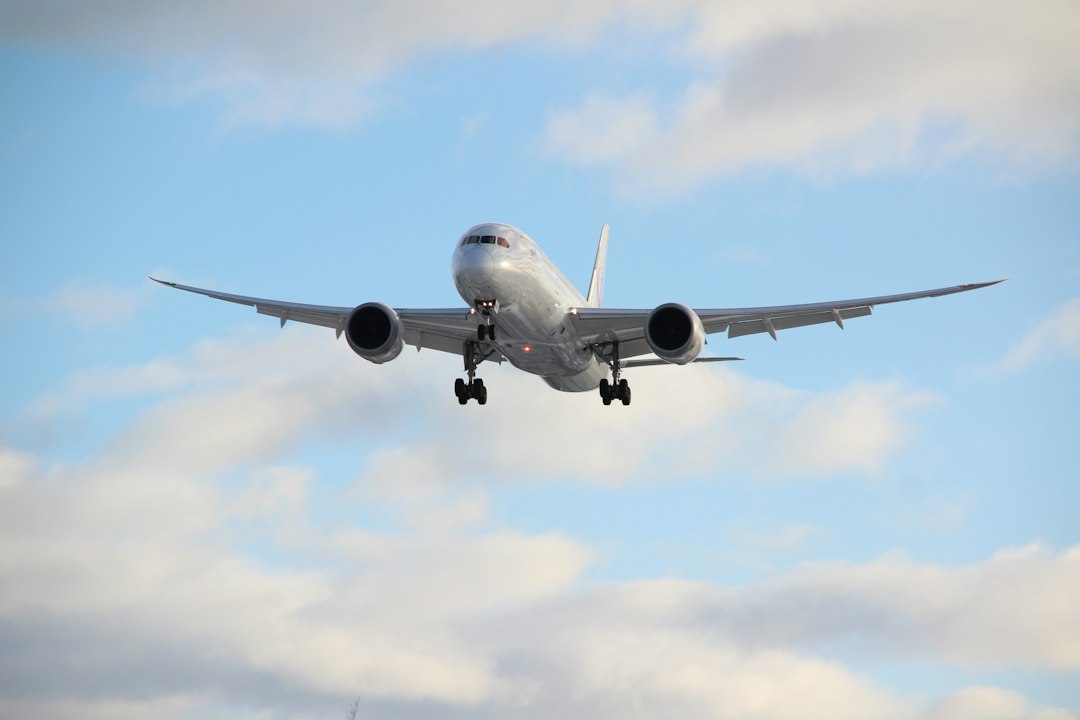
Chicago to Tokyo: Details of the New Nonstop Route
When you look at the logistics behind the new Chicago to Tokyo route, the sheer physics of it is what really grabs my attention. The great circle distance between O'Hare and Narita hits exactly 6,294 miles, and hitting that target requires incredibly precise polar routing to keep fuel burn in check. You’re looking at a 13-hour and 35-minute haul, where pilots are constantly battling the jet stream—which, honestly, is why your flight home is almost always two hours shorter than the trip out. Because the path takes you so close to the North Pole, those Boeing 787-9s have to handle some wild magnetic variations that would make a standard compass basically useless. It’s a fascinating dance of technology where the plane’s composite frame actually lets them keep the cabin pressure and humidity a bit higher, which is the only reason you don't feel like a total zombie after spending half a day at 35,000 feet.
I think it’s easy to forget how much goes on behind the scenes just to keep these flights smooth. Dispatchers are constantly watching the polar vortex, ready to shift the flight plan by hundreds of miles if the turbulence looks bad or the high-altitude temperatures start acting up. They’re relying on these dynamic North Pacific Track systems—basically invisible highways in the sky—to make sure planes stay separated while crossing the ocean. Every time that plane pushes back from the gate, it’s carrying roughly 25,000 gallons of fuel, and the amount they actually burn depends on real-time satellite data on wind speeds. It’s a tight margin, too; because the westbound flight is so fuel-heavy, the airlines are often limited in how much cargo they can pack into the belly compared to shorter international trips.
If you’re wondering why the air feels different on these newer jets, it’s because the filtration systems are cycling the entire cabin volume every two or three minutes. That’s a massive upgrade from the old way of doing things, and it’s a big reason why you might feel slightly better after a long stint in the air. The pilots flying this route are also in a different category of training, specifically because they have to be ready for technical issues in the middle of nowhere where there isn't a diversion airport for thousands of miles. When I see news about this expansion, I don’t just see a new schedule—I see a highly optimized machine that’s pushing the limits of what a twin-engine jet can handle in some of the most remote airspace on the planet. It’s a pretty incredible feat of engineering that we get to experience just by booking a seat in economy.
Strategic Partnership: Working with Japan Airlines
The joint business agreement between American Airlines and Japan Airlines creates a metal-neutral landscape where revenue is shared, allowing both carriers to prioritize the most efficient routing regardless of which specific aircraft operates the flight. Because of this deep integration, the two airlines use a shared inventory management system that makes rebooking seamless across their combined global networks whenever things go sideways with weather or delays. Within the Oneworld alliance, this partnership operates under a specific antitrust immunity grant from the U.S. Department of Transportation, which essentially permits them to coordinate pricing and schedules on transpacific routes in a way other airlines can’t. It’s honestly impressive how Japan Airlines uses its specialized subsidiary, JALUX, to streamline in-flight catering, ensuring you get those premium, Japanese-sourced meals even on American-operated flights leaving from Chicago.
This isn't just about the food or the scheduling, though; the partnership extends to a reciprocal frequent flyer agreement where your elite status perks—like priority standby and baggage handling—are actually hard-coded into the reservation systems of both airlines. If you’ve ever wondered why transfers at Tokyo-Narita or Haneda feel smoother than at other international hubs, it’s because the ground operations are synchronized, moving you through expedited customs protocols managed by joint staff. They’ve even set up data-sharing protocols to sync predictive maintenance, ensuring that spare parts for their shared Boeing 787 fleets are already waiting at partner hubs in both Chicago and Tokyo. Unlike standard interline agreements, they even offer a shared corporate sales program, which lets big companies negotiate one single contract that covers travel across both airlines globally.
And when you get down to the technical side of things, it’s clear they’ve put in the work to keep their standards identical. The two airlines have historically integrated their flight crew training modules, so standard operating procedures for transpacific communications remain consistent whether the pilots are from American or JAL. They’ve also built a centralized clearinghouse to settle payments in a single currency, which cuts out the financial friction that usually makes international ticketing such a headache. On the cargo side, American can book belly space on JAL’s domestic Japanese flights to feed into their long-haul departures, effectively treating the entire country like an extension of their Chicago hub. Most recently, as of this summer, they’ve even started sharing the procurement of sustainable aviation fuel, specifically trying to lower the carbon footprint of that busy Chicago-to-Tokyo corridor. It’s a level of cooperation that really changes the math for how they manage these long, grueling routes.
Boeing 787-9 Dreamliners Set for Transpacific Service
Let’s dive into why the Boeing 787-9 has basically become the gold standard for these long-haul transpacific routes. If you’ve ever wondered why you feel slightly less like a zombie stepping off a flight from Chicago to Tokyo, it really comes down to the plane’s unique electrical architecture. Unlike older jets that rely on "bleed air" systems pulled directly from the engines, the 787-9 uses an all-electric environmental control system, which keeps the cabin air much cleaner and, crucially, a lot more humid. You’re not dealing with that desert-dry air that usually leaves you feeling drained after thirteen hours in the sky.
But the real magic is in the bones of the thing. The fuselage is built from carbon-fiber-reinforced polymer, which doesn't just resist the corrosion that plagues traditional aluminum jets; it allows the cabin to stay pressurized at a lower altitude—roughly 6,000 feet compared to the typical 8,000 feet. This means your body isn't fighting as hard to oxygenate your blood, which is a massive win for reducing that heavy, exhausted feeling you get after a long flight. And when you hit those patches of turbulence over the Pacific, the plane’s sensors actually detect the movement and adjust the wing control surfaces in real-time to smooth things out.
It’s also fascinating to see why airlines keep choosing the 787-9 over the larger 787-10 for these specific missions. While the 787-10 carries more people, it doesn't have the same range-to-weight efficiency required to cross such massive distances while still hauling a full load of fuel and cargo. That payload flexibility is the secret sauce for a route like Chicago to Tokyo, where the fuel margins are razor-thin. Plus, those massive, electrochromic windows that dim at the touch of a button are a nice touch, but honestly, it’s the way the plane manages its weight through step-climbs that really shows how much engineering went into making this flight possible.
A Significant Milestone: Returning to a Long-Haul Hub
The return of Chicago O'Hare as a primary transpacific gateway is a massive strategic move, and honestly, it’s about time we talk about the logistics that make this actually work. When you look at the sheer scale of modern aviation, O'Hare’s transition back into a critical long-haul hub isn't just about adding flights; it’s about the underlying 13-bank flight schedule that meticulously organizes how thousands of passengers flow through the terminal. This architecture, which mirrors the intense efficiency we've seen at Dallas/Fort Worth, is designed to shave precious minutes off your connection window, making the difference between a frantic run through a concourse and a stress-free stroll to your gate. It’s a delicate balancing act that requires the airport to handle high-density traffic without creating a bottleneck, and from where I’m sitting, the way they’ve optimized these connection windows is a game-changer for anyone tired of missed transfers.
To support this volume, the ground infrastructure at O'Hare has been quietly overhauled, specifically with automated baggage systems that can handle over 1,000 bags per hour—a necessity when you’re trying to move luggage from a regional feeder flight onto a heavy long-haul departure. The airfield itself has moved toward a modernized parallel runway layout, which is the only way to facilitate the simultaneous arrivals and departures required for these strict oceanic takeoff slots. We’re also seeing a global shift toward dual-bridge loading gates, a detail that might sound minor but actually cuts boarding times for a 787-9 by about 15 minutes. That’s a significant chunk of time saved, especially when you’re dealing with the complexity of boarding hundreds of passengers on a wide-body jet, and it really demonstrates how hardware upgrades are just as important as the flight schedule itself.
Looking at the operational side, there’s a level of technical integration here that I think is truly impressive, particularly regarding how they manage the planes on the ground. By using an AI-driven gate assignment engine, ground teams are minimizing taxi times to save fuel, which might seem like a small detail but adds up to 15 to 20 gallons saved per minute of taxiing. They’ve even implemented a fast-track logistics corridor for cargo, meaning that high-end Japanese seafood can clear customs in under an hour, thanks to electronic documentation shared between authorities before the plane even touches down. It’s all about these tiny, high-stakes optimizations—like real-time center-of-gravity monitoring for maximum cargo capacity or using ionospheric data to keep the jets cruising at their most efficient altitude—that ultimately make these long-haul routes economically viable. At the end of the day, seeing O'Hare reclaim this status shows how smart infrastructure and data-sharing can completely reshape the passenger experience.
Beyond Tokyo: American’s Three-Route Chicago Expansion
When you look at this three-route expansion from O’Hare, it’s not just about adding dots to a map; it’s a deliberate, tactical play to rebuild Chicago as a cornerstone of American’s international strategy. Beyond the headline-grabbing return to Tokyo-Narita starting March 27, 2027, the inclusion of Charlottesville and Ontario, California, acts as a clever funnel for the entire operation. Think of these domestic legs as the circulatory system for that long-haul flight, pulling passengers from secondary markets who might otherwise have drifted to competitors. By launching these routes in lockstep, the airline is essentially guaranteeing that the Narita service starts its life cycle with a pre-built web of connecting traffic ready to fill those Dreamliner seats.
It’s honestly refreshing to see this kind of network engineering, as it highlights how the airline is trying to solve the classic hub-and-spoke efficiency problem. Bringing Ontario into the mix is particularly smart because it gives them a flexible West Coast anchor, offering a secondary path for passengers if the tricky weather patterns of the North Pacific force any last-minute adjustments. This isn't just about growth; it's a calculated escalation in the ongoing turf war with United at O’Hare. By syncing these arrivals with the international departure bank, they're shaving down connection times and making the Chicago hub feel much more cohesive for the frequent flyer.
You can really see the logic here: they aren't just betting on point-to-point demand, but on the cumulative network effect of these three routes working in tandem. After a seven-year hiatus on the Tokyo route, they clearly realized that you can't just fly a heavy-metal international leg in isolation and expect it to thrive. They need the regional fleet to feed the beast, and by pairing these specific markets, they’ve built a buffer that should help keep load factors high even when the travel season fluctuates. It’s a classic, high-stakes move to reclaim their footprint, and it honestly makes me curious to see if this kind of aggressive hub-rebuilding will finally tip the scales in their favor at O’Hare.
How to Book and Prepare for Your Upcoming Flight
Booking a flight is often where the real stress begins, but I’ve found that treating it like a strategic game rather than a chore changes the entire experience. You’ll want to aim for that 21-day advance booking window for international travel, which is usually the sweet spot for snagging lower fare buckets before the airlines move into their higher-revenue pricing tiers. I always start by cross-referencing major aggregators to get a baseline price, but I never actually click purchase until I’ve checked the carrier’s direct site to see if there’s a difference in baggage policies or potential point-redemption value. And here is a pro tip: always use an incognito window when you’re hunting for these fares to keep dynamic pricing algorithms from sniffing out your search history and hiking the price just because you’ve looked a few times.
Once you’ve settled on a flight, take a moment to peek at the specific aircraft type using a seat-selection tool, because not all 787s or wide-bodies are configured the same way. I personally look for rows near the wings, as the center of gravity there makes for a noticeably smoother ride if you hit turbulence over the Pacific. Before you lock it in, make absolutely sure your passport has at least six months of validity left, because I’ve seen enough travelers get turned away at the gate for a document that was technically valid but failed the airline’s internal requirements. It’s also worth checking if your destination requires a specific visa, and if it does, apply for that the second your flight is confirmed to avoid any last-minute scramble.
Finally, the preparation phase is where you can really insulate yourself from the chaos of modern travel. I make it a habit to register my flight in the airline’s app at least a day out, which is usually the only way to get a heads-up on a gate change before the terminal screens even update. If you need a special meal, call or update that request at least 48 hours early, because the catering logistics for long-haul flights are rigid and don't leave much room for "oops" moments once you’re on board. Pack your essentials—meds, chargers, a change of clothes—in your carry-on, because even with the best planning, the risk of a baggage delay is a real thing. I also like to download offline maps and my hotel confirmation to my phone, just in case I land in a new city and my roaming data decides to take a vacation right when I need it most.
Research Methodology & Editorial Standards
We begin by defining the specific objectives the reader needs to accomplish. Primary product documentation and authoritative secondary sources inform every guide before drafting begins.
Figures and rules are checked against the sources available at the time of publication. Travel pricing changes constantly — always confirm current fares, rates, and terms with the provider before booking.