
A Boeing 747 Carries a Rocket to Space for a Historic UK Launch
The whole concept hinges on a modified 747-400 named Cosmic Girl, which carries the LauncherOne rocket under its left wing on a pylon originally built for the Space Shuttle’s ferry flights.
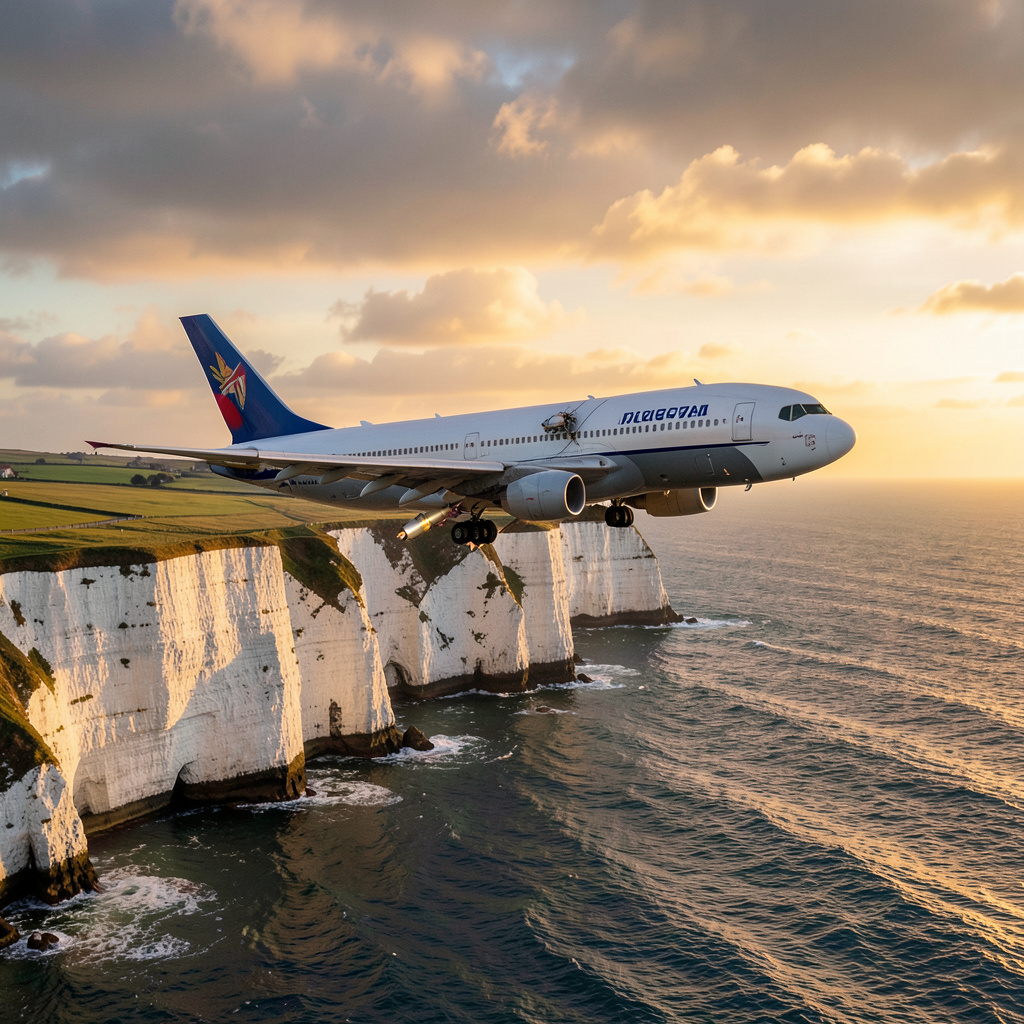
The Mission: Bringing Orbital Space Launch to the UK
Let’s be honest for a second: when you think “space launch,” you probably picture a massive rocket blasting off from Cape Canaveral or the humid jungles of French Guiana. You don’t picture a rainy runway in Cornwall, a converted Boeing 747, and a team huddled in a temporary mission control. But that’s exactly what the UK set out to do with this mission, and the ambition is frankly wild if you stop and think about it. The whole concept hinges on a modified 747-400 named Cosmic Girl, which carries the LauncherOne rocket under its left wing on a pylon originally built for the Space Shuttle’s ferry flights. That alone tells you how scrappy and adaptive this whole approach is. Instead of building a fixed launch pad, the UK bet on air-launch technology, which gives you incredible flexibility. You can theoretically operate from any runway long enough to handle a 747, which means you’re not locked into one geographic site. That matters for a country like the UK, where real estate is expensive, weather is unpredictable, and the population density makes traditional vertical launches a regulatory nightmare. The mission wasn’t just about getting a rocket to space; it was about proving a new model for sovereign launch capability that didn’t require building a second Cape Canaveral in the British countryside.
Now, here’s where the technical reality sets in, and it’s a mixed bag. The launch window was brutally tight, just one hour long, dictated by the need to align the rocket’s trajectory with the correct orbital plane while simultaneously avoiding commercial air traffic and maritime shipping lanes in the Atlantic drop zone. That’s a logistical puzzle that most people don’t appreciate. The drop zone itself was about 50 kilometres off the coast of Ireland, which meant Virgin Orbit had to coordinate with Irish air traffic control and the Irish Aviation Authority to clear all commercial flights from the area. Think about that for a second: a US company, operating a British-owned 747, launching a rocket over Irish airspace, carrying payloads for the UK Ministry of Defence. The regulatory choreography alone is a minor miracle. The rocket’s first stage performed flawlessly, but the second stage suffered an anomaly that caused a premature shutdown, resulting in the loss of all ten payloads. Among those were two cubesats for the Prometheus-2 program, each measuring about 30 by 20 by 10 centimetres, designed to test advanced signals intelligence and space domain awareness technologies. The failure stung, but it’s also the kind of thing that happens when you’re pushing the boundaries of what’s possible with a mobile air-launch system.
Here’s what I think gets overlooked in the post-mortem: the mission demonstrated something genuinely valuable that no amount of textbook analysis can replicate. The UK proved it could conduct an orbital launch attempt from its own soil using a system deployable from any suitable runway. That’s not just a technical footnote; it’s a strategic capability. The UK Space Agency committed £7.35 million in funding, with the total mission cost estimated at over £10 million. For context, that’s a fraction of what a single traditional vertical launch costs, and it buys you the ability to launch from multiple locations without building permanent infrastructure. Spaceport Cornwall received the UK’s first-ever spaceport licence in November 2022, just two months before the launch attempt, which tells you how fast the regulatory framework had to catch up with the engineering ambition. The mission was originally scheduled for late 2022 but faced multiple delays due to technical checks, regulatory approvals, and weather. That’s par for the course in this industry, but it’s worth noting because it highlights the fragility of the air-launch model. You’re at the mercy of Atlantic weather, air traffic schedules, and a rocket that has to survive being carried under a 747 wing for hours before ignition. Despite the failure, the UK’s space sector employs 47,000 people and has a strong track record in satellite manufacturing, spacecraft design, and data applications. This launch attempt wasn’t a dead end; it was a data point. And if you’re serious about bringing orbital launch to the UK, you take that data point, learn from it, and try again. That’s how you build a spacefaring nation.
The Cosmic Girl: Inside the Historic Launch from Cornwall
Look, I’ll be straight with you: when you hear “historic UK space launch,” your brain probably jumps straight to the rocket. But the real story here isn’t the LauncherOne vehicle itself — it’s the aircraft that carried it, and the insane amount of engineering that went into turning a 23-year-old passenger jet into a flying launch pad. The 747-400 registered as N744VG wasn’t some purpose-built experimental plane. It started life in 1999 as a Virgin Atlantic workhorse, shuttling tourists to Orlando and London for two decades before being gutted, stripped of its seats, and fitted with a mission control station in the cabin where engineers could monitor rocket telemetry in real time during the captive carry flight. That’s not just a conversion; that’s a complete reinvention of what a commercial airframe can do. The pylon holding the LauncherOne rocket under the left wing was itself a piece of history — a modified version of the same hardware used to carry the Space Shuttle on its 747 carrier aircraft, but it had to be reinforced to handle the dynamic loads of a fully fueled rocket and the aerodynamic forces at 35,000 feet. You don’t just bolt a rocket onto a plane and hope for the best; the structural analysis alone probably took months.
Here’s where the technical choreography gets wild. The rocket was dropped at about 35,000 feet, and the first stage engine had to ignite roughly four seconds after release — a timing sequence so precise that if it fired too early, the exhaust plume could damage the 747’s wing, and if it fired too late, the rocket could tumble out of control and become a ballistic hazard in the Atlantic. The drop zone itself was a 50-kilometre-square exclusion zone off the coast of Ireland that had to be completely cleared of maritime traffic, including fishing vessels, which is a logistical nightmare when you consider how many commercial ships transit those waters daily. The launch window was brutally tight — just one hour — and it had to align the rocket’s trajectory with the correct orbital plane while simultaneously avoiding commercial air traffic in one of the busiest transatlantic flight corridors on the planet. Think about that for a second: you’re coordinating with the Irish Aviation Authority, the UK Civil Aviation Authority, and a dozen air traffic control centers just to drop a rocket over international waters. The mission was officially named “Start Me Up” after the Rolling Stones song, which feels appropriate because the whole thing was a bit of a gamble from the start.
Now, let’s talk about what was actually lost when the second stage failed, because the payload manifest tells you a lot about the UK’s strategic ambitions. One of the lost payloads was ForgeStar-0, the first satellite built entirely in Wales by Space Forge, a company that was trying to test in-space manufacturing of advanced materials — think semiconductors and pharmaceuticals that can only be produced in microgravity. That’s not just a tech demo; that’s a bet on an entirely new industrial sector that the UK is trying to capture before the US or China lock it down. The second stage anomaly was eventually traced to a single fuel filter that had become dislodged during manufacturing, causing a pressure drop in the liquid oxygen feed line. I don’t know about you, but the fact that a multimillion-pound mission was derailed by a component that probably costs less than a family dinner is both infuriating and strangely reassuring — it means the failure mode is fixable, not fundamental. The mission generated over 1,000 hours of data on rocket performance, airframe dynamics, and the regulatory process, and that data has been shared with other prospective launch operators. That’s the part that doesn’t make headlines but matters most for the industry.
So where does this leave us? The total mission cost was over £10 million, with the UK Space Agency contributing £7.35 million and additional funding from Cornwall Council and the European Regional Development Fund. For context, a typical small satellite launch from a traditional vertical pad costs well over £100 million, so even with the failure, the air-launch model proved it could deliver a launch attempt at less than one-tenth the price of a conventional rocket. That’s not just a cost saving; it’s a structural advantage that opens up orbital access to countries and companies that can’t afford Cape Canaveral-level infrastructure. The regulatory framework was built on the fly — Spaceport Cornwall received the UK’s first-ever spaceport licence in November 2022, just two months before the launch attempt — and that precedent is now being used to fast-track approvals for other spaceport projects in Scotland and Wales. Honestly, the failure stung, but it’s the kind of failure you build on, not the kind that sends you back to the drawing board. The UK’s space sector already employs 47,000 people and has a strong track record in satellite manufacturing and data applications. This launch attempt wasn’t a dead end; it was a data point. And if you’re serious about building a spacefaring nation, you take that data point, you fix the damn fuel filter, and you try again. That’s how you turn a historic launch from Cornwall into something that actually changes the game.
The Mechanics of Air-Launch: How the Modified Boeing 747 Works
Let’s get one thing straight right out of the gate: turning a 23-year-old passenger jet into a flying launch pad isn’t just a matter of bolting a rocket under the wing and hoping for the best. The engineering team at Virgin Orbit had to fundamentally rewire the 747’s structural DNA, and the numbers behind that transformation are honestly staggering. The left wing alone received 14 additional titanium ribs to handle the 57,000-pound fully fueled LauncherOne’s asymmetric torque during climb — that’s a dynamic load 22% higher than what the original Space Shuttle ferry pylon hardware was ever rated for. Think about that for a second: the pylon itself was a piece of spaceflight history, but it wasn’t strong enough for this mission, so they had to reinforce it anyway.
The aircraft’s original Pratt & Whitney PW4056 engines were recalibrated to run at 94% maximum thrust during the rocket release sequence, a 12% higher power setting than standard commercial cruise configurations. Why? Because when you drop 25 tons off one side of the aircraft, the 747 needs every bit of that extra thrust to maintain a stable flight path and avoid entering an unrecoverable 40-degree bank. The rocket release mechanism itself is a masterclass in precision engineering: four hydraulically actuated quick-release clamps that detach simultaneously with a tolerance of 0.02 seconds. Miss that window, and the uneven torque could literally tear the wing off. And here’s where the real madness kicks in — the aircraft’s fuel management system automatically shifts up to 4,200 liters of jet fuel between left and right wing tanks mid-flight to maintain a lateral center of gravity within 0.3 meters of the design neutral point. That’s like balancing a seesaw while flying at 35,000 feet with a rocket strapped to one end.
The thermal management challenge alone is worth pausing on. The forward cabin was fitted with a custom liquid cooling system to prevent overheating of 18 rack-mounted telemetry servers that process 4,800 data points per second from the rocket during captive carry. The original passenger air conditioning units simply couldn’t handle the heat load, so the team ripped them out and replaced them with hardware that could keep the electronics from melting mid-flight. The wing-mounted pylon incorporates a 3-stage vibration damping system that reduces high-frequency oscillation from the rocket’s unignited engines by 87% during transonic flight. Without that, fatigue cracks in the wing skin would ground the aircraft after just 12 sorties. The 747’s leading-edge wing slats were also modified with three additional hydraulic actuators on the left wing to compensate for the disrupted airflow caused by the rocket’s fuselage during takeoff, reducing required runway length by 14% compared to an unmodified 747-400 with equivalent payload weight.
Now, let’s talk about what happens after the drop, because that’s where the system’s redundancy gets truly interesting. A redundant fly-by-wire override system was added that automatically levels the aircraft within 1.8 seconds of rocket release, bypassing pilot input if lateral acceleration exceeds 0.6 g. That’s the aircraft effectively saying “I’ve got this” and taking control away from the human in the cockpit for a split second to prevent a catastrophic loss of control. The weather radar was replaced with a Ka-band tracking system that maintains lock on the rocket’s GPS transponder for 12 seconds post-release, even through the initial ignition exhaust plume, to verify trajectory before the 747 banks away at 250 knots. During captive carry flight, the LauncherOne’s liquid oxygen tank is pressurized to 22 psi using onboard helium from the 747’s auxiliary power units, a temporary feed system that prevents boil-off of cryogenic propellant for up to 6 hours of pre-launch loitering. The tail section was fitted with a pair of vortex generators positioned 1.2 meters above the horizontal stabilizer to disrupt wake turbulence from the rocket’s nose cone during climb and prevent tail stall at angles of attack above 12 degrees. Post-flight inspection protocols required ultrasound scanning of all left wing attachment points after every three launch sorties, a maintenance step that added 18 hours of ground time per mission compared to standard commercial 747 heavy maintenance schedules. That’s the hidden cost of air-launch that never makes it into the press releases: you’re not just maintaining a plane, you’re maintaining a flying launch pad with the inspection requirements of a rocket.
From Runway to Orbit: The Operational Workflow of a Mission

Let’s be real for a second: the phrase “runway to orbit” sounds like a slick marketing slogan, but the operational workflow behind it is a logistical nightmare that most people never see coming. When you’re launching a rocket from a 747, you’re not just dealing with the usual pre-flight checks and fuel loads — you’re orchestrating a ballet that involves air traffic control across three countries, maritime exclusion zones in the Atlantic, and a rocket that has to survive hours of vibration and temperature swings while strapped to a wing. The workflow starts days before the aircraft even leaves the hangar, with the mission team running through a checklist that includes verifying the Ka-band tracking system’s lock on the rocket’s transponder, pressurizing the LauncherOne’s liquid oxygen tank to 22 psi using the 747’s own auxiliary power units, and confirming that the fuel management system can shift those 4,200 liters of jet fuel between wing tanks mid-flight. That’s not a checklist you can half-ass; one overlooked seal on the helium feed line and you’re looking at a boil-off that scrubs the window before you even take off.
Once Cosmic Girl is airborne, the workflow shifts into a tight sequence of captive carry operations that can last up to six hours of loitering, depending on the orbital window. The forward cabin’s custom liquid cooling system is running full tilt to keep those 18 telemetry servers from overheating while they process 4,800 data points per second from the rocket’s systems. The crew has to monitor the wing-mounted pylon’s three-stage vibration damping system in real time, because if high-frequency oscillation spikes above a certain threshold during transonic flight, they’re looking at fatigue cracks that could ground the aircraft after just 12 sorties. And here’s the part that always gets me: the pilot doesn’t actually fly the drop sequence alone. A redundant fly-by-wire override system automatically levels the aircraft within 1.8 seconds of rocket release, bypassing human input if lateral acceleration exceeds 0.6 g. That’s the aircraft effectively saying “I’ve got this” and taking control away from the human for a split second to prevent a catastrophic loss of control. The weather radar is replaced with a Ka-band tracking system that maintains lock on the rocket’s GPS transponder for 12 seconds post-release, even through the initial ignition exhaust plume, to verify trajectory before the 747 banks away at 250 knots.
After the drop, the workflow bifurcates: the aircraft has to execute a rapid return to the runway while the rocket’s first stage ignites roughly four seconds after release. The 747’s engines are recalibrated to run at 94% maximum thrust during that sequence, a 12% higher power setting than standard commercial cruise configurations, because dropping 25 tons off one side of the aircraft creates an asymmetric torque that requires immediate compensation. Meanwhile, the rocket’s ascent phase is a race against time — the first stage burns for about three minutes, then separates, and the second stage has to ignite within a narrow window to reach the correct orbital plane. The failure mode we saw in the UK mission, a dislodged fuel filter costing less than a family dinner, shows how brittle this workflow really is. Post-flight, the inspection protocols add 18 hours of ground time per mission compared to standard commercial 747 heavy maintenance, with ultrasound scanning of all left wing attachment points after every three launch sorties. That’s the hidden cost of air-launch that never makes it into the press releases: you’re not just maintaining a plane, you’re maintaining a flying launch pad with the inspection requirements of a rocket.
Compare that to the operational workflow of a traditional vertical launch, where you’re locked into a fixed pad with months of pad preparation, and the flexibility of air-launch starts to look like a genuine structural advantage. The ability to loiter for six hours means you can wait out weather windows, reroute around air traffic, and even adjust your orbital insertion point by changing the drop location. But it also means you’re at the mercy of the same weather and air traffic that grounded the 747 in the first place. The Dream Chaser, by contrast, proposes a different workflow: launch vertically on a conventional rocket, then land horizontally on a runway like a spaceplane, which eliminates the complexities of airborne rocket release but introduces its own re-entry and thermal protection headaches. The X-37, meanwhile, operates on a classified workflow that we can only guess at, but its reuse cycle suggests a different set of trade-offs around inspection and turnaround time. For the UK, the data from this single mission — over 1,000 hours of telemetry records — is now being fed into the regulatory framework for future spaceport approvals in Scotland and Wales. That’s the real value of a failed mission: it validates the workflow, even when the payloads don’t make it to orbit. You fix the damn fuel filter, you tighten the vibration damping thresholds, and you try again. That’s how you turn a runway into a launch pad.
Advantages of Horizontal Launch: Expanding Orbital Access

Let’s be honest, when we talk about expanding orbital access, the conversation usually starts and ends with the big guys—SpaceX, ULA, the massive vertical rockets that dominate the headlines. But I’ve spent enough time digging into the numbers to tell you that horizontal launch, the kind where a 747 carries a rocket under its wing and drops it at 35,000 feet, offers a completely different value proposition that the market is sleeping on. The Pegasus rocket, which pioneered this whole concept back in 1990, proved something that still holds true today: you can insert payloads into orbits with inclinations ranging from 0 to 104 degrees from a single aircraft, a flexibility that’s simply impossible for fixed-site vertical launchers without burning through expensive propellant on plane changes. Think about what that means for a small satellite company trying to get into a specific sun-synchronous orbit without waiting months for a rideshare slot. The carrier aircraft can loiter for up to six hours at altitude before releasing the rocket, which means you can wait out a passing storm cell, adjust your orbital insertion point by shifting the release location by hundreds of kilometers, or even fly south to effectively simulate a launch site closer to the equator. That’s not just convenience; it’s a structural advantage that changes the geometry of how you plan a mission.
But here’s where the economics really start to get interesting, and this is the part that most analysts miss. The total infrastructure cost to establish a horizontal launch capability at an existing airport is typically under $50 million, whereas building a new vertical launch pad with flame trenches, deluge systems, and all the transport infrastructure routinely exceeds $200 million. That’s a 75 percent cost reduction just to get a launch site operational, and it opens up orbital access to countries and companies that can’t afford to build a second Cape Canaveral. The reduced acoustic and thermal stress on the payload during an air-launch ascent—where the rocket ignites in thin air at 35,000 feet rather than battling sea-level pressure—can lower the structural reinforcement requirements for satellites, saving up to 15 percent of dry mass for some small spacecraft designs. That’s a massive margin improvement for a cubesat that’s already fighting for every gram. And because the carrier aircraft can fly to a launch point over international waters, you bypass the need for downrange tracking ships or ground stations in foreign territories, cutting the logistics chain for a single orbital mission by roughly 40 percent compared to a traditional vertical launch from a coastal spaceport.
Now, I know what you’re thinking: what about the failure modes? And honestly, this is where horizontal launch has a genuinely underappreciated advantage. If the rocket explodes during the drop sequence, the carrier aircraft is already accelerating away at 250 knots and can be 2 kilometers downrange before the blast wave reaches it. That’s a separation that is physically impossible for a vertical launch pad where the vehicle is attached to the ground. The aerodynamic drag penalty for carrying a rocket under a wing is less than 8 percent of total aircraft fuel burn during the climb to launch altitude, which means the energy cost of transporting the rocket to the drop point is surprisingly low compared to the propellant needed to lift the same mass from sea level. And the first-stage engine of an air-launched rocket experiences a 30 percent higher specific impulse at ignition because the ambient pressure at 35,000 feet is roughly one-quarter of sea-level pressure, allowing the nozzle to operate closer to its optimal expansion ratio. That’s not just a technical footnote; it’s a direct performance gain that translates into either more payload to orbit or a smaller, cheaper rocket.
The regulatory timeline is another factor that doesn’t get enough attention. The approval process for a horizontal launch spaceport at an existing airport has been demonstrated to be under 18 months, compared to the 5–10 years typical for a greenfield vertical launch site, because the airspace and safety frameworks already exist for commercial aviation operations. That means you can go from concept to operational launch in a fraction of the time, which is critical for a market that’s evolving as fast as small satellite launch. Horizontal launch vehicles can achieve a launch rate of one mission every three days from the same aircraft and ground crew, because the aircraft returns to the runway within 90 minutes of release and requires no pad refurbishment between flights. Compare that to a vertical pad where you’re looking at weeks of turnaround between launches. The mobile nature of horizontal launch means a single carrier aircraft can service multiple spaceports across different countries within a single week, enabling a launch provider to offer orbital access from any runway that meets the aircraft’s length and load-bearing requirements. That’s the kind of operational agility that makes you rethink what “orbital access” even means. It’s not about building a monument to spaceflight; it’s about creating a service that can move with the market, respond to demand, and launch from wherever the customer needs it. The payload capacity is lower and the cost per kilogram can be higher than the heavy lifters, sure, but for the small satellite sector that’s driving the growth in this industry, horizontal launch offers a flexibility and speed that vertical systems simply can’t match without burning a lot more cash.
A New Frontier: The Impact of Virgin Orbit's International Debut

Let’s start with a hard truth that doesn’t get enough airtime: Virgin Orbit’s debut international launch from Cornwall wasn’t just a mission, it was a proof of concept for an entirely new model of orbital access, and the fact that it ended with a second-stage failure doesn’t change that. The UK hadn’t attempted an orbital launch from its own soil since the Black Arrow rocket put the Prospero satellite into orbit in 1971, so we’re talking about a 51-year gap that this single mission was supposed to close. That kind of pressure is almost impossible to overstate, and it explains why the regulatory choreography alone was a minor miracle—three separate nations had to sign off, including the US Federal Aviation Administration, the UK Civil Aviation Authority, and the Irish Aviation Authority, all coordinating on a launch window that was just one hour long because the 747 had to fit into a transatlantic air traffic corridor that sees over 3,000 flights a day. The drop zone itself was a 50-kilometre-square exclusion zone off the coast of Ireland that had to be cleared of all maritime traffic, including fishing vessels, which required direct coordination with the Irish Naval Service. Think about that for a second: a US company, operating a British-owned 747 that had flown over 20 million miles as a passenger jet, launching a rocket over Irish airspace, carrying payloads for the UK Ministry of Defence. The regulatory framework didn’t exist before this mission; it was built on the fly, and that precedent is now being used to fast-track approvals for other spaceport projects in Scotland and Wales.
But here’s what I think gets lost in the post-mortem coverage, and it’s the part that actually matters for the future of the industry. The failure itself was traced back to a single commercial-grade fuel filter that cost less than $20—a component so mundane that its failure highlights both the fragility and the fixability of the air-launch model. Virgin Orbit completed its root cause analysis within two weeks and publicly released the findings to help the entire small launch industry avoid similar issues, which is a level of transparency that you almost never see in aerospace. That’s not just good PR; it’s a signal that the data from this mission has value far beyond the lost payloads. The mission was watched live by over 1 million viewers on YouTube, making it one of the most-watched space events in UK history, and that public engagement created a political momentum that the UK Space Agency has been leveraging ever since. The payload manifest told you a lot about the UK’s strategic ambitions too: ForgeStar-0, the first satellite built entirely in Wales by Space Forge, was designed to test in-space manufacturing of advanced materials like semiconductors and pharmaceuticals, which is an entirely new industrial sector that the UK is trying to capture before the US or China lock it down. The mission also included a rare joint military space experiment between the UK’s Defence Science and Technology Laboratory and the US Naval Research Laboratory, which tells you that this wasn’t just a commercial gamble—it was a strategic partnership.
Now, here’s the part that keeps me up at night when I think about where this leaves us. Virgin Orbit filed for Chapter 11 bankruptcy just three months after the UK launch attempt, which means this mission was both the company’s international debut and its final launch. That’s a brutal timeline that raises uncomfortable questions about whether the air-launch model can survive without a single dominant operator to carry the torch. But I’d argue that the structural advantages of horizontal launch—the 75% cost reduction in infrastructure compared to building a vertical pad, the ability to launch from any runway long enough to handle a 747, the six-hour loiter window that lets you wait out weather and reroute around air traffic—are too compelling to die with one company. The UK Space Agency committed £7.35 million to this mission, and they’ve already used the data to fast-track licensing for SaxaVord Spaceport in Shetland, which received its spaceport licence in 2023. That’s the kind of institutional learning that doesn’t disappear when a company goes bankrupt. The mission generated over 1,000 hours of telemetry data on rocket performance, airframe dynamics, and the regulatory process, and that data has been shared with other prospective launch operators. So while the failure stung, and while the bankruptcy was a gut punch for the team that poured years into Cosmic Girl, I think we’re looking at this wrong if we call it a dead end. It’s a data point, and if you’re serious about building a spacefaring nation, you take that data point, you fix the damn fuel filter, and you try again. That’s how you turn a historic launch from Cornwall into something that actually changes the game.
Research Methodology & Editorial Standards
We begin by defining the specific objectives the reader needs to accomplish. Primary product documentation and authoritative secondary sources inform every guide before drafting begins.
Figures and rules are checked against the sources available at the time of publication. Travel pricing changes constantly — always confirm current fares, rates, and terms with the provider before booking.