
Why Oklahoma offers the best stretch of the historic Route 66 road trip
If you’ve ever wondered why Oklahoma feels like the true heart of Route 66, it comes down to the numbers. The state holds 432 miles of the original alignment, which is the longest stretch you’ll find in any single state.
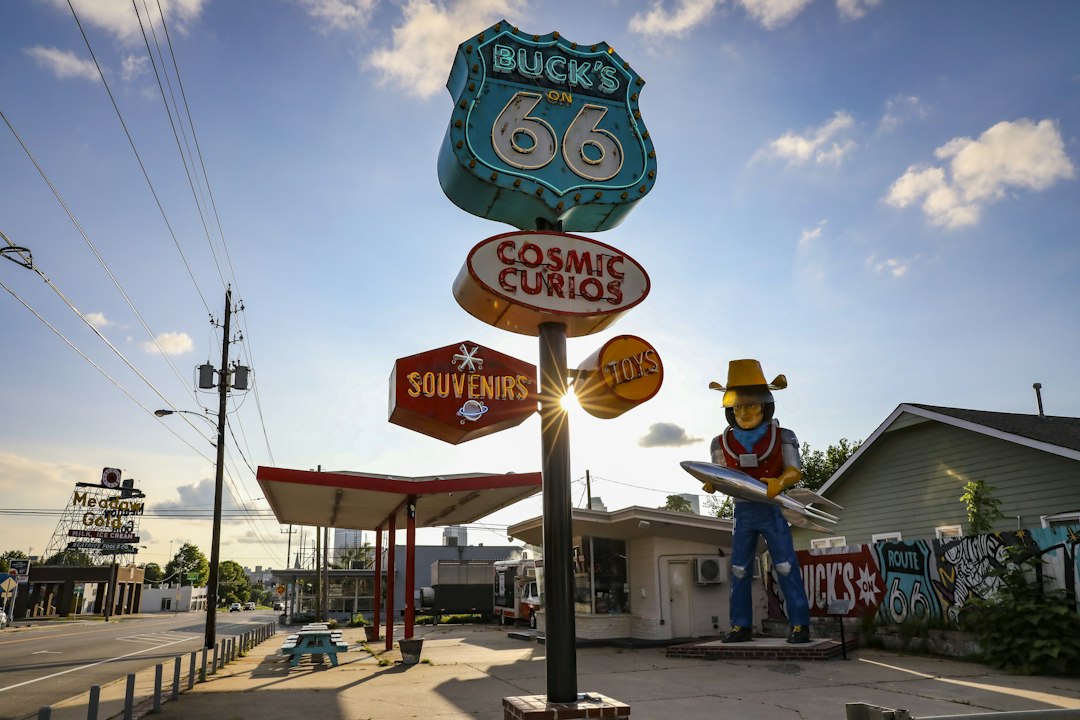
Why Oklahoma Holds the Longest Navigable Stretch of the Mother Road
If you’ve ever wondered why Oklahoma feels like the true heart of Route 66, it comes down to the numbers. The state holds 432 miles of the original alignment, which is the longest stretch you’ll find in any single state. While other regions dealt with mountains or complex terrain that forced them to build bypasses and modern highways, Oklahoma’s rolling prairies allowed for a much straighter, more direct path. Back in the early 1930s, the state highway department put federal relief labor to work, pouring concrete that was so durable it’s still standing today. It’s pretty wild to think that while other states were busy tearing up their history for the interstate system, these segments were just left to endure, largely because local economies here relied so heavily on the traffic the road brought in.
Think about it this way: 85 percent of that original 1926 path is still accessible to us today, a preservation rate you just won't find anywhere else along the Mother Road. Because the state was smart enough to classify these segments as Historic Route 66, they’ve been protected from the kind of industrial development that would have chopped the route into pieces. You can actually see this in the pavement; northeastern Oklahoma still features original aggregate mixes from before World War II. It’s basically a living laboratory for road builders. And if you’re into the history of how things were put together, you’ll find over 40 original concrete culverts and drainage structures that are still doing their job after all these decades.
When you’re driving through, you’ll notice things that are missing from other states, like the rare Pony Truss bridges that were part of the old Ozark Trail. There’s something special about crossing those, knowing they’ve survived when almost everything else was modernized. The density of original neon signs and old-school roadside architecture here is honestly unmatched, mostly because the state kept the route as a primary arterial road rather than shunting it aside. Near Arcadia, you can even drive a 30-mile stretch of the original pavement that feels exactly like it did in the 1940s. It’s not just a road; it’s a transition zone where the landscape shifts from humid eastern forests to the wide-open western plains, giving you a sensory shift you can’t get anywhere else on the trip.
Exploring the Iconic Historic Towns Along the Oklahoma Corridor
If you're planning to drive the Mother Road, you have to look past the major cities and really dig into the town-by-town experience, because that is where the soul of this journey actually lives. I always tell people that Oklahoma functions less like a transit corridor and more like a linear museum where the architecture tells the story of the 20th century. Take Miami, for example; you’ve got the Coleman Theatre, a 1929 Spanish Colonial Revival palace that was built specifically for the acoustics of the vaudeville era. It is a striking contrast to something like the Blue Whale in Catoosa, which feels like a total fever dream until you realize it was just a local zookeeper’s anniversary gift to his wife. When you stop at the Heart of Route 66 Auto Museum in Sapulpa to see the world’s tallest gas pump replica, you start to understand how these towns used scale to capture the attention of weary travelers.
Honestly, the way these towns have preserved their specific niche history is what makes the corridor feel so authentic compared to other cross-country routes. If you want to see how the road evolved, you could spend hours in the Oklahoma Route 66 Museum in Clinton, which is set up to simulate the sensory experience of driving through different decades of the 1900s. It’s a bit different from the National Route 66 Museum in Elk City, where they’ve actually built out full storefronts from the 1920s to the 1950s that feel like you’ve stepped onto a film set. Then you have spots like Stroud, where the Rock Café is literally built from sandstone salvaged during highway widening projects back in the late 1930s. There’s a tangible, physical weight to that kind of history that you just can't manufacture today.
But what really fascinates me is how these towns have managed to survive the shift from the old highway to the modern interstate system by leaning into their individual quirks. You’ve got the 90-foot concrete totem pole in Chelsea that has somehow shrugged off decades of brutal Oklahoma wind, standing as a testament to early engineering, while Tulsa’s downtown corridor stays defined by the high-density Art Deco buildings that were funded by the oil boom. Even the smaller stops have this way of anchoring the trip; seeing Lucille’s Service Station near Hydro, designed in that "cottage style" to look like a home, makes you realize how much effort went into making motorists feel comfortable during those long, grueling hauls. It’s a mix of big-city ambition and small-town charm that you won't find anywhere else, and I really think you'll find that the more time you spend in these individual pockets, the more the entire route starts to make sense.
A Visual Journey: Best Spots for Photography and Murals in Oklahoma
If you’re anything like me, you’re constantly looking for that one frame that captures the spirit of a place without it feeling like a stock photo. Oklahoma is basically a goldmine for this, but you have to know where to point your lens because the best visuals here are layered with a century of grit and genuine character. When you’re in Tulsa, you really have to hit the Arts District to see the Outsiders House mural; it’s a total pilgrimage site that somehow feels as raw as the 1983 film it celebrates. Then there’s the sheer contrast in Miami, where the murals documenting the Tar Creek disaster use these somber, muted tones that hit you differently than the bright, celebratory street art you’ll find elsewhere. It’s that kind of visual variety that makes the state such a compelling study for anyone with a camera.
Honestly, the way these towns integrate their history into public art is fascinating if you look at the technical side of things. In Vinita, for instance, they’ve specifically selected high-contrast pigments for their agricultural murals just to hold up against the brutal UV radiation we get out here on the Southern Plains. I’m also a huge fan of the ghost signage on the brick facade of the Guthrie opera house, where the original mineral-based paint has actually bonded with the clay over the last hundred years. It’s a perfect example of accidental preservation, and you can’t get that kind of texture with a modern digital filter. If you’re into forced perspective, the mural in Enid depicting the Cherokee Strip Land Run is another must-see, as it creates a genuine three-dimensional effect that looks incredible through a wide-angle lens.
And don’t even get me started on the night shots you can pull off in Lawton, where the murals use special reflective coatings that react to low light. If you’ve got a tripod and know how to manage a long exposure, you’ll get this distinct, eerie glow that makes the whole building look like it’s pulsing. For something a bit more organic, check out the living, seasonal murals in Muskogee’s Honor Heights Park; the floral arrangements there shift their color palettes every few weeks, so you’re never getting the same shot twice. It’s this blend of high-tech street art and old-school restoration in places like the historic train depot in Bristow that really grounds the experience. Just take your time with it, let the light move across the surfaces, and you’ll find that these walls have a lot more to say than just being background scenery for a quick post.
Immersive Americana: Unique Museums and Curiosities You Can’t Miss
When you move past the typical roadside attractions, Oklahoma reveals a layer of history that feels almost scientific in its preservation, and that’s what I love about digging into these local institutions. Think of the Woolaroc Museum near Bartlesville, where you aren’t just looking at artifacts; you’re standing in a 3,700-acre sanctuary where nearly 700 American bison still roam the Osage Hills, while inside, the collection of early 19th-century Colt firearms offers a masterclass in mechanical evolution. It’s a complete contrast to the Oklahoma Territorial Museum in Guthrie, where they’ve actually preserved the original land run deeds using ink analysis to ensure they survive the region’s high-alkaline soil. I find that kind of commitment to physical longevity pretty incredible, especially when you consider how many historical documents get lost to decay in less controlled environments.
If you’re a fan of high-stakes engineering, you really have to stop in Weatherford to see the Titan II rocket engine at the Stafford Air and Space Museum. Seeing a piece of hardware that actually powered intercontinental ballistic missiles—and knowing the exact flight-certified materials were stress-tested for the vacuum of space—brings a totally different weight to the history of the Cold War. Then there’s the sheer scale of the J.M. Davis Arms and Historical Museum in Claremore, which holds over 20,000 firearms categorized by their metallurgical composition. Watching the progression from matchlock mechanisms to modern semi-automatics through these specific forging techniques is the kind of deep-dive detail that makes the frontier era feel less like a movie set and more like a real, tangible reality.
But honestly, the most fascinating side of this is the preservation technology we’re seeing at places like the Gilcrease Museum in Tulsa. They maintain their Founding Father correspondence in vaults locked at a strict 68 degrees and 45 percent humidity to stop oxidation, while using specialized UV-filtering glass to protect 19th-century oil paintings from the harsh sunlight. It’s a similar technical rigor you see at the Museum of Osteology in Oklahoma City, where they’ve turned a massive collection of 450 vertebrate skulls into a digital, 3D-scanned library to avoid handling the actual bones. It’s wild to think that while you’re driving the open road, these facilities are fighting a constant, calculated battle against physics to keep these stories from fading away. Whether it’s that or the climate-controlled care for exotic species at Tiger Safari in Tuttle, you’ll start to see that Oklahoma isn’t just housing history—it’s actively engineering its survival for the next century.
Celebrating a Century: How Oklahoma Prepares for the Route 66 Centennial
It’s honestly wild to reflect on the fact that we’re officially hitting the century mark for the Mother Road, and Oklahoma isn’t just throwing a party—they’re treating this centennial like an engineering masterclass. If you were in Tulsa this June, you probably saw the sheer scale of the effort when over 3,500 classic cars synchronized for a record-breaking cruise, a logistical feat that required real-time traffic algorithms just to ensure the vibrations from those engines didn’t hit the harmonic frequencies of our historic bridges. It’s that kind of detail that defines how this state approaches its heritage. They aren’t just looking back; they’re using ground-penetrating radar to study the original 1920s concrete, mapping out exactly why those expansion joints have held up against our brutal summer heat for a hundred years.
Think about the technical side of the preservation here, because it’s honestly impressive. In places like Stroud, they’ve applied specialized hydrophobic silicate treatments to the sandstone at the Rock Café, which is a clever way to keep the structure from crumbling under the weight of our humid, unpredictable springs. Even the visuals are being handled with a scientist's eye, like those new photoluminescent pigments on the centennial murals that store solar energy all day to glow at night without needing a single watt of grid power. It’s a complete departure from the way other regions handle tourism, choosing instead to lean into high-fidelity data and material science to ensure these landmarks survive the next hundred years.
And if you’re a total gearhead or history buff, you’ll really appreciate the digital bridge they’ve built between the past and present. Researchers at the Stafford Air and Space Museum have used LiDAR mapping to create a virtual reality experience that simulates the exact suspension physics of a 1926 vehicle on the original terrain, letting you feel the road as it was when the concrete was still fresh. Plus, there’s a massive effort underway to digitize 15,000 original engineering blueprints, using tech to pull faded notations back into focus so we don't lose the "how-to" of early American road building. It really feels like the state is treating the entire 432-mile stretch as a living, breathing laboratory, and honestly, I think it’s the best way to honor a road that was built to connect us in the first place.
Beyond the Highway: Why Oklahoma Offers the Most Authentic Road Trip Experience
When you step off the main interstate and onto the original alignments of Route 66 in Oklahoma, you’re not just taking a scenic detour; you’re engaging with an authentic, engineered landscape that has managed to hold its own against a century of environmental stress. Here’s why I think this stretch feels so different: it’s essentially a 432-mile, open-air laboratory where the architecture and the very ground beneath your tires tell a story of survival. We’re talking about a corridor that crosses over 25 distinct geological zones, from the coal-rich strata in the northeast to those striking Permian-age red beds in the center of the state. It’s fascinating how the local geography actually shaped the road’s longevity, like in Sapulpa, where the unique clay composition in the soil acts as a natural dampener against the frost-heave cracking you’d see elsewhere.
Think about the sheer engineering resilience here, because it’s honestly impressive once you start looking closely. Those iconic Pony Truss bridges weren’t just built for aesthetics; they were designed with a low center of gravity to stand up to the high-velocity wind gusts that sweep across the plains. Even the original concrete, which uses crushed river gravel from local tributaries, shows a higher structural density than the standardized mixes forced on other states back in the day. It’s no surprise, then, that seismographic monitoring confirms this route follows a stable tectonic shelf, keeping these segments far more intact than roads built over more volatile ground. You can literally feel the difference in the stability of the ride when you’re cruising through those stretches that have survived since the 1930s.
But the authenticity really hits home when you notice how the human-made structures were built to work with the environment rather than fight it. Take the old service stations in places like Hydro, where the buildings were oriented specifically to maximize cross-ventilation, a clever workaround for the heat before air conditioning was a standard feature. Or look at the Rock Café in Stroud, where the porous sandstone walls act as a passive climate-control system, keeping things comfortable without relying on heavy machinery. Even the public art here is built to last; those murals use specialized, ozone-resistant binders and reflective pigments that seem to bond right to the brick. When you’re driving through, you’re seeing a version of the American road that wasn’t just built to be fast, but built to endure, and that’s exactly why these 432 miles feel so much more grounded than a modern highway.
Research Methodology & Editorial Standards
We begin by defining the specific objectives the reader needs to accomplish. Primary product documentation and authoritative secondary sources inform every guide before drafting begins.
Figures and rules are checked against the sources available at the time of publication. Travel pricing changes constantly — always confirm current fares, rates, and terms with the provider before booking.