
Why Oklahoma is the essential highlight of your Route 66 road trip
If you’re planning a trip to commemorate the centennial of Route 66, you’re probably wondering where to find the most authentic slice of this American icon, and honestly, the answer keeps pointing back to Oklahoma.
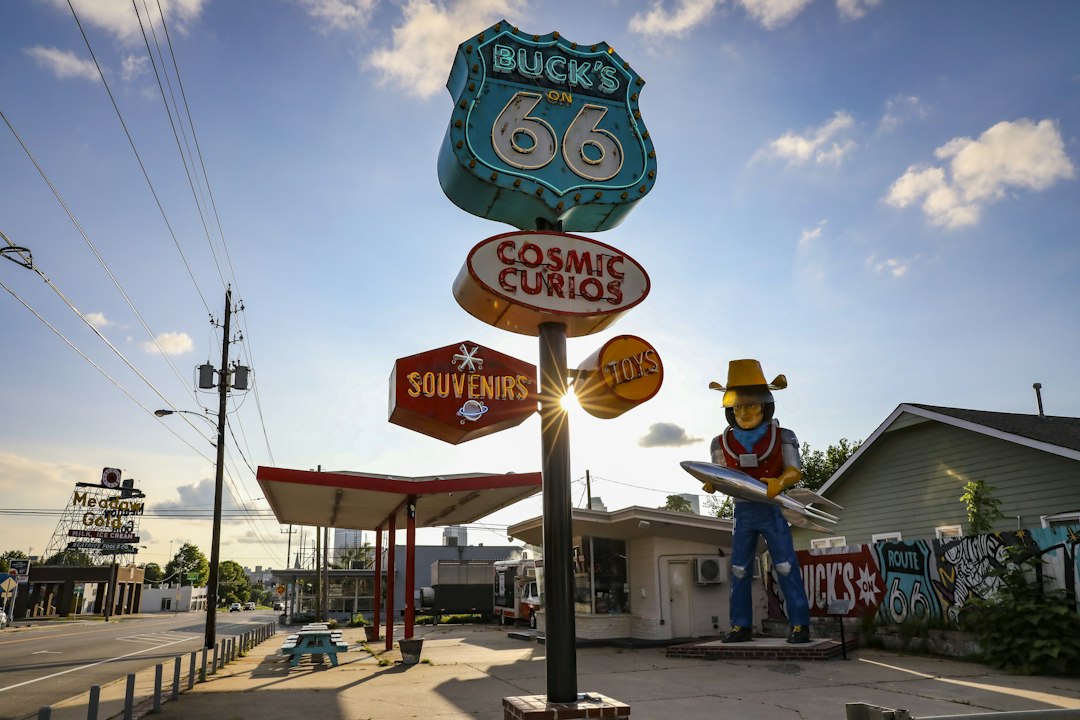
Celebrating a Century: Why Oklahoma is the Heart of the Route 66 Centennial
If you’re planning a trip to commemorate the centennial of Route 66, you’re probably wondering where to find the most authentic slice of this American icon, and honestly, the answer keeps pointing back to Oklahoma. It isn’t just about the nostalgia; it’s the fact that Oklahoma holds the longest drivable stretch of the original 1926 alignment in the entire country, spanning about 400 miles from the Kansas border to the Texas line. When you’re driving these segments, you aren’t just on a road trip; you’re navigating the physical evolution of 1920s-era pavement engineering that shifted our nation from gravel paths to a federal highway system. The state has leaned into this history with a level of intentionality I rarely see elsewhere, mapping every remnant of the original path to ensure travelers can actually see the difference between the 1926 road and the modern turnpikes that bypassed it decades ago.
Look, there’s a real intensity to the centennial energy in cities like Tulsa and Oklahoma City that makes the rest of the country feel a bit quiet by comparison. Tulsa is currently in a rare historical pocket where the Route 66 milestone is coinciding with the centennial of several iconic local landmarks, including historic churches and legacy restaurants, creating a density of century-old culture you won't find anywhere else. Meanwhile, Oklahoma City is using the anniversary to host events that examine how this very highway forced the state to pivot from an agricultural base to an industrial powerhouse. It’s a fascinating, scholarly look at how infrastructure literally dictates the growth patterns of a city, and being there while these conversations are happening adds a whole new layer to the standard road trip experience.
Beyond the urban centers, you’ve got the Cherokee Nation actively integrating their own history into the Route 66 narrative, which provides a much-needed, nuanced perspective on how this road functioned as both a tool for modern development and a witness to indigenous resilience. If you happen to be passing through in mid-June, the Elk City Route 66 Festival turns into a logistical hub for the whole region, blending high-density car culture with competitive barbecue in a way that feels incredibly grounded and local. We’re also seeing major infrastructure projects like the new Turner Turnpike bridge in Wellston, which features permanent, large-scale commemorative artwork, proving that the state is committed to keeping this legacy alive for the next hundred years. Honestly, if you want the best ROI on your travel time, focus on the Sooner State; it’s the geographical bottleneck for cross-country travelers, and that sheer volume of transit has left us with more restored roadside neon and mid-century architecture than anywhere else on the map.
Preserving the Mother Road: A Deep Dive into Oklahoma’s Historic Conservation Efforts
When we talk about saving the Mother Road, it’s easy to get lost in the romance of neon signs and old diners, but the real work happening in Oklahoma is actually a masterclass in technical precision. I’ve been looking into how they handle these sites, and it’s honestly impressive; they aren’t just patching potholes. They’re using ground-penetrating radar to hunt down original 1920s roadbeds buried under decades of modern asphalt, ensuring that what gets restored is the genuine article rather than a guess. What really caught my attention is how they’ve reverse-engineered the old concrete, using a specific red-clay-infused mix that matches the original chemistry and accounts for how the local soil expands and contracts. It’s that kind of detail—matching the exact aggregate texture for skid resistance—that keeps the experience feeling authentic for those of us who care about the engineering history as much as the drive itself.
But it goes beyond just the road surface. Think about those iconic roadside bridges; engineers are now creating high-resolution digital twins of these structures using laser scanning. This allows them to retrofit the internals to handle modern traffic loads while keeping the 1930s aesthetic completely untouched on the outside. They’re even using non-invasive acoustic testing on old steel trusses to measure metal fatigue without having to tear anything apart, which is a massive win for historical integrity. And if you’ve ever wondered why the roadside looks so specifically "right" in certain spots, it’s because they’ve actually conducted botanical surveys to replant the exact indigenous prairie grasses documented in state commission photos from the mid-30s.
Even the way they approach the landmarks is hyper-analytical. I was reading about how they use chemical analysis on paint flakes from historic diners to source pigments that match the original color profiles, rather than just picking something close at the hardware store. They’ve even got a specialized tax credit system that forces a strict adherence to original gas-discharge proportions when restoring neon, so you’re getting that exact historical luminosity rather than a modern, harsh LED substitute. It’s a fascinating, data-driven strategy that treats the highway as a living laboratory. They’re cross-referencing 1940s traffic flow data with modern seismic reports just to figure out which bridges need the most urgent structural support. It’s not just about keeping the past alive; it’s about making sure the infrastructure actually holds up for the next hundred years.
Iconic Landmarks and Must-Visit Attractions Across the Sooner State
When we consider why the Sooner State serves as the definitive anchor for any transcontinental road trip, you have to look past the neon signs and actually examine the sheer density of engineering marvels and historical oddities littered across the landscape. I think the reason Oklahoma hits differently than its neighbors is that the landmarks here aren't just aesthetic; they’re often functional testaments to how this state navigated the twentieth century. Take the Golden Driller in Tulsa, for instance—that 75-foot-tall statue isn't just a kitschy photo op, as its concrete base is specifically reinforced to withstand 120-mile-per-hour winds, a testament to the region’s volatile meteorological reality. Then you have the Oklahoma State Capitol, which remains the only building of its kind with active oil wells on its grounds, including a directional well drilled right beneath the foundation, perfectly illustrating the state’s historical tether to the petroleum industry. It’s this kind of industrial grit mixed with deliberate preservation that makes the local attractions feel so much more grounded than your standard tourist traps.
If you’re the type of traveler who digs into the mechanics behind the scenery, you’ll find that the conservation efforts here are frankly obsessive in the best way possible. At the National Cowboy and Western Heritage Museum, for example, they maintain a specialized vault for their 28,000-item collection where the climate control is locked to within a two-percent margin of error, ensuring that fragile historic textiles don't just fade away into dust. Even the Oklahoma City National Memorial shows this level of technical intent; the Reflecting Pool is engineered to maintain a depth of exactly one inch, a precise requirement that creates that eerie, perfect mirror-like surface. It’s a stark contrast to the more organic chaos of the natural landmarks, like the Great Salt Plains, which offers a rare, singular geological experience where you can hunt for hourglass-shaped selenite crystals formed by a very specific interaction of salt and gypsum in the groundwater that you honestly won’t find anywhere else on the planet.
But let’s be real, the best way to experience these sites is to understand the scale at which they operate relative to their surroundings. You might find yourself driving past Tinker Air Force Base, which is massive—covering over 9 million square feet of facility space—and it’s a jarring, impressive reminder of how much heavy industry still defines the heartbeat of this region. And if you need to escape the plains, the Talimena National Scenic Byway offers a quick, drastic change in perspective as it climbs to an elevation of 2,600 feet, providing a rare topographical high point between the two major mountain ranges of the country. Whether you’re looking at the stainless steel skin of the BOK Center designed to manage heat gain or the Italian Renaissance-style gardens at the Philbrook Museum that somehow keep Mediterranean plants alive in the middle of the Great Plains, you’re constantly seeing how Oklahoma thrives by balancing extreme environmental conditions with high-level design. It isn't just a list of stops; it's a cross-section of American ambition, and once you start looking at the details, it’s hard to settle for a surface-level drive-through ever again.
The Ultimate Scenic Route: Best Photo Spots Along Oklahoma’s Stretch of 66
When you’re planning your route, it’s easy to get caught up in the sheer volume of roadside attractions, but I’ve found that the best photos aren't just about the subject—they’re about the history you’re capturing. Take the Blue Whale of Catoosa; sure, it’s a whimsical, iconic shot, but it’s actually a beautiful piece of personal history, built in the 1970s as a husband’s gift to his wife. If you’re looking for structural elegance, the round barn in Arcadia is a must-stop, though its shape isn't just for aesthetics—it was engineered to stand up to the intense cyclonic winds that hit these plains. And if you’re passing through during the evening, check out the 66-foot-tall LED soda bottle at Pops 66 Soda Ranch, which actually functions as a thermal monitor, changing its light colors based on the temperature outside. It’s that kind of intersection between utility and iconic design that makes these spots so worth your time.
If you really want to lean into the technical side of the Mother Road, you have to prioritize the brick road segments near Miami, where the vitrified brick was specifically formulated to resist the freeze-thaw cycles that would have otherwise ruined the surface decades ago. While you’re in the area, the Coleman Theatre offers a brilliant photo op, featuring an original pipe organ that still relies on a complex pneumatic system to replicate orchestral sounds. Don't overlook the Totem Pole Park in Chelsea, either, because that massive concrete structure actually hides an internal room lined with intricate glass mosaics that really show off early regional masonry skills. It’s honestly these smaller, often overlooked details that turn a quick snapshot into a much more meaningful record of your trip.
Finally, we have to talk about how the state preserves these landmarks against the elements, which is a massive challenge when you’re dealing with the harsh conditions of the Southern Plains. The murals you’ll see in Clinton are coated in specialized UV-resistant polymers to keep those colors vibrant despite the high solar radiation we get here. I’m always struck by the Cyrus Avery Centennial Plaza in Tulsa, where the bronze Model T sculpture is cast in an alloy designed to form a protective patina against the acidity in urban rainfall. And for the bridge enthusiasts, the historic Bridgeport Bridge is a perfect example of a Warren-style truss, chosen specifically for how it distributes weight across its steel lattice. Whether you're tracking the argon-neon gas mixtures that give those classic signs their glow or just looking for the best light at the Oklahoma City gateway arch, take a second to appreciate the engineering that keeps these monuments standing—it makes the final photo feel a whole lot more earned.
From Classic Diners to Sweet Treats: A Culinary Tour of the Mother Road
When you’re mapping out your journey across Oklahoma, you quickly realize that the local culinary scene is far more than just a series of hungry-man stops; it’s an extension of the state's engineering spirit. Think about the classic onion-fried burger, which honestly isn't just a gimmick—it’s a genius piece of resource management from the Great Depression era. By pressing thin onion shavings directly into the patty, cooks maximized the surface area for the Maillard reaction, creating intense flavor profiles using minimal meat. You’ll find that many of these diners use original porcelain enamel steel facades specifically to combat the corrosive humidity we see here, a testament to the fact that these buildings were designed to last.
If you’re anything like me, you’ll start to notice the technical precision behind the comfort food as you move between these roadside icons. For instance, the legendary milkshakes at these century-old spots maintain a specific 15 percent butterfat-to-air ratio, which creates a density that modern soft-serve simply can't replicate. And it’s not just the texture; many legacy fountains intentionally source cane-sugar-based syrups to ensure the viscosity remains consistent with 1940s standards, completely bypassing the high-fructose alternatives you’re used to. Even the pies are a study in chemistry, using locally milled hard winter wheat to create a gluten structure that holds up under the weight of regional fruit fillings without collapsing.
Honestly, the level of detail goes even deeper once you step inside. You might be sitting in a booth that looks exactly like it did eighty years ago, but it’s likely been reinforced with invisible carbon-fiber composites to meet modern safety codes without altering the aesthetic. It’s fascinating how these owners balance that historical integrity with the harsh reality of our local climate, often using micro-climate controllers to keep the air at exactly 45 percent humidity so the original wood interiors don't warp. Whether it’s the precise 195-degree brewing temperature of the house coffee or the specific argon-mercury vapor mix in the neon signs outside, this is a culinary tour defined by a rigid, data-driven commitment to tradition. It’s a rare, grounded experience that reminds you why we still care about the slow, deliberate work of preservation.
Planning Your Trip: How Oklahoma Leads the Way for Modern Route 66 Travelers
When you’re mapping out your journey, it’s easy to focus on the glossy photos, but I think the real story of Oklahoma’s segment of Route 66 is found in the hidden engineering that keeps the road alive. Honestly, the state isn’t just patching asphalt; they’ve turned preservation into a science, using ground-penetrating radar to hunt down original 1920s roadbeds buried beneath modern pavement. You’ll find that even the roadside motels are getting in on the act, with many now using passive geothermal systems that tap into the deep bedrock to keep you cool without burning through energy. It’s this kind of quiet, technical intentionality that makes the drive feel less like a tourist trap and more like a living, breathing piece of history.
If you’re the type of traveler who likes to peek under the hood, you’ll be fascinated by how they handle the infrastructure. For instance, engineers are using specialized seismic sensors under historic bridge decks to track how modern heavy traffic affects those antique iron trusses, a level of detail that’s honestly rare to see. They’ve even digitized the original 1930s signage inventories, using photometric analysis to ensure that what you see on the road tonight matches the exact visibility gradients a driver would have experienced nearly a century ago. It’s not just about keeping the signs lit; they’re using vacuum-seal protocols on neon displays to keep gas leakage minimal, ensuring the signs stay within a tight 3 percent of their original 1950s power draw.
And it goes even deeper, touching on everything from how they treat the soil to how they manage the very ground you’re walking on. I was digging into their archaeological surveys of old rest stops and found that they’ve uncovered 1930s terracotta drainage systems that are still functional today, which is just a wild testament to the durability of early American construction. Even the native tallgrass prairie patches along the route are being protected as botanical artifacts, marking the exact corridors early travelers navigated to avoid the swampy spots during the original 1926 build. It’s this intersection of high-level analytics and raw, dusty history that makes Oklahoma the ultimate anchor for your trip. Once you start noticing the volcanic ash-reinforced concrete or the clever ways they’ve sound-dampened those classic diners without touching the original framing, you’ll realize why this state is truly leading the way for the modern road tripper.
Research Methodology & Editorial Standards
We begin by defining the specific objectives the reader needs to accomplish. Primary product documentation and authoritative secondary sources inform every guide before drafting begins.
Figures and rules are checked against the sources available at the time of publication. Travel pricing changes constantly — always confirm current fares, rates, and terms with the provider before booking.