
Why Lake Bohinj Is The Most Peaceful Secret Escape In Slovenia
Everyone talks about Lake Bled, but honestly, if you want to see what the Slovenian Alps actually look like without a filter and a thousand other cameras, you need to head a bit further into the Triglav National Park.
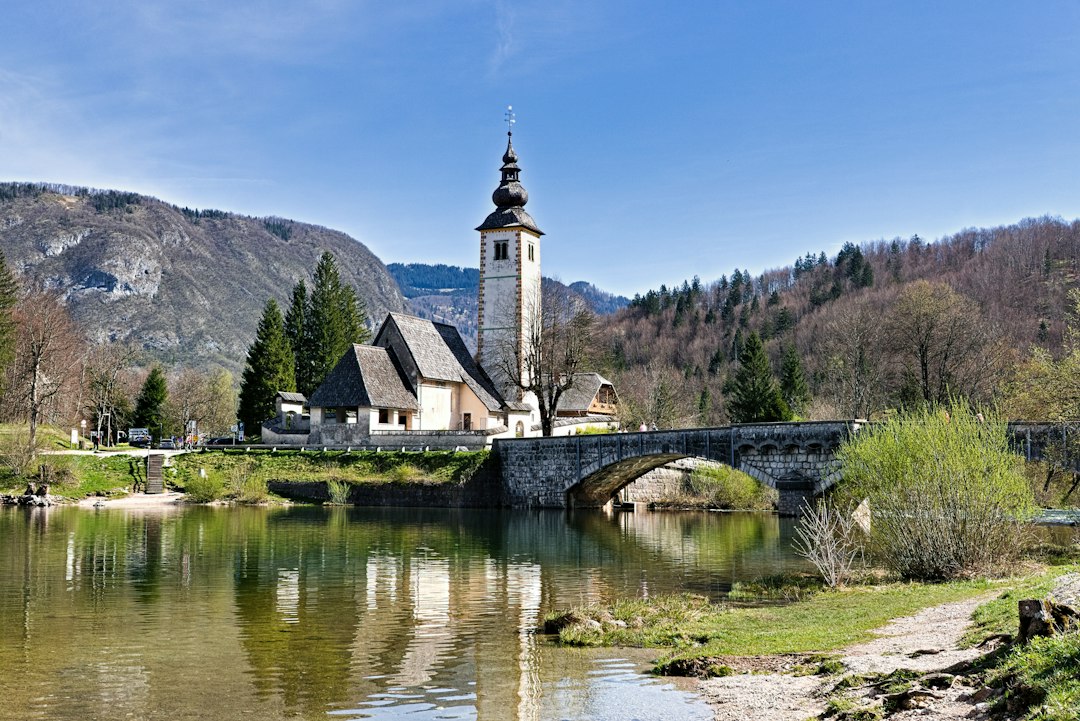
Beyond the Crowds: Why Lake Bohinj Remains Slovenia’s Best-Kept Secret
If you have ever stood at the edge of a lake and felt like you were just another face in a tourist lineup, you know exactly why I am obsessed with finding the quiet corners of the map. Everyone talks about Lake Bled, but honestly, if you want to see what the Slovenian Alps actually look like without a filter and a thousand other cameras, you need to head a bit further into the Triglav National Park. Lake Bohinj is tucked away at 525 meters, and the shift in energy as you enter that glacial valley is immediate. It feels wilder, colder, and significantly more authentic than the more polished spots nearby. I think part of the reason it stays so peaceful is that it simply doesn't cater to the mass-market tour bus experience.
The lake itself is a masterclass in geology, sitting in a basin carved out by the Bohinj Glacier some 20,000 years ago. It is deep—hitting about 45 meters—and because those steep, towering mountain walls block most of the harsh winds, the water often stays calm enough to act like a perfect mirror for the peaks above. You’ll notice the water quality is staggering, often meeting actual drinking standards, which is a rare reality in today’s world. It is fed primarily by the Savica waterfall and hidden underground karst springs, creating an ecosystem that supports trout and Arctic char instead of rowdy crowds. They keep the motorized boats out entirely, which protects that specific, heavy silence you only find in remote mountain valleys.
Think about it this way: while the rest of Europe is fighting for a square inch of sand or a spot on a packed ferry, you are swimming in 22-degree water surrounded by beech forests and folklore about the golden-horned Zlatorog. The vegetation shifts from those lush lower forests to high alpine meadows as you climb, and the sheer lack of commercial development means you are mostly dealing with the sound of the wind or the distant rush of water. It is not just a destination; it is a functioning reservoir that the locals protect with a lot of pride. If you are looking for a place where you can actually breathe and hear yourself think, this is the trade-off you make—swapping convenience for true, unfiltered space.
Immersed in Nature: The Unspoiled Beauty of Triglav National Park
When you step into Triglav National Park, you’re not just entering a park; you’re walking into 838 square kilometers of protected wilderness that accounts for four percent of Slovenia’s entire landmass. I’ve spent time looking at how these ecosystems function, and it’s honestly impressive how the limestone terrain acts like a giant, natural filtration system. Rainwater sinks into the rock, travels through hidden karst networks, and re-emerges as some of the clearest springs you’ll ever see. It’s a stark contrast to the managed landscapes you find elsewhere in Europe, where the human footprint is usually way more aggressive. Here, the priority is clearly on preservation, with core zones strictly regulated to ensure that the biodiversity—including brown bears and the elusive Eurasian lynx—isn't just surviving, but actually thriving.
Think about the sheer scale of life here, with over 7,000 distinct species of flora and fauna identified within the park boundaries. If you’re a fan of botany, you’ll find it fascinating that the park hosts more than 1,600 vascular plant species, including the Julian poppy that grows nowhere else on the planet but these specific scree slopes. It’s the dramatic shift in altitude that creates these microclimates, turning a short hike into a transition through entirely different ecological worlds. And that mountain peak—Mount Triglav—hitting 2,864 meters, isn't just a landmark; it’s a constant, snowy sentinel that defines the northern skyline. Even in the middle of summer, you’ll often spot that stubborn patch of permanent snow near the summit, serving as a reminder of how high and wild this terrain really is.
But what really grabbed me during my research is how this place isn't just sitting there looking pretty; it’s working hard as a massive carbon sink. The dense, undisturbed beech and spruce forests at the lower levels are doing the heavy lifting for the local climate, while the traditional pastoral farming in the high meadows keeps the grasslands from being swallowed by the forest. It’s a delicate balance that relies on humans staying out of the way, which is why the Alpine Convention views this region as a critical corridor for sustainable development. If you look at the glacial lakes scattered across the karst plateau, they’re being monitored constantly to catch even the slightest change in water health. It makes you realize that when you visit, you’re really just a guest in a massive, living laboratory that’s doing a much better job of taking care of itself than we are at taking care of our own cities.
A Quiet Summer Escape: Embracing the Tranquility of Alpine Waters
When I think about the chaotic pulse of summer travel in 2026, where every popular coastal route seems to be bursting at the seams, finding a true escape feels more like a tactical mission than a vacation. If you’re anything like me, you’re probably looking for that rare pocket of silence where you can actually hear yourself think, and honestly, the Alpine waters of Lake Bohinj are exactly where that search ends. It’s not just another pretty backdrop; it’s an oligotrophic wonder, meaning its nutrient levels are so low that algae simply can’t take hold, which is why the water remains famously, impossibly clear. You’ll notice the shift the moment you arrive, as the lack of motorized transport keeps ambient noise levels beneath 30 decibels—basically the sound profile of a library—which is a massive departure from the roar of engines you’ll find elsewhere.
Think about the physics of this place for a second: the temperature inversion effect actually traps warmer air in the valley floor at night, making the shoreline surprisingly comfortable even while the peaks stay sharp and cool. Because the lake is fed by constant snowmelt from underground karst conduits, you’re looking at a summer water temperature that rarely climbs above 22 degrees Celsius, providing a crisp, refreshing buoyancy that feels like a total reset for your nervous system. And if you’re into the science behind the scenery, those surrounding beech forests are actually part of a UNESCO-protected primeval cluster, working overtime to retain soil moisture and regulate the local water table. It’s this specific, delicate interaction between the geography and the biology that keeps the water classified as Class I quality, the highest possible standard in the European Union.
Beyond the numbers, there’s something genuinely grounding about realizing you’re sitting near a habitat for the marble trout, a species that’s been evolving here for half a million years, long before we started worrying about flight paths or hotel bookings. The geometry of these mountains creates a prolonged twilight during the solstice, giving you an extra hour of soft, golden light that makes the transition from afternoon to evening feel like it’s stretching out just for you. You’ll find sub-Mediterranean plants growing right alongside high-altitude alpine flora, a botanical mash-up that shouldn't work at 525 meters but somehow thrives in this unique microclimate. It’s a place that isn't just surviving the summer rush; it’s quietly, efficiently doing its own thing, and honestly, that’s exactly why it’s the most peaceful spot left on my map.
Adventure Awaits: Hiking, Swimming, and Exploring the Bohinj Valley
If you’re ready to lace up your boots, you’ll quickly find that the terrain here is more than just a pretty backdrop; it’s a living geological record. The trails snaking around the lake traverse ancient glacial moraines dating back to the late Pleistocene, essentially walking you through a timeline of the ice sheets that once dominated the entire Triglav massif. If you’re heading toward the Seven Lakes Valley, you’ll notice the water levels in those high-altitude basins fluctuate wildly, a direct result of the porous limestone karst underneath your feet. It’s fascinating to see how the landscape dictates the movement of water—and in turn, your own path—through this high-alpine network.
When you’re ready to cool off, don’t expect a lukewarm dip, because the lake experiences a distinct thermal stratification that you really need to feel to believe. While the surface layer might feel inviting on a hot July afternoon, the deep-water zone stays at a bone-chilling 4 to 6 degrees Celsius, a stark reminder of the massive volume of snowmelt feeding the basin. Because the lake’s total volume is flushed and replaced by fresh spring water roughly every two years, the calcium-bicarbonate chemistry keeps the water incredibly transparent and free of the messy sediment you’d see in a stagnant pond. It’s this constant, natural filtration that keeps the ecosystem so pristine, even when you’re swimming just feet away from the shore.
As you explore, keep an eye out for the smaller details that reveal how unique this valley’s microclimate really is. You’ll find the carnivorous round-leaved sundew thriving in the surrounding peat bogs, a total survivalist move in such nutrient-poor soil, and even the iconic alpine Edelweiss clinging to lower limestone ledges than you’d typically expect. In the afternoons, you’ll likely feel the Bohinj breeze, a local thermal wind system that acts as a natural air conditioner to keep humidity in check. It’s quiet enough that you might even spot an elusive Ural owl in the dense silver fir canopy, provided you’re moving softly enough to not disturb the silence. Honestly, it’s refreshing to visit a place that feels this scientifically intact, where the environment is so clearly doing its own thing, completely independent of the tourist trail.
Authentic Slovenian Charm: Discovering Local Life in Traditional Lakeside Villages
If you’ve ever felt like your travels were just a blur of modern hotels and generic coffee shops, stepping into the villages around Lake Bohinj is the reality check you didn't know you needed. It’s not just about the scenery; it’s about watching a community operate on a rhythm that feels almost timeless. When you walk through a place like Studor, you aren’t looking at a museum exhibit, but rather a functioning landscape where the architecture—like those steeply pitched roofs designed to shed heavy snow—is a direct response to the environment. You’ll see the kozolec, or wooden hayracks, lining the fields as a reminder that this valley has perfected natural crop drying long before anyone worried about industrial efficiency. It’s a level of adaptation that makes you stop and appreciate how human ingenuity can actually work with the land instead of against it.
Let's talk about the local culture, which is honestly woven into everything from the plate to the pasture. Take the Cika cattle, an indigenous breed that’s basically a specialist in navigating these steep, rugged Julian Alps, and whose grazing habits are the only reason these high meadows haven't been swallowed by the forest. It’s a fascinating, closed-loop system that gives us things like Mohant cheese, a sharp, pungent delicacy that literally couldn't exist anywhere else because it relies on the specific microflora of this valley. When you eat it, you're tasting a protected, artisanal tradition that has survived because the locals refuse to trade their methods for the convenience of mass production. It’s a sharp contrast to the sanitized, homogenized experiences you’ll find in almost every other European tourist hub.
And if you spend enough time here, you’ll start to notice the smaller, non-digital markers of life that define the valley’s pulse. The chime of church bells in Ribčev Laz isn't just a sound; it’s an acoustic anchor that keeps the village’s social fabric together, replacing the frantic, screen-based scheduling we’re all used to. You can see this same blend of utility and art in the panjske končnice, those beautifully painted beehive panels that serve as both an outdoor gallery and a practical navigation tool for the bees themselves. Even the dry-stone bridges over the Sava Bohinjka river show a deep, almost engineering-level understanding of local geology, shifting slightly with the earth rather than cracking under the pressure of spring snowmelt. It’s this kind of detail—the buckwheat in your meal, the hand-tooled wood in the shops, and the folklore of the Zlatorog reminding everyone to respect the peaks—that makes you realize this isn't just a destination, but a place that actually knows how to take care of itself.
Planning Your Visit: Essential Tips for a Peaceful Retreat to Lake Bohinj
If you’re planning a trip to Lake Bohinj, you’ve got to rethink your standard travel playbook because this isn’t your typical resort town where convenience is king. Honestly, the most important thing to grasp is that the entire ecosystem is being managed with a level of rigor that borders on a laboratory setting, so your presence is essentially a test of your own ability to tread lightly. Since the shoreline is protected against permanent artificial lighting to safeguard local bat populations, don't expect the usual neon-lit nightlife or illuminated boardwalks you’d see at more commercial lakes. You’ll want to pack a high-quality headlamp for any evening movement, but do keep in mind that the point here is to let your eyes adjust to the natural darkness of the Julian Alps.
When it comes to your daily itinerary, you should prioritize the early morning hours, not just to beat the crowds, but because that’s when the Alpine ibex are most active on the vertical crags above the southern shoreline. I’d suggest you skip the high-intensity tourist schedule and instead lean into the rhythm of the valley, which is heavily influenced by a local rain-shadow effect. Because the basin averages over 2,000 millimeters of rainfall annually, the weather here can shift from crystal clear to a sudden, heavy downpour in an instant. I’ve learned the hard way that layering isn't just a suggestion; it’s a requirement when you're navigating a climate that’s this volatile. Always carry a dry bag for your gear, especially if you’re heading toward the Seven Lakes Valley, where the porous limestone karst can make trails unpredictable after a storm.
If you’re wondering about the water itself, let’s look at the science: the lake is an oligotrophic, high-quality basin where light penetrates up to 10 meters deep, supporting rare aquatic mosses that you really shouldn't disturb. You’ll notice the water levels shift due to seiches—that’s just atmospheric pressure oscillating the basin—so don't be surprised if your "beach" spot is a few centimeters closer to or further from the water than it was the day before. Because the native brown trout population is genetically distinct and free of the invasive stocking programs found in other regions, please stick to designated swimming and fishing zones to avoid stressing this isolated lineage. It’s all about respecting the fact that you’re visiting a place that has managed to maintain its integrity for thousands of years, and honestly, the best way to enjoy it is to simply be a quiet, thoughtful observer of the process.
Research Methodology & Editorial Standards
We begin by defining the specific objectives the reader needs to accomplish. Primary product documentation and authoritative secondary sources inform every guide before drafting begins.
Figures and rules are checked against the sources available at the time of publication. Travel pricing changes constantly — always confirm current fares, rates, and terms with the provider before booking.