
Why International Flight Disruptions Could Impact Your Next Trip to Major Cities
You might think of airport security as a static, behind-the-scenes part of the journey, but the reality is that the presence of Customs and Border Protection officers at major hubs is now a volatile pressure point in federal politics.
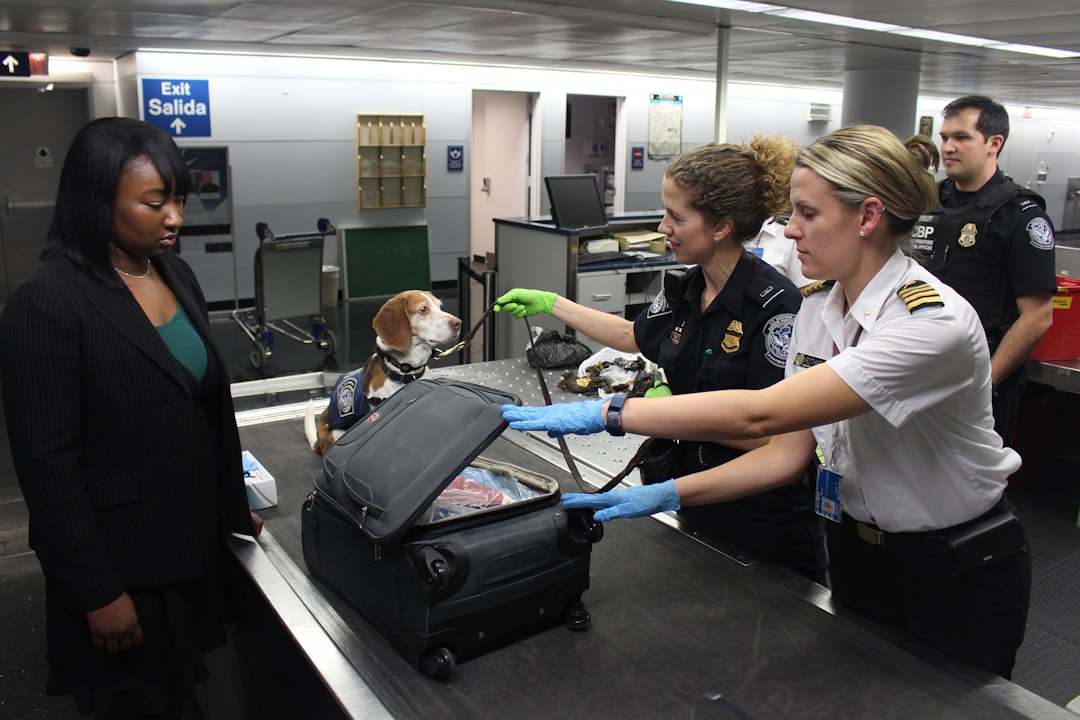
The Intersection of Immigration Policy and International Air Travel
Let’s take a step back and look at how immigration policy is quietly becoming one of the biggest risks to your international travel plans. You might think of airport security as a static, behind-the-scenes part of the journey, but the reality is that the presence of Customs and Border Protection officers at major hubs is now a volatile pressure point in federal politics. When the Department of Homeland Security threatens to pull those officers from airports in sanctuary cities, they aren't just making a policy point—they’re threatening a total shutdown of international arrivals at those locations. Think about it: without these agents, there is no legal framework to process incoming passengers, and the entire system effectively grinds to a halt. It’s a single point of failure that the airline industry is rightfully worried about, with major carriers warning that a mass removal of staff could lead to systemic paralysis.
We’re seeing this tension play out in ways that reach far beyond political headlines. For instance, federal labor unions have already flagged that ICE agents simply aren't trained or certified to step in and fill the gap left by TSA personnel, meaning there’s no easy backup plan if these standoffs escalate. This creates an environment of deep uncertainty for you as a traveler, especially with major events like the 2026 World Cup on the horizon. We already know the government can be flexible when it suits them—like waiving visa bond requirements for soccer fans—but that same agility can work against you when airports become bargaining chips in federal litigation. It’s a strange, precarious intersection where your ticket home or abroad is tied to local and national power struggles that feel a world away from the boarding gate.
And honestly, there’s a whole other layer here that we don't often talk about: the shift toward private sector involvement in enforcement. With major political donors securing billions in contracts for detention and deportation logistics, the resources and attention of federal agencies are being pulled in new, complex directions. We’ve seen private charter airlines come under intense fire from activists during peak travel seasons because they’re caught in the middle of these government-mandated deportation flights. When you add in the logistical strain of these contracts on top of the already fragile staffing levels at airports, it’s easy to see why the industry is sounding the alarm. My advice? Keep a close eye on the news in the cities you’re transiting through, because when federal and local policies collide, the first place you’ll feel the impact is in your flight schedule.
Understanding the Threat to Customs Processing in Sanctuary Cities
Let’s take a look at why the threat of pulling Customs and Border Protection officers from sanctuary city airports is so much more than just a political headline. The reality is that the legal framework governing international arrivals relies on a rigid mandate: if there isn't a physical federal officer there to clear you, the airport effectively loses its status as a legal port of entry. It’s an absolute binary switch. If the agents are gone, the gates are closed to international traffic, period. That means your flight can’t legally land, and the airline has no choice but to divert, leaving you stranded in a city you didn't plan to visit.
Think about the sheer logistics of this for a second. We aren't just talking about a minor delay at the baggage claim; we’re talking about a complete collapse of an airport’s ability to function as an international gateway. Even if an airport tried to use local law enforcement to fill the void, those officers simply don't have the legal standing or access to federal biometric databases to verify visas or process customs declarations. The technology, like those Global Entry kiosks we all rely on, is hard-coded to require a human officer to sign off on your entry. Without that human in the loop, the entire system is effectively dead in the water.
And here’s the part that really keeps industry analysts up at night: the unpredictability of it all. Federal statutes don't actually require the government to give any advance notice before reclassifying an airport’s status, which leaves airlines with zero lead time to react. If this happens mid-flight, you’re looking at a logistical nightmare where thousands of passengers are suddenly grounded because their destination port no longer holds the legal authority to let them off the plane. Even a short 48-hour shutdown would trigger a ripple effect of backlogs and crew rest issues that could take weeks to clear.
Honestly, the risk has become so tangible that the international aviation insurance industry is now starting to flag political interference as a specific, costly risk factor for carriers. It’s a strange, high-stakes game of chicken where your travel plans are essentially being used as a bargaining chip in a federal power struggle. When you look at the economics, it’s actually cheaper for the government to shutter a port than it is to keep it running, which creates a really dangerous incentive to use these closures as a low-cost, high-impact tool for leverage. If you’re planning a trip to a major hub, it’s worth keeping a sharp eye on these policy battles, because the line between a routine landing and a diverted flight is thinner than we’d like to admit.
How Political Feuds Between Local and Federal Authorities Disrupt Flight Operations
Let’s pause for a moment and really look at what happens when local policy clashes with federal authority at the airport, because it’s a lot messier than most people realize. When the federal government and city officials get into a standoff, they aren't just trading barbs in the press; they’re turning our international gateways into bargaining chips. The hard truth is that federal law requires a physical customs officer to be present for an airport to legally function as an international port of entry. If those officers are pulled or unavailable, the gates don't just get crowded—they effectively close, and your flight simply can't land. It’s a binary switch that leaves pilots and airlines with almost no room to maneuver, often forcing mid-flight diversions that turn a routine trip into a logistical nightmare.
And here’s the kicker: don’t think for a second that local police can step in to fill that void if things go south. They don’t have the legal standing or the necessary access to federal biometric databases to process you or your fellow travelers. The entire security infrastructure, including those automated Global Entry kiosks we all love, is hard-coded to require a human agent’s digital signature. Without that specific federal login, the technology is just a fancy, locked door, and there is no backup protocol to bypass it. It’s a single point of failure that keeps industry analysts up at night, especially since there’s no requirement for the government to provide advance notice before essentially shutting down an airport’s international status.
It’s honestly gotten to the point where international aviation insurers are now flagging political interference as a major risk factor, which is just a professional way of saying your travel insurance might get more expensive or harder to justify. Even a short forty-eight-hour freeze can trigger a ripple effect that messes up flight schedules for weeks because of how tightly crew rest and aircraft rotations are synced. We’re seeing a real, perverse incentive here where it’s cheaper for federal agencies to shutter a port than to keep it fully staffed during a dispute. If you’re planning a trip to a major city, keep an eye on the local political climate, because when these worlds collide, your boarding pass is usually the first thing that gets caught in the crossfire.
Global Geopolitical Tensions: The Broader Impact of Middle East Conflicts on Travel
Let’s talk about why the situation in the Middle East is fundamentally changing the way you book your next international trip. It isn't just about the news cycles; we’re seeing a direct, mechanical impact on aviation that hits your wallet and your schedule. Because airlines are now avoiding restricted airspace, they’re forced to fly much longer, circuitous routes that require massive increases in fuel reserves—sometimes up to 15 percent more per flight. You’re paying for that extra weight in higher fuel surcharges, and you’re feeling the strain in the form of more frequent last-minute cancellations. It’s a messy reality where the volatility of regional oil production creates a direct, painful link between geopolitical hostilities and the price of your plane ticket.
Think about the way this is shifting the map for travelers. We’re seeing a massive, measurable pivot in where people are choosing to go, with destinations like New Zealand now seeing a 22 percent surge in arrivals as people actively seek out stability. It’s not just a preference; it’s a necessity, because insurance premiums for carriers operating near these high-tension zones have jumped by nearly 40 percent. Those costs don't just vanish—they get passed straight down to you. Meanwhile, the air cargo industry is scrambling to move high-value goods from sea to air to avoid maritime blockades, which effectively eats into the available cargo space on your passenger flight and tightens the entire market.
And honestly, the operational side of this is even more frustrating when you’re mid-air or trying to connect. Air traffic control systems across the Mediterranean are hitting a breaking point, with sector congestion up 30 percent as everyone tries to navigate the same narrowed corridors. It’s creating a systemic bottleneck that ruins flight connectivity, and when you add in the fact that some pilots are reporting navigation interference that forces them to rely on older, legacy systems, the margin for error is shrinking. If you’re planning a big trip, my advice is to look at your route as a high-stakes logistical chain rather than just a simple flight. When global tensions flare, the first thing to break is the efficiency of our international transit, and you really need to be prepared for the ripple effects that follow.
Navigating Flight Cancellations and Schedule Changes Amid Regulatory Uncertainty
Let’s be real for a second: planning an international trip these days feels less like booking a vacation and more like trying to solve a high-stakes puzzle with pieces that keep changing shape. You’ve probably noticed that flight schedules aren't just shifting; they’re under a level of regulatory pressure we haven't seen in years. Between record-high jet fuel costs forcing emergency consolidation in the UK and European airspace, and sudden, sweeping route adjustments across the Middle East, the traditional reliability of your flight itinerary is fading. It’s not just you feeling this, either; airlines are scrambling to keep up as they navigate everything from Mediterranean air traffic bottlenecks to the logistical nightmare of carrying 15 percent more fuel just to bypass restricted zones.
When you look at the data, it’s clear that we’re in a period of extreme volatility where even a 48-hour window of stability is no longer guaranteed. Carriers like Etihad and Emirates are rolling out massive ticket waiver programs, not just as a perk, but as a survival mechanism to keep you from jumping ship when your flight inevitably gets flagged or rerouted. Think about how the cargo industry is eating into your passenger belly-hold space to bypass maritime blockades, or how air traffic control congestion is surging by 30 percent in key corridors. These aren't just minor inconveniences; they are systemic shifts that turn a simple connection into a potential hours-long delay.
If you’re wondering how to handle this, my best advice is to stop viewing your ticket as a static promise and start treating it as a fluid, high-stakes logistical arrangement. When major airlines are forced to switch to legacy navigation systems because of interference, or when an entire region’s flight path is redrawn overnight, the old rules of thumb for travel just don't apply anymore. Keep an incredibly close watch on the specific transit hubs you’re flying through, because in this current climate, the difference between a smooth landing and a sudden, mid-flight diversion often comes down to policy shifts that happen while you’re already in the air. We’re all learning to be more agile, but honestly, keeping your itinerary lean and your expectations flexible is the only way to stay ahead of the chaos.
Essential Tips for Protecting Your International Itinerary During Times of Policy Flux

Let’s be honest: when you’re booking a trip, you’re looking for a seamless experience, but in today's climate, your itinerary is essentially a living, breathing document that’s vulnerable to shifts you might never see coming. I think the most critical thing you can do is start looking at your flight path with the same scrutiny as a dispatcher, especially since modern flight planning software now updates fuel burn calculations in real-time, sometimes shifting by 12 percent the moment airspace closes. It’s wild to think that a simple Notice to Air Missions can appear with only 15 minutes of lead time, giving your pilot almost zero room to adjust. And here is where it gets really technical: if that reroute adds just a few hundred miles, your aircraft might hit its strict weight and balance limit, which could legally force the airline to offload passenger luggage just to stay within safety margins.
Think about the tech behind your entry into a country, too, because it’s surprisingly fragile. Most digital customs systems operate on a fail-secure mechanism, meaning if the network handshake between the airport and federal servers hits even a minor snag, the system defaults to a hard lockout, effectively shutting down processing. It’s not just a software glitch; it’s a hard stop that can leave you stranded on the tarmac. You should also keep in mind that your booking engine isn't showing you the "dynamic rerouting probability" of your flight, even though some routes are statistically more likely to be disrupted based on their proximity to geopolitical hotspots. I’d suggest checking for these risk factors before you hit the buy button, as your choice of hub directly influences your exposure to these kinds of unpredictable shutdowns.
Finally, you need to understand that when the system breaks, it doesn't break equally for everyone. Most major carriers have moved toward hub-and-spoke recovery protocols that prioritize premium passengers during mass disruptions, which can easily leave economy travelers stuck in rebooking queues for 72 hours or more. If you’re traveling, look into whether your specific route relies on high-latitude transit zones, as those are prone to signal degradation from solar activity, which can force pilots to rely on older navigation methods that slow down the whole flow of traffic. Honestly, the best defense is to carry everything you absolutely need in your carry-on, because when a 500-mile detour triggers a weight-limit issue, your checked bag is usually the first thing the airline leaves behind to keep the plane in the air.
Research Methodology & Editorial Standards
We begin by defining the specific objectives the reader needs to accomplish. Primary product documentation and authoritative secondary sources inform every guide before drafting begins.
Figures and rules are checked against the sources available at the time of publication. Travel pricing changes constantly — always confirm current fares, rates, and terms with the provider before booking.