
Why Downtown Los Angeles Is The Ultimate Destination For Your Next Urban Getaway
When I walk through the streets of Downtown Los Angeles, I’m constantly struck by how these buildings feel more like time capsules than simple places to crash for the night.

A Renaissance of Style: Exploring DTLA’s Trendiest Boutique Hotels
When I walk through the streets of Downtown Los Angeles, I’m constantly struck by how these buildings feel more like time capsules than simple places to crash for the night. You look at the Freehand, which sits in the 1924 Commercial Exchange Building, and it’s incredible that the terra cotta facade survived the seismic retrofitting required for its 2017 rebirth. It’s a similar story over at the Hoxton, where they kept the 1892 Railway Building’s deep-set windows—a clever bit of pre-AC engineering designed to keep the heat out. And honestly, those hand-poured encaustic tiles inside are a world away from the mass-produced flooring you see in most modern hotels. It feels like someone actually cared about the craft.
If you’re deciding where to stay, it helps to realize that these hotels are really competing on how much history they can pack into a guest experience. The Proper Hotel is a perfect example, taking the old California Club and splashing over 100 types of custom vintage tiles across the space to give you that authentic 1920s industrial vibe. Compare that to the Ace Hotel, which owns the legendary United Artists Theatre. You aren't just getting a room; you’re in a building designed by silent film stars, with a ceiling so packed with mirrors it still creates this wild celestial effect. Those acoustics are still better than most venues built today, which is kind of wild if you think about it.
Then you have the Nomad, which occupies the old Bank of Italy building that was once the tallest structure in the city back in 1922. The gold-leaf work on that lobby ceiling was restored with old-school techniques that would be way too expensive for any developer to attempt today. It’s a bit of a flex, but it works. Even the rooftop pool at the Proper is a trip when you realize you’re swimming where elite club members used to play basketball. They had to reinforce the whole thing to hold the weight of the water without ruining those original ceiling heights, and the result is this seamless indoor-outdoor space that feels totally unique. It’s not just about a bed and a shower; it’s about choosing which piece of LA history you want to inhabit for a few days.
Culinary Landmarks: Where to Experience the Best of Downtown’s Dining Scene
Let’s be honest, when you’re planning a trip to a city as sprawling as Los Angeles, it’s easy to get overwhelmed by the sheer number of hyped-up spots. But Downtown really hits differently because you aren’t just eating; you’re effectively participating in a living history lesson. Take Grand Central Market, which has been going strong since 1917 inside the city's first steel-reinforced building—it’s essentially the bedrock of the local scene. Or consider Philippe the Original, where they’re still keeping the old-school sawdust floors alive while serving up the French Dip they claim to have invented back in 1908. It’s that kind of continuity that makes these landmarks feel more authentic than any polished, new-build restaurant ever could.
And if you’re looking for something that leans into the weird and wonderful, Clifton’s Republic is a total trip, having functioned as an escape for folks since 1935 with an interior that’s still styled like a literal redwood forest. You’ve also got these incredible adaptive reuse projects in the Arts District, where former industrial bakeries have been converted into dining halls that use those original, massive steel-frame windows to pull in natural light in a way architects today just can’t replicate. Even the masonry in the old garment district warehouses is doing work, with century-old brick acting as a thermal mass that regulates the temperature way more efficiently than the standard concrete you see elsewhere. It’s a fascinating, low-tech approach to comfort that you can actually feel while you’re tucking into a meal.
Then there’s the sheer scale of the architecture, like the Bradbury Building or the Biltmore, where you’re dining under hand-painted frescoes by Giovanni Smeraldi, the same guy who worked on the Vatican. It’s pretty wild to think about how these spaces were engineered to function—using light wells and natural ventilation—long before we became so dependent on HVAC systems. Some of the most interesting spots are even tucked into the old Prohibition-era tunnels, where the subterranean climate does the heavy lifting for wine storage without burning through electricity. So, when you’re picking where to eat, my advice is to look for the places that haven't scrubbed away their past, because that history is usually the best ingredient on the menu.
Culture and Architecture: Navigating the Historic Core and Modern Icons
When you walk through the heart of Los Angeles, you’re essentially moving through layers of engineering history where the old and the new aren’t just neighbors, but active participants in the city’s climate control. Take the Bradbury Building, for instance; it’s fascinating because it skips the typical steel frame, relying instead on load-bearing brick and an open iron-cage elevator that acts like a massive convection chimney to pull air through the space. It’s a stark contrast to modern marvels like the Caltrans District 7 Headquarters, which uses a high-tech facade of computer-controlled metal louvers to track the sun and keep the building cool without constant AC. You can really feel the difference between these passive, low-tech methods and today’s automated precision. It’s worth noting that even the historic Los Angeles Public Library uses its stunning rotunda mural not just for art, but as an integrated lighting source for the reading rooms below.
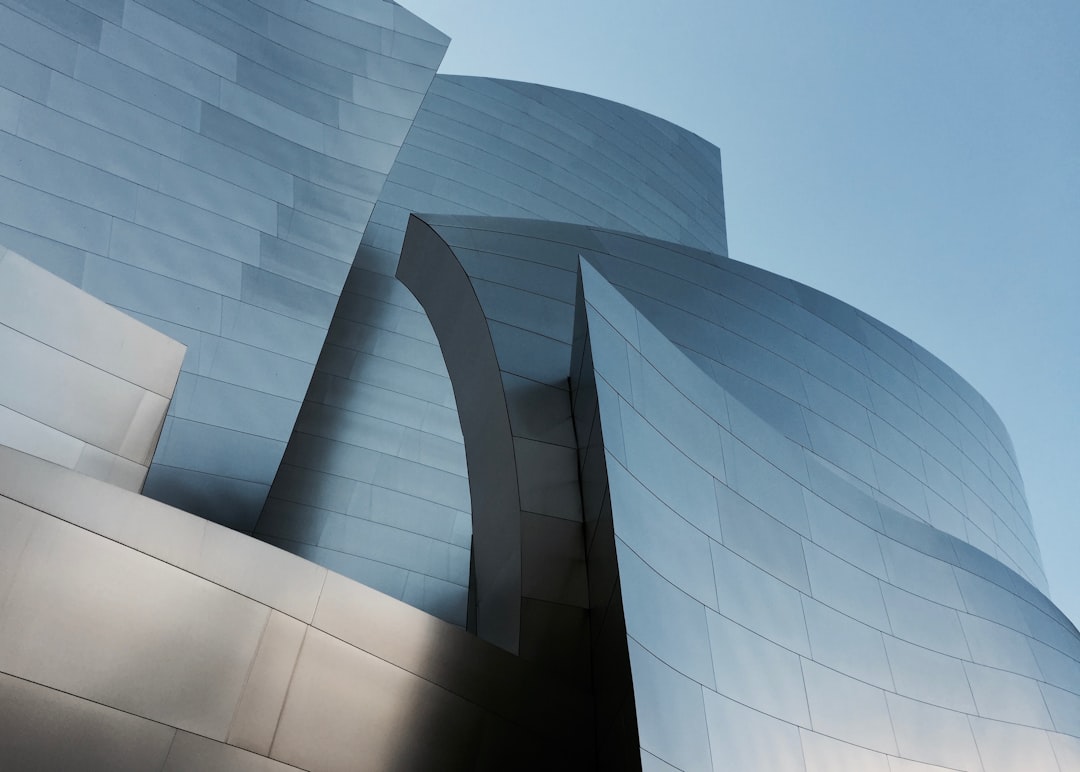
If you’re a fan of how design actually functions, look at the Walt Disney Concert Hall. Gehry learned from his previous mistakes, opting for a matte stainless steel skin that kills the solar glare, while the interior uses terraced Douglas fir panels to bounce sound in a way that feels intimate despite the massive scale. Then there’s the Cathedral of Our Lady of the Angels, which is a masterpiece of seismic engineering; it sits on 191 rubber base isolators that allow the whole structure to drift up to 26 inches during a quake. It’s a wild bit of security hidden right in plain sight. Contrast that with the Oviatt Building, where you get a rare look at authentic Art Deco luxury through imported Lalique glass and a French-made clock tower. These spots aren't just pretty faces; they’re laboratories of their respective eras.
And don’t forget the city’s roots literally buried under your feet. Those Prohibition-era tunnels beneath the Historic Core aren't just for atmosphere; they’re incredibly climate-stable because the surrounding earth acts as a perfect thermal buffer, something we’re only just starting to appreciate again in green design. Even our infrastructure, like those iconic Los Angeles River bridges, uses an arch-and-pier design meant to handle wind and seismic stress while mimicking the flow of water. It’s also hard not to respect the sheer symbolic weight of City Hall, which literally contains sand from all fifty-eight California counties in its foundation. It’s a level of intentionality you don’t see much anymore. Whether you’re staring up at the honeycomb veil of The Broad or wandering through the Spanish Colonial arches of Union Station, you’re seeing how architects have always struggled to balance the harsh desert sun with the need for beauty.
Art in the Streets: A Guide to Downtown’s World-Class Galleries and Murals
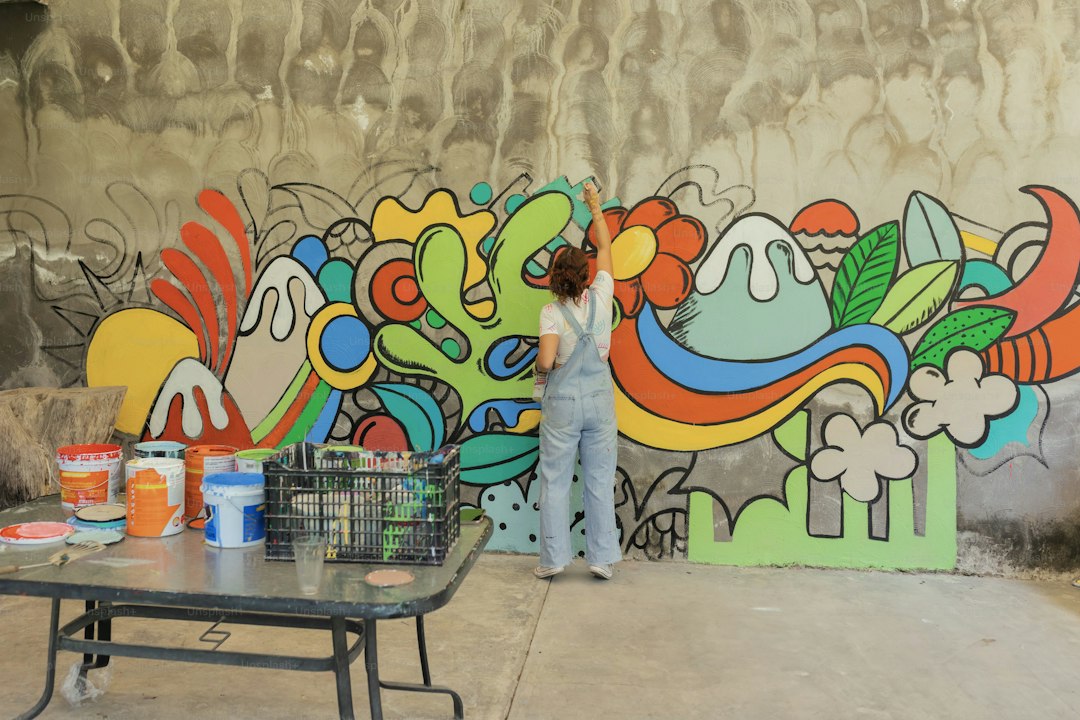
If you’re anything like me, you’ve probably walked past a mural in Downtown Los Angeles and wondered how it manages to stay so vibrant under that relentless Southern California sun. Let’s dive into it, because the secret isn’t just in the talent of the artists; it’s a masterclass in materials science. Many of these massive installations, some spanning over 15,000 square feet, use specialized mineral-based silicate paints that actually bond with the masonry at a molecular level, preventing the peeling we usually see in high-UV climates. It’s a fascinating, low-tech way to ensure longevity that stands in stark contrast to the high-tech, motion-sensing light installations you’ll find tucked into the same blocks. Honestly, looking at how these works interact with the environment—some even featuring photocatalytic coatings that scrub nitrogen oxides from car exhaust—makes you realize that this isn't just decoration, but a functional part of the urban infrastructure.
When you start comparing the different pockets of the city, you’ll notice the architecture itself dictates the art. In the Arts District, the elongated walls left behind by old industrial railway spurs create these massive, unconventional canvases that you simply don't get in modern, boxy developments. Contrast that with the Historic Core, where galleries are often housed in former textile lofts that kept their original saw-tooth roofs specifically to capture that perfect, consistent northern light for painters. It’s incredible to think that the same design choices made a century ago to help garment workers see their stitches are now the gold standard for lighting high-end contemporary art. You’re essentially walking through a series of adaptive reuse projects where grain silos and bank vaults have been transformed into "white-cube" spaces that respect the raw history of the buildings while housing some of the most cutting-edge work in the country.
If you’re planning to explore, I’d really suggest looking past the initial visual impact and digging into the tech behind the scenes. It’s wild to me that we’ve reached a point where street-level tours now use augmented reality to show you the digital rendering process of a piece you’re standing right in front of. We’ve seen a 40 percent jump in dedicated contemporary art spaces over the last five years, and it’s clearly being driven by developers who realize that old warehouse inventory is the perfect vessel for this kind of creative density. Whether it’s the climate-controlled vaults keeping prints pristine at a steady 68 degrees or the hydrophobic clear coats that let rain wash away city pollutants, the sheer level of intentionality here is staggering. My advice is to pick a neighborhood and just start walking, because once you know what to look for, the streets themselves start to feel like an interconnected, living laboratory.
Elevated Nightlife: Finding the City’s Most Sophisticated Rooftop Bars
When you’re looking to escape the street-level hustle of Downtown Los Angeles, heading to the top of a skyscraper feels like a secret handshake with the city. But let’s be real, not every rooftop experience is created equal, and there is a massive difference between a generic observation deck and a space that’s been engineered for actual comfort. You’ve probably noticed that some spots feel windy and harsh, while others stay perfectly tempered; that’s usually because the architects have accounted for the urban canyon effect, where buildings actually channel air to create gusts much stronger than what you feel on the sidewalk. These high-end venues often use hidden acoustic baffles—disguised as art or structure—to stop noise from bouncing off the neighboring glass towers, so you can actually hold a conversation without shouting.
If you look closely at the landscaping, you might wonder how they keep those trees and pools alive without crushing the roof. It’s a pretty clever bit of engineering: they’re using lightweight volcanic-based soil to shed the weight while maintaining drainage, and many are even recycling condensate from the building’s own HVAC system to keep things green. It’s a closed-loop system that makes a lot of sense in our dry climate. And honestly, the lighting is just as thoughtful. I’ve noticed the best spots use astronomical clocks to dim or shift their color temperature as the night goes on, which keeps the light pollution down and actually lets you see the stars—a rare treat in the middle of a major city.
The attention to detail even extends to how you enter these spaces. Ever notice how you pass through a small vestibule or airlock before stepping outside? That’s not just for show; it’s there to manage the internal air pressure so the building’s climate control doesn't get sucked out into the night air. Then there are the glass railings, which are usually made of low-iron, high-clarity panels that almost vanish, giving you an unobstructed view that feels safer than it looks. It’s all part of a quiet, high-tech dance between modern convenience and historic architecture. Whether it’s the smart glass that cuts the late-afternoon glare or the specialized flooring that expands and contracts with the temperature, these rooftops are essentially living laboratories. So, when you’re picking your spot for the evening, look for those subtle design choices; they’re the reason you’ll be able to linger for hours instead of just popping up for a quick photo.
Beyond the Traffic: Why DTLA is the Most Walkable Urban Escape in Los Angeles
When you’re trying to navigate Los Angeles, we all know the frustration of being tethered to a car, but here’s why Downtown actually flips that script entirely. It’s all about the math of the city grid; those blocks are tiny, usually hitting only 300 to 400 feet, which means you’re constantly hitting intersections that keep life moving at a human pace. I’ve noticed that this density isn't just for show, as urban planners link these tight blocks directly to higher retail accessibility and way more foot traffic than you’d find anywhere else in the region. Think about it: when you’re walking, you’re hitting a storefront roughly every few meters, giving the area a walkability ratio that honestly feels more like a historic European center than the typical SoCal landscape.
And then there is the science of the environment itself, which is honestly pretty fascinating if you pay attention to the details. The skyscrapers and older masonry buildings actually form these deep street canyons that act like natural cooling vents, dropping the sidewalk temperature by about 5 degrees compared to the open heat of the suburbs. You can feel it when you’re walking through the Historic Core, where those same structures shield you from direct sun and even lower your exposure to particulate matter. Plus, the city has been really smart about the pavement—those permeable pavers are doing the heavy lifting to recharge the aquifer by cutting urban runoff by nearly 30 percent during our rare but heavy rains.
Maybe it's just me, but I really appreciate how the infrastructure is designed to keep you moving without breaking a sweat. With a transit score of 98 out of 100 and a network of protected bike lanes and pedestrian paths, it’s arguably the only place in Southern California where your feet are a legitimate form of transportation. They’ve even re-timed the traffic signals to prioritize us pedestrians over the cars during busy hours, which makes a huge difference when you’re just trying to get from a gallery to dinner. You end up clocking in over 4,000 steps a day without even trying, all while navigating through a mix of elevated walkways and hidden passages that keep you out of the sun. It really makes you realize that the most efficient way to see the city isn't behind a windshield, but right there on the sidewalk.
Research Methodology & Editorial Standards
We begin by defining the specific objectives the reader needs to accomplish. Primary product documentation and authoritative secondary sources inform every guide before drafting begins.
Figures and rules are checked against the sources available at the time of publication. Travel pricing changes constantly — always confirm current fares, rates, and terms with the provider before booking.