
Ultimate Guide to the Best Dog Friendly Beaches Across Los Angeles and Orange County
If you’ve ever tried to plan a beach day with your dog in Los Angeles, you know the frustration of finding that most "dog-friendly" signs actually come with a strict leash requirement.
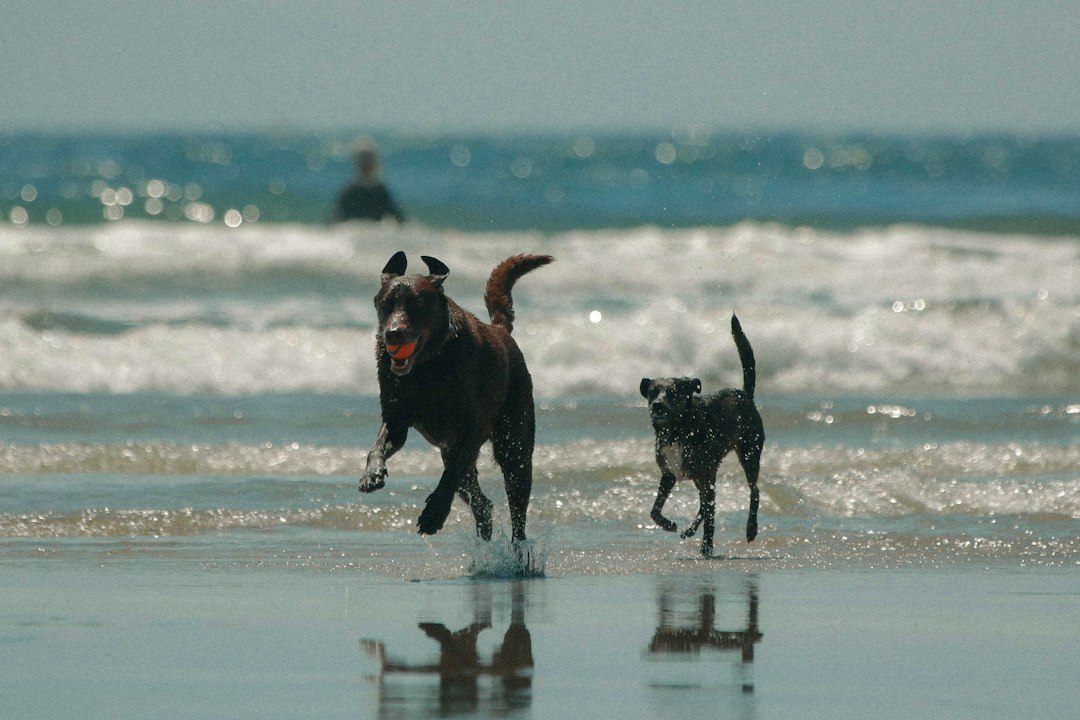
Top-Rated Off-Leash Beaches in Los Angeles
If you’ve ever tried to plan a beach day with your dog in Los Angeles, you know the frustration of finding that most "dog-friendly" signs actually come with a strict leash requirement. Honestly, it’s a bit of a maze out there because the legal landscape for off-leash play is incredibly narrow. While most of our local coastline prohibits dogs on the sand entirely due to health department regulations, Rosie’s Dog Beach in Long Beach stands as the rare exception where your pup can actually roam free. It’s the only spot in the entire county that truly fits the bill for an off-leash experience, spanning about four acres of prime shoreline.
I think it’s worth noting why this specific location works so well from a logistical standpoint. Because of the breakwaters in Long Beach, the wave energy is much lower here compared to the open-ocean beaches you'll find elsewhere in SoCal. This makes it statistically safer for smaller dogs who might otherwise get tumbled by the aggressive surf we see in places like Malibu or Manhattan Beach. Plus, the substrate is fine-grained quartz sand, which is way easier on sensitive paw pads than the rough, shell-heavy mix you’ll encounter further up the coast. It’s these small, practical details that really make the difference between a stressful outing and a genuinely good time.
We should also talk about the responsibility that comes with these zones, because they aren't just patches of sand. The city keeps a close eye on water quality with bi-weekly testing, and the beach undergoes daily mechanical sifting to keep the area sanitary. You’ll see specialized waste stations installed specifically to prevent nitrogen runoff, and you might notice seasonal fencing meant to protect native shorebirds that have had to shift their nesting habits because of all our canine visitors. It’s a hyper-local ecosystem, and most of the folks you’ll meet there live within a five-mile radius. It’s not just a place to park your dog; it’s a managed public utility that requires constant re-surveying due to erosion and specific city liability coverage. Just keep that in mind when you’re out there—it’s a privilege that relies on us keeping the space clean and respecting those boundaries.
Essential Dog-Friendly Coastal Spots in Orange County
When we pivot from the crowded, leash-heavy confines of Los Angeles to the Orange County coastline, the dynamic changes quite a bit, shifting from a game of finding any available space to navigating a complex set of municipal micro-regulations. If you’re planning a trip down here, you have to understand that Huntington Dog Beach is the outlier; it’s a 1.5-mile stretch that functions almost entirely on private funding and merchandise sales rather than city tax dollars. This setup is fascinating because it allows for a level of operational autonomy that you just don't see at state-run parks, though it does mean the area is subject to specific geological quirks. For instance, the sediment there has a higher mineral concentration thanks to the Santa Ana River’s discharge patterns, which is why local researchers occasionally monitor the substrate to ensure it doesn't irritate your pup’s paws.
But honestly, once you leave that specific stretch, the rules tighten up significantly, and you really need to watch the clock and the map. In places like Laguna Beach, you’re limited to off-peak windows—before 9:00 AM or after 6:00 PM—primarily to protect sensitive sand-dune ecosystems from the daily crush of summer crowds. If you head toward Newport Beach, you’ll encounter strict summer bans between 10:00 AM and 4:30 PM, a policy driven by historical data on surface temperatures that can cause actual thermal burns on asphalt and hot sand. It’s a stark reminder that these restrictions aren't just bureaucratic red tape; they’re often grounded in the physical reality of the environment your dog is walking on.
And if you’re looking at Crystal Cove State Park, just keep in mind that it’s a non-starter for sand play, as dogs must stay on paved paths to avoid disturbing the habitat of the endangered snowy plovers. You’ll even see thermal sensors at entry points designed to keep human and canine foot traffic away from those nesting areas. Beyond the regulations, you have to stay sharp regarding the water itself, especially around Corona del Mar where the tidal patterns create localized currents and sudden drop-offs that can catch even confident swimmers off guard. Even the parking lots are part of this highly engineered environment, using permeable pavers to manage runoff, which tells you just how closely these municipalities are monitoring the impact of our four-legged companions on the coast.
Understanding Local Leash Laws and Beach Regulations
It’s wild how quickly a simple day at the beach can turn into a headache once you start looking at the actual rules of the sand. Most of us just want to find a spot to let our dogs run, but the reality is that local leash laws are often a lot more technical than the simple "leashed" or "off-leash" signs suggest. I’ve found that municipal codes in Los Angeles and Orange County are increasingly moving away from the old-school "voice command" exception, essentially requiring you to have a physical leash in hand—usually six feet long—even in areas where your dog is allowed to roam free. It’s not just about keeping your pup nearby; it’s about liability and how the city manages these public spaces as high-traffic, managed utilities.
If you really start digging into why these rules exist, you’ll see it’s rarely just about convenience. Coastal jurisdictions are actually using heat-mapping software to figure out where the busiest dog zones are, and then they adjust patrol frequencies to match those seasonal surges. You might notice those specialized light-reflecting signs at the beach; those aren't just for show, they’re calibrated to stay visible even during high-tide cycles when the available space shrinks down to almost nothing. It’s worth being aware that some entry points are legally classified as protected biological corridors, meaning even a quick step off a paved path can trigger a violation, regardless of whether your dog is leashed.
There’s also a massive, invisible infrastructure working behind the scenes to keep these spots open. Many beaches are using specific bio-hazard containers for waste because local groundwater filtration systems are incredibly sensitive to canine-specific pathogens. And if you’re wondering why you can’t linger in certain zones, it’s often because of "no-stand" regulations designed to keep us from disrupting the auditory environment that shorebirds need for breeding. Some cities are even using acoustic deterrents—which we can’t hear—to keep dogs out of sensitive dune areas where endangered species live. It’s a lot to keep track of, but knowing that these boundaries are often mathematically tied to the tide lines makes it easier to understand why the rules seem to change under our feet every single day.
Safety First: Preparing Your Dog for a Day at the Beach
Let's pause for a moment and reflect on the fact that while we view the beach as a sanctuary, our dogs often process that same environment through a completely different biological lens. Honestly, the most important thing to wrap your head around is that dogs lack the skin-based sweat glands we rely on, meaning their cooling mechanism—panting—is fundamentally hampered by the high humidity of our coastal air. You really need to watch for heat exhaustion, which can hit much faster than in a local park because the ocean's surface acts like a giant mirror, reflecting intense UV rays directly onto your dog. If you’re ever unsure if the ground is safe, just press the back of your hand against the sand for seven seconds; if it’s too hot for you, it’s guaranteed to cause blistering on their sensitive digital pads.
Beyond the heat, you have to be incredibly vigilant about what your dog is actually consuming during playtime. Many owners overlook the fact that even confident swimmers can ingest enough seawater to trigger hypernatremia, a dangerous condition where excess sodium pulls fluid from the bloodstream and leads to serious neurological distress. You should also be cautious about toys dropped in the surf, as dogs often accidentally swallow wet sand along with them, which can result in a physical blockage known as sand impaction that sometimes requires surgery. And please, don't assume every breed is built for the surf; if you have a brachycephalic dog like a Frenchie or a Pug, those anatomical airway obstructions make the turbulent ocean waves a genuine drowning risk regardless of how much they seem to enjoy the water.
Before we even head out, I always make sure to verify the current status of local marine algae blooms, as some cyanobacteria are neurotoxic and can turn a fun afternoon into a medical emergency within hours. It’s also worth investing in a high-quality, canine-specific life jacket with a handle, which isn't just an accessory—it’s a critical tool for hauling your pup out of those hidden rip currents that can exhaust even the strongest swimmers. Once the day wraps up, don't just toss them in the car; rinsing them down with fresh water is vital to remove the salt and mineral deposits that would otherwise dry on their skin and likely trigger painful contact dermatitis. Think of these steps not as chores, but as the baseline for ensuring your dog makes it home as happy as they were when they first hit the sand.
Essential Gear and Supplies for a Stress-Free Beach Trip
When you’re prepping for a coastal day with your dog, you quickly realize that the standard gear you’d bring to a park just doesn’t hold up against the harsh reality of sand, salt, and intense UV exposure. Let’s look at the actual physics of the gear: microfiber towels are my top recommendation because their high surface area-to-mass ratio lets them absorb four times their weight in water, which is honestly the only way to get a dog dry enough for the car ride home without soaking your upholstery. I’ve found that a portable pressurized shower system—specifically one using a hand pump—is far superior to gravity-fed bags, as it provides a consistent 0.5 gallons per minute flow rate, which is the perfect pressure for flushing abrasive salt crystals out of an undercoat. If you’re still using rigid plastic bowls, consider switching to collapsible silicone; they lack those annoying internal crevices where wet sand and bacteria love to hide, which is a simple way to avoid the gastrointestinal issues that come from your dog drinking contaminated water.
When it comes to sun protection, don’t just grab any tent, as the reflective nature of sand and water can boost UV exposure for your pet by 20 percent compared to grass. You’ll want a canopy with a verified UPF 50+ rating to truly shield them during those peak midday hours. For leashes, I always tell people to skip the nylon and go for biothane; it’s non-porous, so it won’t soak up water or get bogged down by heavy, sand-filled weight that makes standard leads sag. Also, if you’re worried about their paws, a thin layer of natural wax containing beeswax or carnauba acts as a hydrophobic seal, protecting those sensitive pads from the drying effects of salt and the constant abrasion of silica-heavy sand.
And honestly, don't overlook the smaller, mission-critical items that make the logistics of the day much smoother. I keep a dedicated coastal first-aid kit stocked with sterile saline solution, which is the only pH-balanced way to safely irrigate your dog’s eyes after a bout of wind-blown sand or salt spray. If you’re staying until sunset, a simple LED beacon attached to their harness is a game changer, especially since the lack of ambient light at the shore makes it tough to track movement against a dark horizon. Finally, protect your own gear by using a dry bag for electronics; it creates an airtight seal that prevents fine, airborne salt particles from creeping into charging ports and causing long-term oxidation. It’s a bit of an investment, but these choices turn a chaotic trip into a much more predictable, stress-free experience for both of you.
Expert Tips for Managing Your Dog’s Beach Etiquette and Comfort
Let’s dive into what you should keep in mind to keep your dog happy and safe on the sand, because the beach environment is honestly a lot more taxing on their biology than a standard park. You might notice your pup acting a bit disoriented as the tide shifts; that’s actually common, as the rapidly changing shoreline can disrupt a dog’s spatial awareness, especially in older pets who rely on fixed landmarks to feel secure. And have you ever wondered why they seem to wander further away at the coast? It’s because the constant roar of the surf masks your voice commands and other auditory cues they normally track, so it’s smart to keep them closer than you think you need to.
Beyond the behavioral stuff, there’s a real physical toll that the beach takes on their coat and skin that most of us don't catch until we're back home. That saltwater spray isn't just wet; it leaves a crystalline film that acts like a desiccant, drying out their skin and potentially stripping away the natural oils that keep them comfortable. I’ve seen plenty of dogs end up with itchy, inflamed spots simply because the mineral-heavy sand altered their skin’s pH balance, so don't just assume it’s an allergy if they start scratching. It’s also worth noting that the sand can actually trap heat against their paws, effectively blocking their primary cooling mechanism, which means they can overheat much faster than you’d expect even on a breezy day.
When it comes to the water itself, be really careful about how much they swallow, because even small amounts of saltwater force their kidneys to work overtime to manage that sudden electrolyte spike. If you’re worried about safety, I’d suggest skipping the collar in favor of a well-fitted harness, as it won't restrict their breathing or the natural dive reflex if they do go for a swim. Keep an eye out for telltale signs of fatigue like a drop in tail movement, which is often a subtle, early marker that they’re starting to struggle with the heat. And honestly, a quick ear check after you get home is a habit that will save you a world of trouble; that lingering moisture and humidity in the ear canal is a recipe for yeast growth that can set in within just a day.
Research Methodology & Editorial Standards
We begin by defining the specific objectives the reader needs to accomplish. Primary product documentation and authoritative secondary sources inform every guide before drafting begins.
Figures and rules are checked against the sources available at the time of publication. Travel pricing changes constantly — always confirm current fares, rates, and terms with the provider before booking.