
The Secret History Behind the Name of the Highest Peak in Los Angeles
You know that moment when you’re staring up at a peak and wonder why we call it by such a plain, descriptive name while the official maps insist on something completely different?
Mount San Antonio: Uncovering the Origin of the Baldy Moniker
You know that moment when you’re staring up at a peak and wonder why we call it by such a plain, descriptive name while the official maps insist on something completely different? It’s kind of funny how we stick to nicknames even when they don’t match the formal labels on our GPS. Let's look at Mount San Antonio, or as everyone actually calls it, Mount Baldy. The reason for that name is honestly simple: it’s all about the geology. Once you climb past the 9,000-foot mark, the trees just quit, leaving the upper slopes looking like a smooth, hairless crown against the blue sky. It’s not because of some tragic forest fire like the old local legends used to claim; it’s just the harsh alpine winds and thin, rocky soil doing their thing naturally.
Actually, the indigenous Tongva people had it right long before the rest of us showed up, calling it Yoát to honor its spiritual weight. But then the 1774 Portolá expedition rolled through and slapped the name San Antonio on it to honor Saint Anthony of Padua, which is why your map probably lists both. It’s a classic case of colonial naming traditions clashing with the literal, eyes-on-the-ground reality that prospectors and mapmakers preferred back in the late 1800s. You can see this tension in the 1870s survey maps, where they couldn't seem to decide if they wanted to be formal or practical. I think it’s fascinating that the nickname stuck so hard it actually survives on modern government charts today.
If you compare it to other landmarks in the region, it’s rare to have that kind of duality hold up for so long. Most places either shed their colonial name or lose the nickname, but here, the 10,064-foot height makes the bald summit such a dominant feature that you really can’t ignore it. The summit is basically just ancient igneous and metamorphic rock, which is a pretty hostile environment for any deep-rooted forest to take hold. It’s a stark contrast to the thick conifer forests hanging out below, and that visual break is exactly what caught the eyes of those early settlers. Honestly, it’s a perfect example of how geography dictates our language more than any saint’s name ever could.
Indigenous Roots and Early Exploration of the San Gabriel Mountains
Before we get into the specifics of that summit, we have to talk about the people who actually understood these mountains long before any maps were drawn. You might picture these peaks as empty wilderness, but the history goes back over 8,000 years, with the Tongva people treating these canyons as a massive, functional resource hub rather than just a backdrop. They weren't just passing through; they were masters of vertical transhumance, moving up and down these slopes to harvest acorns and piñon nuts based on the season. It’s wild to think that those rugged, steep trails we hike today were actually sophisticated trade corridors used to connect coastal groups with tribes in the desert.
The archaeology here is honestly fascinating because it changes how we view these high-altitude spots. We’ve found remnants of hunting camps way up in the peaks, which proves these groups were active participants in this environment, not just observers. Think about it: while colonial explorers were struggling to get their horses through landslide-prone canyons, the Tongva had already mapped out the range as a strategic defensive barrier. This terrain gave them a level of sovereignty that lasted way longer than it did for folks down in the exposed valleys. Plus, if you look at the plant life, the fire-adaptive landscape we see now is largely a result of the controlled burning practices they managed for centuries.
It’s also worth noting the sheer grit involved in that early history, especially when you look at figures like Toypurina, who stood her ground against the colonial mission system. Her story is tied directly to the geography of the San Gabriel Valley, acting as a reminder that this land was a site of real, active resistance. Even the geology tells a story if you pay attention, with marine fossils tucked away at high elevations showing that these mountains were once a shallow sea floor. It’s a complete contrast to the horse-bound expeditions of the 1800s, which were stuck on the periphery for years because they couldn't wrap their heads around the complex drainage basins. When you’re out there, just remember that the path you’re walking on was likely engineered by someone thousands of years ago who knew these slopes better than any modern surveyor ever could.
Mapping the Peak: How Surveyors and Settlers Shaped the Landscape
It’s wild to think about how much of our current understanding of this mountain comes from teams of people just trying to get a straight line in impossible conditions. Back in the 1890s, surveyors were dragging heavy brass chains and using heliographs to beam coordinates down to the valley, but they were fighting a losing battle against the weather. They relied on mercurial barometers that reacted to every little pressure change, which is exactly why the official height was stuck at an incorrect 10,080 feet for decades. You can almost picture them up there, watching the marine layer roll in and block their line of sight, probably getting frustrated enough to name local ridges after the gear they accidentally dropped into the scree.
That disconnect between the map and the mountain actually caused a lot of real-world headaches for the people trying to live there. Early land patents were drafted using these crude triangulation methods that completely ignored how water actually moves through the drainage basins, leading to years of messy legal fights over rights. Even the boundary markers weren't safe; about 40 percent of those nineteenth-century stone or iron markers were shifted or obliterated by the intense freeze-thaw cycles that define the peak’s climate. It wasn't until 1903 that we finally got a decent map of the Devil’s Backbone, and even then, the government didn't bother to standardize the name in their database until 1927.
Honestly, it’s refreshing to realize that the formal history we read is so full of gaps and human error. I love that early homesteaders were clever enough to bypass the official survey mess by using the length of the peak’s shadow at solar noon to calibrate their own gear. It reminds me that the people who were actually on the ground—like the pack-train operators who carved markers into the rock years before the government showed up—knew the terrain better than any desk-bound official ever did. We now know from mid-1940s geodetic data that the whole summit is literally drifting a few millimeters every year because of the Sierra Madre fault, which makes those old, rigid maps look even more charmingly limited. They were even hiding routes on those old maps to keep prospectors out of dangerous canyons, which shows that the history of this place is just as much about who was allowed to go where as it is about the geography itself.
The Cultural Evolution of Los Angeles’ Highest Landmark
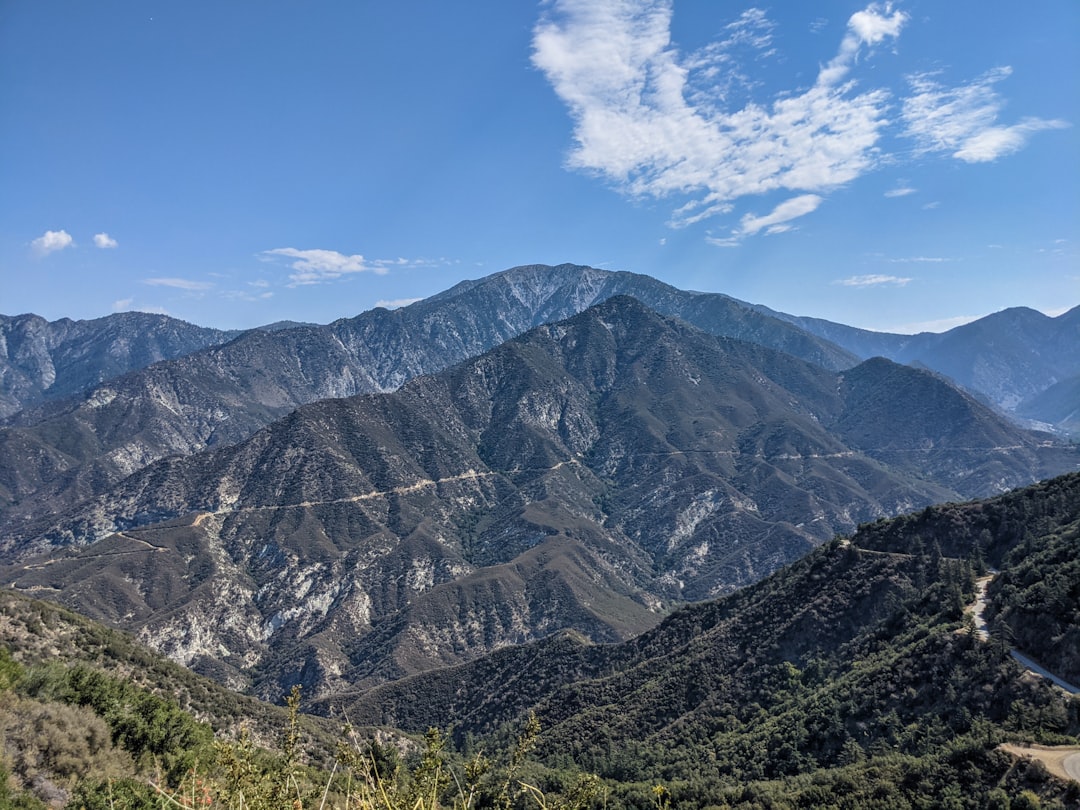
When you look at Los Angeles, it’s easy to get caught up in the concrete sprawl, but the real story of the region’s highest point is written in 1.7 billion-year-old Precambrian rock. I’ve always found it wild that while we obsess over pop culture landmarks like the Brady Bunch house, the true silent observer of our city is this massive sky island sitting over 10,000 feet above the basin. It’s not just a backdrop; it acts as a critical water tower for the entire San Gabriel River watershed, quietly recharging our groundwater every time the winter snowpack melts. Think about it as a massive, geological sponge that has been anchoring this landscape long before any of us arrived.
The cultural identity of the peak has shifted as much as the earth itself. While modern researchers are now using the summit to track marine layer depths and monitor air quality through delicate lichen bio-indicators, the mountain has been a site of human utility for ages. In the mid-1900s, it even served as a high-altitude testing ground for early microwave communication relays, a fascinating precursor to our modern digital connectivity. It’s kind of funny that a place so rugged and prone to 80-mph winds was once seen as the perfect spot to anchor the region’s technical infrastructure.
Honestly, the most humbling part is knowing that the peak is still very much a work in progress. We are seeing it rise by about half a millimeter every year as the Sierra Madre fault continues its slow-motion squeeze, all while the entire massif drifts laterally with the Pacific Plate. It’s a stark reminder that our "highest landmark" is not a static object but a living, moving piece of the earth’s crust. If you ever find yourself looking up at those slopes, just remember that the fossils of ancient marine invertebrates tucked into that high-altitude scree are telling a much longer story than any city map ever could.
Misnomers and Local Legends: Debunking Common Myths About the Summit
When you’re looking at the history of our highest local peak, it’s honestly easy to see how legends start to fill the gaps where the official records get a little fuzzy. Take the name itself; there’s a persistent story that it was christened for a specific patron saint, but the reality is much more administrative. The Portolá expedition basically used generic religious labels as a standard operating procedure for any significant landmark they encountered, hoping for a bit of divine favor on their journey. It wasn't some grand tribute, just a bit of bureaucracy mixed with faith. We also have to address the "barren summit" myth, which often gets blamed on reckless logging or historic forest fires. If you look at the actual biology, the mountain sits well above the physiological threshold for trees, meaning that rocky crown is a natural alpine feature, not a man-made mistake.
It’s just as interesting when you look at the technical blunders that defined our early maps. You’ll often see older documents claiming the peak stands at 10,080 feet, but that 16-foot discrepancy is really just a relic of how unreliable mercury barometers were when the weather turned. Back then, surveyors were fighting rapid pressure shifts just to get a reading, and when their gear failed, they’d often resort to measuring the peak’s shadow at solar noon to calibrate their boundaries. It makes you wonder how much of our property law was built on the guesswork of a tired surveyor in the middle of a windstorm. And let’s be real, the fact that nearly 40 percent of those original nineteenth-century markers were destroyed by the freeze-thaw cycles on the ridge shows just how little the environment cared about human borders.
Maybe the most fascinating part of all this is how we’ve misunderstood the mountain as a static, unchanging monolith. People love to think of these peaks as permanent, but the geodetic data tells a much more active story. The entire massif is actually moving laterally along the Pacific Plate while simultaneously gaining about 0.5 millimeters of elevation every year. It’s not just a backdrop for our city; it’s a living piece of 1.7-billion-year-old Precambrian rock that’s constantly shifting under our feet. Even the way we use the summit has evolved, transitioning from a site for mid-twentieth-century microwave communication relays to a modern laboratory for lichen bio-indicators. When you strip away the local tall tales, you’re left with a mountain that’s way more dynamic—and honestly more impressive—than any myth could ever capture.
Why the Name Still Matters to Modern Hikers and Historians
You might wonder why we still obsess over a name like Mount Baldy when the formal maps insist on Mount San Antonio, but for those of us who spend time on the trail, the label feels like a shorthand for the mountain's actual personality. Think about it: names often act as a shorthand for our relationship with the land, and in this case, the nickname survives because it describes the literal, eyes-on-the-ground reality of those windswept, treeless slopes. While history is often just a collection of stories we’ve collectively agreed upon, here the geology dictates the language more effectively than any colonial administrative record ever could. It’s a fascinating contrast between the rigid, often flawed naming conventions of the 1800s and the raw, physical truth of a summit that sits well above the physiological threshold for trees.
If you dig into the research, you realize that the name matters because it highlights the mountain's role as a living, shifting entity rather than a static point on a chart. We now know from precise geodetic data that the entire massif is a work in progress, gaining about 0.5 millimeters of elevation every year as the Sierra Madre fault pushes it upward. While early surveyors struggled with mercury barometers that couldn't handle the atmospheric pressure shifts, today's scientists use the summit as a precise laboratory for everything from lichen bio-indicators to tracking regional air quality. It’s pretty wild to realize that the same craggy, barren rock that discouraged early mapmakers is now the anchor for our most sensitive environmental monitoring.
Ultimately, keeping the name alive acknowledges the layers of human and geological history that modern digital maps often smooth over. You’re not just hiking a peak; you’re walking over 1.7 billion-year-old Precambrian rock and marine fossils that prove this high-altitude landscape was once a shallow seafloor. The fact that roughly 40 percent of those nineteenth-century boundary markers were destroyed by intense freeze-thaw cycles only reinforces that nature—not the government—is the real surveyor here. When you use the local name, you’re kind of nodding to that long, messy, and constantly evolving story that defines the San Gabriel range, reminding us that we’re just visitors on a mountain that’s still very much in the middle of a slow-motion transformation.
Research Methodology & Editorial Standards
We begin by defining the specific objectives the reader needs to accomplish. Primary product documentation and authoritative secondary sources inform every guide before drafting begins.
Figures and rules are checked against the sources available at the time of publication. Travel pricing changes constantly — always confirm current fares, rates, and terms with the provider before booking.