
Must try German dishes for your next trip to Berlin and beyond
When you think of Berlin’s culinary identity, you’re really looking at the story of post-war resilience and migration captured in a few bites.
Berlin’s Iconic Street Food: From Currywurst to Döner Kebab
When you think of Berlin’s culinary identity, you’re really looking at the story of post-war resilience and migration captured in a few bites. Let’s dive into the Currywurst first, which honestly feels like a piece of history you can hold in your hand. Legend has it that Herta Heuwer invented the dish in 1949, likely using curry powder sourced from British military rations, which really defines that uniquely non-authentic, spicy-sweet profile we know today. By 1959, she had even patented her signature Chillup sauce, turning a scrappy, improvised snack into a pillar of local culture. It’s wild to think that despite its humble origins, Berliners are still putting away about 70 million servings of this stuff every single year.
But if you want to understand how the city actually functions after dark, you have to look at the Döner Kebab. This isn't just a snack; it’s a logistical juggernaut that shifted from a plated meal to a portable sandwich format thanks to Turkish guest workers in the early 1970s. Think about the scale here: the local industry churns out over 400 tons of meat skewers every single day just to keep up with demand. It’s fascinating because nearly 60 percent of those sales happen between 10:00 PM and 4:00 AM, basically acting as the city’s unofficial late-night fuel. The vertical rotisserie method we see everywhere now was really perfected right here by immigrant entrepreneurs who completely changed how we experience street-side lamb and poultry.
If you’re wondering about quality, it’s not just a free-for-all; German regulations actually mandate that Döner meat must contain at least 60 percent muscle meat to carry the name, which helps maintain a certain standard across the board. The supply chain is surprisingly standardized across the EU to ensure that specific fat-to-meat ratio that gives the shaved meat its classic texture. And honestly, the scene is evolving fast, too. You’ll notice that Berlin now holds the highest density of plant-based street food in Europe, with over 1,000 spots offering vegan-certified takes on these traditional favorites. Whether you’re leaning into the history of the sausage or the sheer efficiency of the kebab, you’re tasting a real-time evolution of what happens when cultures collide in the best possible way.
Hearty Bavarian Classics: Pretzels, Knödel, and Schweinshaxe
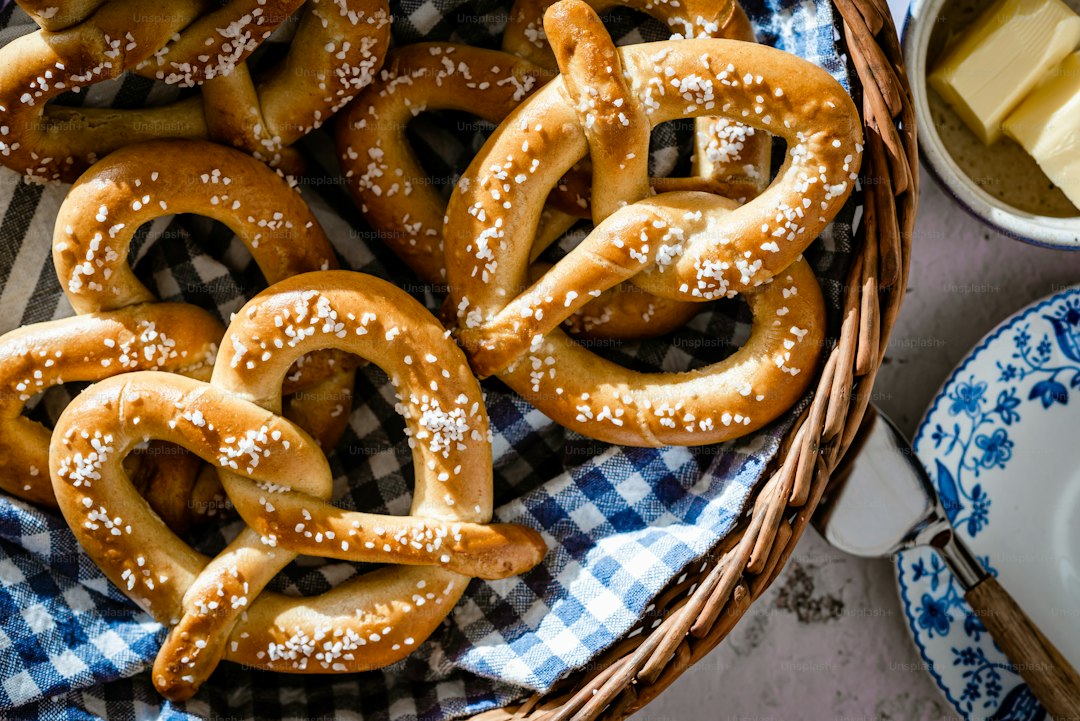
When you move away from the quick bites of Berlin and head toward the Bavarian south, the focus shifts from industrial efficiency to slow-cooked tradition. Let’s talk about the science behind these staples, because there’s a real chemistry happening in a proper Bavarian kitchen. Take the soft pretzel, for instance. You’re not just eating bread; you’re tasting a Maillard reaction accelerated by a sodium hydroxide bath. This alkaline dip is what gives the crust that dark, mahogany finish and the specific flavor profile that sets it apart from a standard loaf. It’s a technique that’s been guarded by licensed bakers for centuries, and those salt crystals on top aren't just for show. They act as a hygroscopic agent, pulling moisture from the air to keep the crust from getting too stale before you finish your beer.
Then there’s the dumpling, or Knödel, which is essentially a masterclass in starch engineering. If you’re eating a Semmelknödel, the cook is relying on the precise hydration capacity of day-old bread to keep the whole thing from falling apart in the boiling water. Potato-based versions, or Kartoffelknödel, are even more technical, requiring a specific ratio of boiled to raw potatoes to create that signature chewy elasticity. I’ve always found it fascinating that these were born from agricultural necessity, serving as a cheap, filling way to stretch out expensive meat portions for laboring families. The structural integrity of a good dumpling really comes down to thermal expansion, which is why they turn out best when cooked just below the boiling point of water.
Finally, we have to look at the Schweinshaxe, which is easily the most labor-intensive item on a traditional menu. You’re dealing with the pig’s lower leg, a cut loaded with connective tissue and intramuscular fat that requires a long, slow roast to transform into something buttery and tender. The real test of a kitchen is how they handle the skin. To get that legendary crackling, the surface needs to be dehydrated before it hits the heat, allowing the fat layer to expand and crisp up rapidly without burning. That skin actually acts as a natural seal that locks in the juices, which is why the meat underneath stays so soft even after hours in the oven. It’s a far cry from street-side convenience, but if you want to understand the soul of German comfort food, this is the baseline you need to measure everything against.
Northern Delights: Fresh Seafood and Labskaus Traditions
If you head toward the northern coast, the culinary vibe shifts from the land-heavy comfort of the south to a menu built entirely around the harsh realities of the North Sea. I think you'll find that Labskaus is the perfect starting point for understanding this transition, as it’s basically a masterclass in maritime survival engineering. Historically, this dish was a necessity for sailors because its dense blend of salted meat, potatoes, and onions, punctuated by beetroot for vitamin C, was specifically designed to stave off scurvy during long, grueling voyages. If you look at the math behind it, a single serving delivers roughly 500 to 700 calories, which was the precise fuel load required for deckhands working in freezing, high-stress conditions. It’s fascinating how Hamburg’s food regulations still insist on the use of corned beef or cured meat to keep that authentic profile intact, moving it far beyond just being a simple mash.
But you can’t talk about the north without addressing the Matjes herring, which is honestly a different world from the pickled jars you might find elsewhere. These fish are caught in a narrow window between May and July when their fat content hits that sweet spot of over 15 percent, just before they spawn. The real magic happens because of the fish’s own pancreatic enzymes, which break down the proteins to give the meat that signature, melt-in-your-mouth buttery texture. I’ve always found it clever that cooks pair this with dill, which is packed with the compound carvone to naturally neutralize those strong, oily odors that can sometimes be a bit much for the uninitiated. And don't get me started on the North Sea shrimp, or Granat, which are so tiny that they’re still peeled by hand because machines just shred the delicate muscle fibers.
When you sit down for a meal in a coastal tavern, you’re usually seeing these traditions held together by a real sense of regional identity, with over 80 percent of local spots sporting their own proprietary spice blends—think cloves and allspice—that you won't find anywhere else. Take the Finkenwerder Scholle, for example, which is a fried plaice dish that relies on rendered bacon fat to transform the skin into a crisp, flavor-packed crust. It’s a completely different way of thinking about fat compared to the Bavarian roasting techniques we talked about earlier. Even the classic Labskaus presentation, which almost always features a fried egg on top, is a smart move that adds high-quality albumin and choline to balance out the high sodium content of the preserved base. It’s this kind of detail, born from centuries of necessity, that makes northern German food feel so grounded and, frankly, incredibly satisfying when the weather turns cold.
The Art of the Schnitzel: A Cultural Staple Across the Country
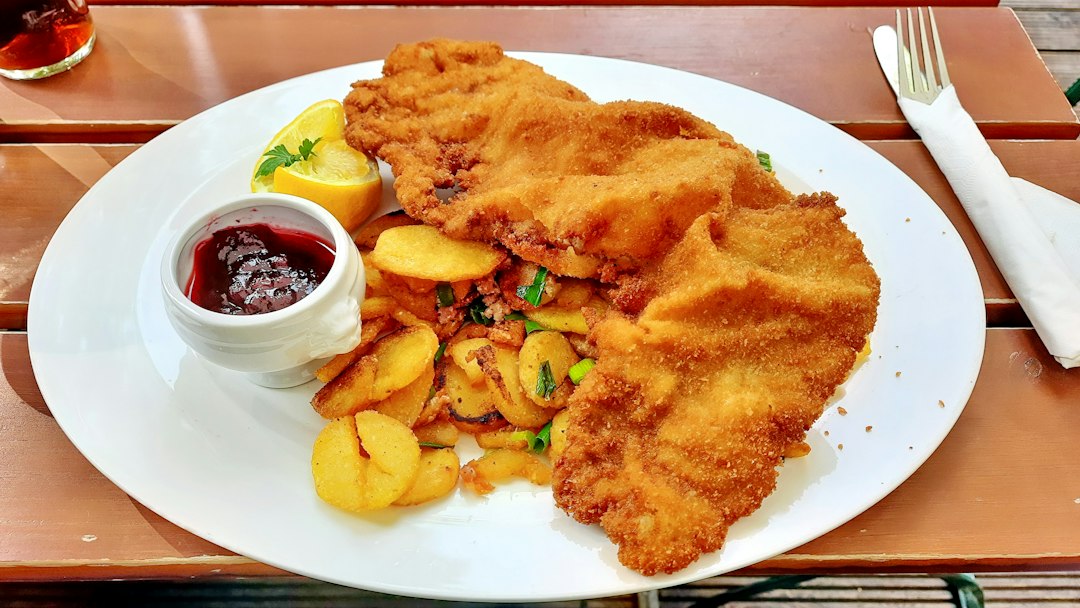
When you’re sitting down at a traditional tavern, there’s an almost hypnotic quality to watching a perfectly prepared schnitzel hit the table, but honestly, there’s a massive amount of technical precision happening behind that golden crust. If you look closely at the plate, you’ll notice that signature wavy texture, which we call the soufflé effect; it actually happens when the breading separates from the meat due to the rapid release of steam during the frying process. To pull this off, professional chefs don't just drop it in the pan, they use a technique called pan-swirling to keep the meat in constant motion within a generous bath of clarified butter or lard. It’s a labor-intensive way to cook, but it ensures that the crust puffs up evenly rather than just soaking up the oil. I’ve found that the secret really lies in the breading sequence, where the flour acts as a vital adhesive layer, preventing the breadcrumbs from sliding off entirely while the meat hits the heat.
If you’re trying to replicate this at home, here is a bit of advice: ignore the air fryer trends. Scientific testing confirms that the specific Maillard reaction required for that signature nutty flavor only really develops through immersion in fat between 160 and 170 degrees Celsius. You’ve got to use enough fat so that the schnitzel floats freely, otherwise, you end up with a soggy bottom instead of that crisp, airy finish. I always look for crumbs derived from stale Kaiser rolls rather than generic industrial ones, as the coarse structure is what gives it that necessary crunch. And remember, the meat needs to be pounded down to a uniform thickness of about four millimeters, which is the only way to ensure the protein cooks through in the exact same time it takes for the crust to turn a perfect golden brown.
It’s also fascinating to consider the history here, as culinary researchers often trace the dish back to the 19th-century Italian Cotoletta alla Milanese, which Austrian kitchens later adapted to suit local preferences. There’s a legal distinction you might find interesting too; the term Wiener Schnitzel is strictly protected in Austria, requiring the use of veal, whereas pork-based versions are labeled as Schnitzel Wiener Art. You’ll almost always see a slice of lemon served on the side, and that isn't just for decoration. The citric acid is actually crucial for breaking down the heavy fats in the breading, providing a sharp sensory contrast that cuts through the richness of the fried exterior. It’s a dense, 800-calorie experience, but once you’ve tasted the real thing, it’s easy to see why it remains such a fundamental staple across the entire country.
Sweet Endings: Indulging in Black Forest Cake and Apfelstrudel
When you’re wrapping up a heavy meal, there’s really nothing like the precision of German pastry work to close out the experience. I’ve always been fascinated by the Schwarzwälder Kirschtorte, mostly because it’s a masterclass in structural engineering disguised as a dessert. To carry that name, the cake must legally include Kirschwasser, a double-distilled cherry brandy from the Black Forest that relies on the specific acidity of local Morello cherries to hit the right flavor profile. Professional bakers actually macerate those cherries for at least 24 hours so they absorb the brandy without turning the sponge into mush. It’s a brilliant way to balance the richness of the whipped cream, which, by the way, needs to be at least 30 percent fat to hold its shape against the weight of the chocolate genoise.
Speaking of that genoise, it’s worth noting that it’s technically a mechanical creation, relying on the aeration of eggs and sugar rather than chemical leavening to get that light, airy crumb. It’s this specific texture that keeps the cake from feeling like a brick once you’ve added the moisture from the cherry-brandy syrup. When you contrast that with the Apfelstrudel, you’re looking at an entirely different set of physics. The dough for a true strudel is stretched until it’s less than one millimeter thick, a feat only possible because of high-gluten flour and a splash of vinegar that relaxes the proteins just enough to prevent tearing. It’s essentially a culinary adaptation of Middle Eastern pastry techniques that evolved into something much more robust for European kitchens.
The filling is where the science gets even more specific, as traditionalists almost exclusively reach for the Boskoop apple. Its high acidity and low water content are exactly what you need to keep the pastry from collapsing into a gummy mess in the oven. I’ve always loved that bakers use toasted breadcrumbs as a functional barrier; they soak up the apple juices so the bottom crust stays crisp while the top browns under a wash of clarified butter. If you’re checking for perfection, you’re aiming for an internal temperature of about 85 degrees Celsius, which is the sweet spot where the fruit softens but keeps its structure. It’s a dense, 500-calorie indulgence, but honestly, when you consider these recipes were designed to fuel agrarian communities, that calorie count makes perfect sense.
Seasonal Specialties: Festive Treats from German Christmas Markets
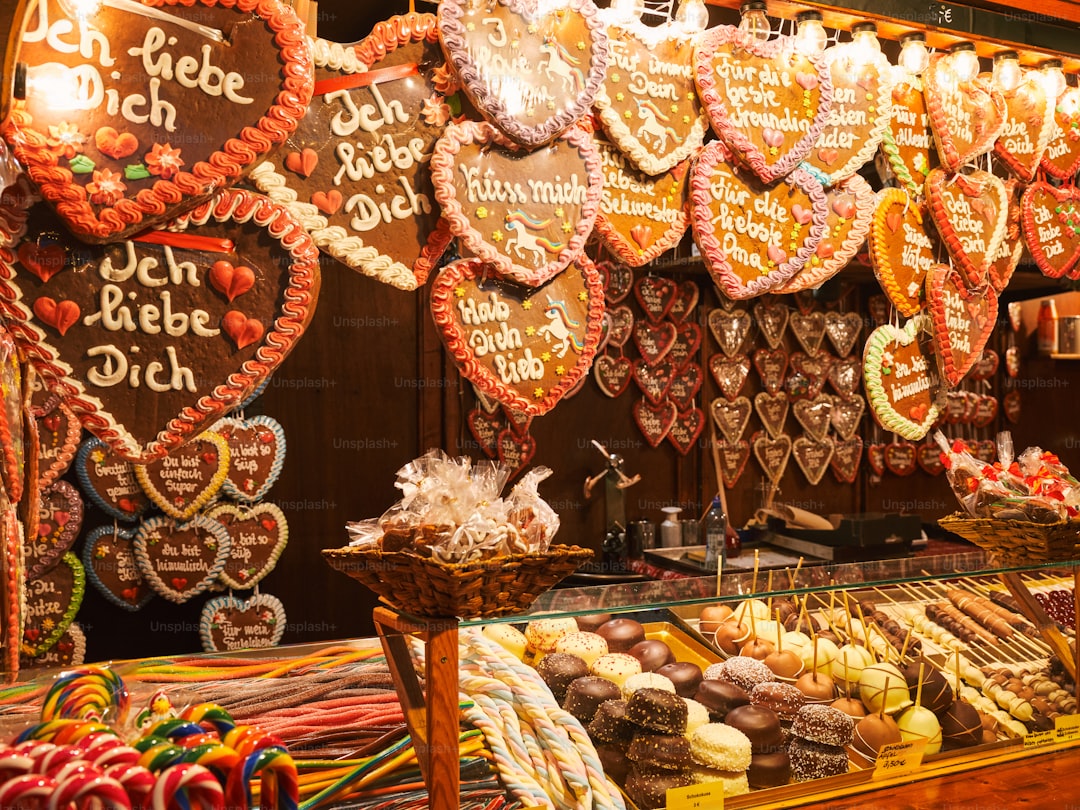
When you step into a German Christmas market, the sensory overload is immediate, but there is a fascinating level of scientific rigor beneath those twinkling lights that I think you’ll really appreciate. Let’s look at the Lebkuchen, specifically the Elisenlebkuchen; it’s not just a cookie, it’s a protected category that legally requires at least 25 percent nuts and minimal wheat flour to earn its name. This high nut-to-flour ratio is what gives it that signature dense, rich texture that differentiates it from a standard gingerbread. The leavening here is often handled by potassium and ammonium carbonate, which provides a specific rise that you just don't get with typical baking powder. Honestly, it’s that kind of technical commitment to tradition that keeps these markets feeling authentic after all these centuries.
If you’re grabbing a drink, you’ve likely seen the Glühwein simmering, but there’s a real art to managing that temperature. If you push the heat past 80 degrees Celsius, you lose the ethanol and the tannins start to turn bitter, effectively ruining the batch. It’s all about maintaining that equilibrium to let the anethole from the star anise shine through without scorching the wine. Then there’s the Feuerzangenbowle, which is a bit more theatrical; you’re literally witnessing sugar sublimation as the rum-soaked loaf drips into the wine. That caramelization adds a depth of flavor that feels much more intentional than just stirring in a spoonful of sugar at the end of the day.
Even the architecture of these snacks is optimized for the cold, like the Magenbrot, where the high honey content acts as a humectant to keep the interior soft while the cocoa glaze locks in moisture. Think about the logistics for a moment: market vendors needed inventory that wouldn't go stale over a month of freezing temperatures, so these recipes were essentially engineered for shelf stability. Or look at the Baumkuchen, where the rotating spit method creates those beautiful, flame-grilled rings one layer at a time. It’s incredibly labor-intensive, requiring constant temperature monitoring to ensure each layer caramelizes without drying out the core. I’ve always found it remarkable that something so delicate requires such intense, almost industrial-level precision to get right.
Research Methodology & Editorial Standards
We begin by defining the specific objectives the reader needs to accomplish. Primary product documentation and authoritative secondary sources inform every guide before drafting begins.
Figures and rules are checked against the sources available at the time of publication. Travel pricing changes constantly — always confirm current fares, rates, and terms with the provider before booking.