
Exploring the Architectural Wonders of Barcelona Through the Eyes of Gaudi
When you walk through Barcelona, it’s easy to get lost in the sheer beauty of the buildings, but I’ve always found that Gaudí’s genius isn't just about aesthetics; it’s about how he borrowed the rulebook from nature.
The Organic Vision: Understanding Gaudí’s Philosophy of Nature-Inspired Design
When you walk through Barcelona, it’s easy to get lost in the sheer beauty of the buildings, but I’ve always found that Gaudí’s genius isn't just about aesthetics; it’s about how he borrowed the rulebook from nature. Instead of relying on the heavy, static supports that defined most architecture of his time, he looked at how trees handle wind or how bones manage weight. He used geometric forms like hyperboloids and helicoids—shapes you’d see in a tree trunk—to create curves that actually hold themselves up. It’s a bit like watching a forest canopy at work, where the load is distributed through branching columns rather than those clunky flying buttresses you see on Gothic cathedrals.
Think about how he used hanging chain models to find the perfect arch. By letting gravity do the heavy lifting, he essentially inverted nature’s own tension to create catenary arches that are perfectly stable. It wasn't just a stylistic choice; it was a clever way to minimize material while maximizing space. You can really see this logic in how he handled light, too. He didn’t just put in windows; he designed specific angles and textures to mimic how sunlight filters through leaves in a dense forest, creating this soft, dappled effect that changes as the day moves on.
And then there's the math hiding in plain sight, like the way he used phyllotaxis patterns—those same sequences you see in a sunflower—to dictate how his designs grew upward. Even his use of trencadís, those bits of crushed ceramic, feels less like decoration and more like a way to mirror the textures of mineral deposits found in the wild. He wasn't just stacking stones; he was practically growing these buildings from the ground up. It’s this blend of rigid engineering and organic flow that makes his work feel alive, even a century later. Next time you’re standing underneath one of his ceilings, pay attention to the acoustics; he actually studied how sound bounces in caves to make sure the interior resonance felt just as natural as the rest of the structure.
Sagrada Família: Unlocking the Symbolism Behind the Unfinished Masterpiece
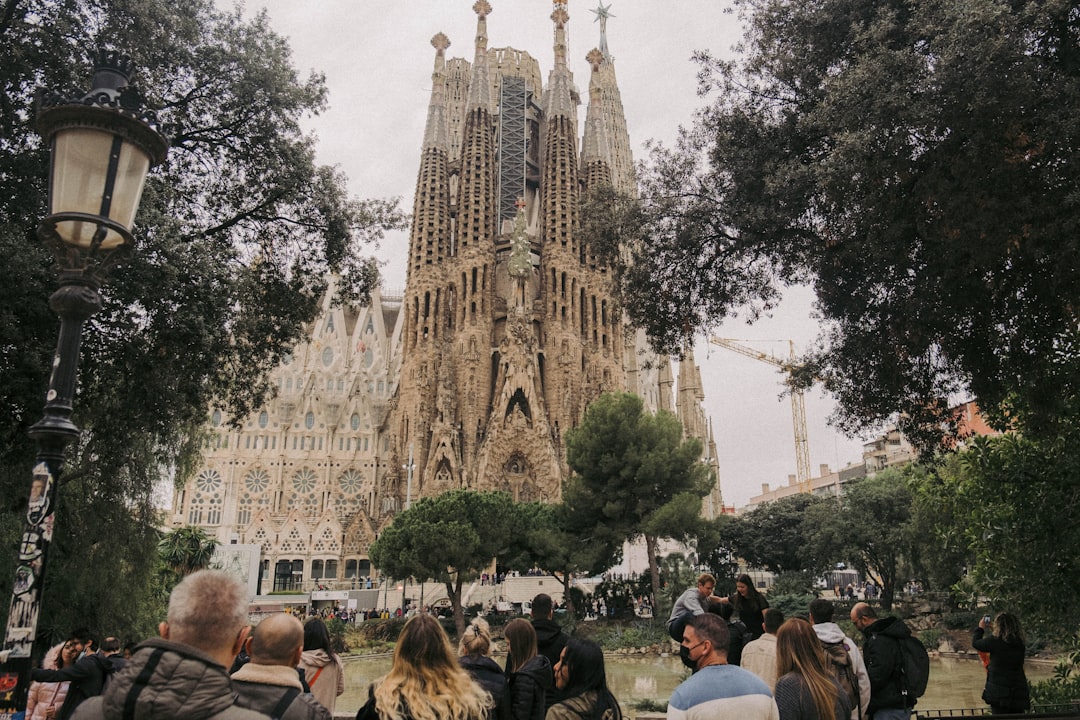
When you stand in front of the Sagrada Família, it’s hard not to feel like you’re witnessing a dialogue between centuries. We’re talking about a project that started back in 1882, and yet, here we are in 2026, still watching the final pieces snap into place. It’s not just a church; it’s an evolving puzzle of theology and engineering that has spanned 144 years. Most cathedrals were built to be static, but Gaudí designed this one to be a living, breathing narrative that grows with the city. If you look closely at the Passion facade, you’ll even find a cryptic numerical square where every row and diagonal sums to 33, a direct nod to the age of Christ. It’s that kind of intentional, hidden detail that makes the whole structure feel less like a building and more like a massive, stone-carved manuscript.
The way the light moves through the space is really where the genius hits you, especially since the stained glass shifts from cool, morning-inspired greens and blues on the Nativity side to deep, sunset-heavy oranges and reds near the Passion facade. It’s a deliberate, color-coded progression designed to mirror the arc of a single day. And the engineering behind it is just as wild; those central towers—the ones dedicated to the Evangelists and the Virgin Mary—soar to 172.5 meters, officially making this the tallest religious building in Europe. To pull that off without the clunky flying buttresses you see on traditional Gothic cathedrals, the builders rely on a sophisticated system of inclined, tree-like columns. They channel weight directly into the foundation, which keeps the interior open and unobstructed, even though the scale is massive.
What I find most fascinating is how the construction has actually bridged the gap between old-world craftsmanship and modern tech. While the original vision was strictly manual, today’s teams are using 3D printing and CNC milling to stay true to Gaudí’s intent while speeding up the timeline significantly. They’re even using prefabricated, high-strength tensioned stone panels to get those towers finished without sacrificing the artistic detail. It’s a strange, beautiful tension—using cutting-edge tech to honor a man who was obsessed with the organic geometry of the natural world. Whether you’re looking at the twelve-pointed star crowning the tower of Jesus or the quiet, neo-Gothic crypt where Gaudí himself is buried, you’re looking at a site that refuses to be finished in the conventional sense. It’s an ongoing, living experiment in how we build, believe, and leave our mark on the skyline.
Park Güell: Exploring the Integration of Urban Planning and Whimsical Landscapes
When we talk about urban planning, we usually think of grids, zoning laws, and concrete, but Park Güell turns that logic completely on its head. It’s fascinating to see how Gaudí originally envisioned this as a high-end garden city for wealthy families, even if only two of the sixty planned homes actually made it off the drafting table. Instead of imposing a rigid structure on the Muntanya Pelada, he worked with the landscape, using stone excavated directly from the site to build retaining walls and viaducts. It’s a masterclass in site-specific engineering that prioritized the natural terrain over standard construction habits. I think about how he even designed the stone pathways to mimic the hillside's natural drainage patterns, creating a transition from Barcelona’s busy streets to this wilder space that feels totally seamless.
The way he handled the park’s mechanics is even more impressive when you look under the hood. Take the Hypostyle Room, for instance; those eighty-six Doric columns aren't just there to hold up a public market. They’re actually part of a massive hydraulic system designed to channel rainwater into an underground cistern that holds 1,200 cubic meters of water. Even the famous dragon at the entrance isn't just a piece of art; it’s an functional overflow pipe for that same system. It’s early-stage sustainable water management that keeps the park’s irrigation running without needing a constant external supply. He even used the local tile factory's waste piles for his mosaics, essentially inventing large-scale industrial upcycling long before it became a modern buzzword.
Then there’s the human element, which I find genuinely charming when you consider the scale of the project. The serpentine bench in the Nature Square is a perfect example; it was molded to the human body by having a worker sit in wet plaster to get the ergonomics just right. Beyond the comfort, the park’s terracing was a calculated move to stop soil erosion while building microclimates for diverse plant life. He even thought about the logistics of the era, building a viaduct system specifically to handle the weight of horse-drawn carriages. It’s this constant push-pull between whimsical, artistic flair and brutal, practical problem-solving that makes Park Güell feel like a living, breathing component of the city rather than just a static monument.
Casa Batlló and Casa Milà: Decoding the Fluid Facades of Passeig de Gràcia
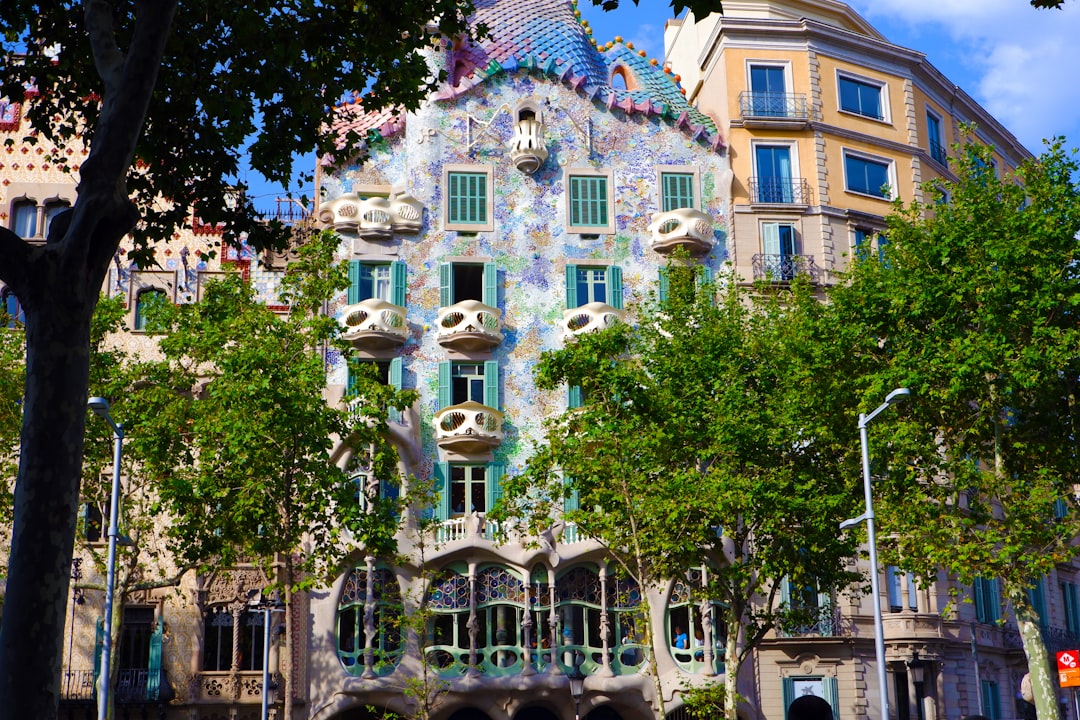
When you stroll down Passeig de Gràcia, it is hard not to feel like the buildings themselves are breathing, and that is exactly the point Gaudí was making with these two masterpieces. Let’s look at Casa Batlló first, where the engineering is surprisingly intimate; the balcony railings were actually modeled from plaster casts of a worker’s hand to ensure the grip fits a human palm perfectly. You can see his obsession with functional anatomy everywhere, even in the window frames that slide vertically into the floor to turn the entire living space into an open-air balcony. The light well is another masterclass in design, lined with tiles in progressively darker shades of blue so that sunlight distributes evenly from the top floor all the way to the bottom. Even the skeletal balconies are a triumph of technical care, reinforced with cast-iron components treated with specialized paint to stop the salt air from eating away at the structure.
But then you pivot to Casa Milà, or La Pedrera, and the shift in engineering philosophy is stark. This building was a massive leap forward for residential living, featuring one of the world’s first underground parking garages—a logistical feat that feels incredibly modern for the early 20th century. What really blows my mind is that the entire stone facade is self-supporting because it hangs from an internal steel framework, essentially pioneering what we now call curtain wall technology. Because he moved the load-bearing requirements inside, Gaudí was able to make every single floor plan unique, free from the constraints of rigid, stacking walls. It is a completely flexible system where those internal partitions weren't even designed to carry weight, letting residents shift their space as their needs changed.
If you head up to the roof, don't just look at the art; check out the chimneys, which are as much about science as they are about style. They use that famous trencadís technique, but they also function as active ventilation shafts that keep the air inside the building fresh through natural convection. Compare that to the roof of Casa Batlló, where those colorful scales were specifically curved to bounce sunlight directly into the core of the house. Both buildings prove he wasn't just building for the sake of beauty; he was obsessively solving human problems. Whether it is the way the entrance hall columns are angled to displace structural load or the way the stone slabs were hung to create those famous undulating curves, everything here has a specific, calculated purpose. It is rare to see this level of technical ambition hidden behind such whimsical, fluid shapes, and honestly, it makes these two buildings feel more like living machines than static stone.
Beyond the Icons: Lesser-Known Gaudí Sites That Define Catalan Modernism
While we often fixate on the towering spires of the city’s most famous landmarks, I think the real soul of Catalan Modernism is tucked away in the sites that don't always make the highlight reels. If you really want to understand the mechanics behind Gaudí’s genius, you have to look at the Bellesguard estate, where he essentially engineered a passive cooling system using brick arches in the attic to catch a constant draft against the summer humidity. It’s a brilliant example of how he traded traditional HVAC for simple, clever physics. Or consider the Colònia Güell crypt, where those famous leaning columns aren't just aesthetic; they’re a blend of basalt and local stone designed to absorb seismic vibrations better than any uniform masonry of the era. It’s these quiet, functional experiments that show how he was constantly stress-testing his ideas in the real world.
And then there’s the way he played with environmental forces in his smaller commissions, like the thermal-storing ceramic sunflowers at El Capricho that soak up heat during the day to keep the interior comfortable as the sun goes down. I’m always struck by how he used the Bernoulli principle at the Finca Güell fountain to keep water flowing rhythmically regardless of the pressure, proving he was as much a hydraulic engineer as an artist. At Finca Miralles, you’ll find a wave-like boundary wall that isn't just for show; it’s a deliberate wind-break designed to protect the microclimate of the garden. It’s honestly refreshing to see how he used simple geometry, like the 23.5-degree angle of the window frames at El Capricho, to perfectly manage sunlight across the seasons.
It’s easy to get caught up in the visual drama, but when you stand at the Portal Miralles, pay attention to the asymmetry of the gate—it’s designed to guide your eye toward the path without needing a single sign. These sites weren't just vanity projects; they were rigorous, localized solutions to very specific architectural problems. Whether it’s the Bellesguard brickwork that uses interlocking patterns to reduce mortar and increase structural flexibility or the acoustic-focused staircase inside that same tower, you’re looking at a man who viewed every building as a living, breathing machine. If you take the time to visit these less-trodden spots, you’ll stop seeing them as static monuments and start seeing them as the prototypes for a more sustainable, thoughtful way of building. It’s a masterclass in how to build with—not against—the world around us, and that’s a lesson that still feels remarkably relevant today.
The Legacy of a Visionary: How Gaudí Transformed the Architectural Identity of Barcelona
When we look at Barcelona today, it’s impossible to separate the city’s pulse from the shadow of Antoni Gaudí, but I think we often miss how much of his identity was forged in his own physical limitations. You see, his struggle with severe rheumatism made traditional drafting nearly impossible, forcing him to abandon the pen in favor of three-dimensional string models and gravity-based calculations. It’s wild to think that our modern skyline was effectively born from a necessity to bypass the T-square, which he famously rejected because he believed straight lines simply didn't exist in the natural world. This wasn't just a stylistic quirk; it was an early, aggressive commitment to bio-mimicry that, in my view, turned his buildings into something closer to living organisms than static masonry.
If you really want to understand his impact, you have to look at the sheer technical ingenuity he baked into these structures to solve human problems before they became trends. He wasn't just slapping pretty tiles on a facade; he was using copper oxide glazes to reflect harsh Mediterranean heat and designing ventilation shafts as resonance chambers to scrub out street noise. Think about the way he pressed real plant specimens into wet sand to cast his ironwork—he was literally capturing the imperfections of nature to make his architecture feel authentic. Even his use of slag-infused concrete at Colònia Güell shows he was experimenting with industrial upcycling and fire resistance long before we started putting those labels on modern building codes.
Ultimately, Gaudí’s legacy is less about the postcard views and more about how he fundamentally changed the city’s metabolism. By building in features like moisture-absorbing limestone basements and seismic-resistant chimney stacks, he transformed Barcelona into a proving ground for what we’d now call sustainable, responsive design. He didn’t just want to build monuments; he wanted to create systems that could breathe and age alongside the people living inside them. It’s honestly rare to find an architect who managed to marry such intense, almost obsessive, engineering with a vision so poetic that it still feels like a fantasy a hundred years later. I think that’s why we’re still talking about him—he didn't just design buildings; he taught us how to build with the world rather than against it.
Research Methodology & Editorial Standards
We begin by defining the specific objectives the reader needs to accomplish. Primary product documentation and authoritative secondary sources inform every guide before drafting begins.
Figures and rules are checked against the sources available at the time of publication. Travel pricing changes constantly — always confirm current fares, rates, and terms with the provider before booking.