
Experience the rebellious spirit of Scotland at this legendary fire festival
If you’ve ever looked into Up Helly Aa, you might assume it’s an ancient tradition passed down directly from the Norse settlers who lived here before Shetland became part of Scotland in 1467.
The Origins of Up Helly Aa: A Legacy of Viking Defiance
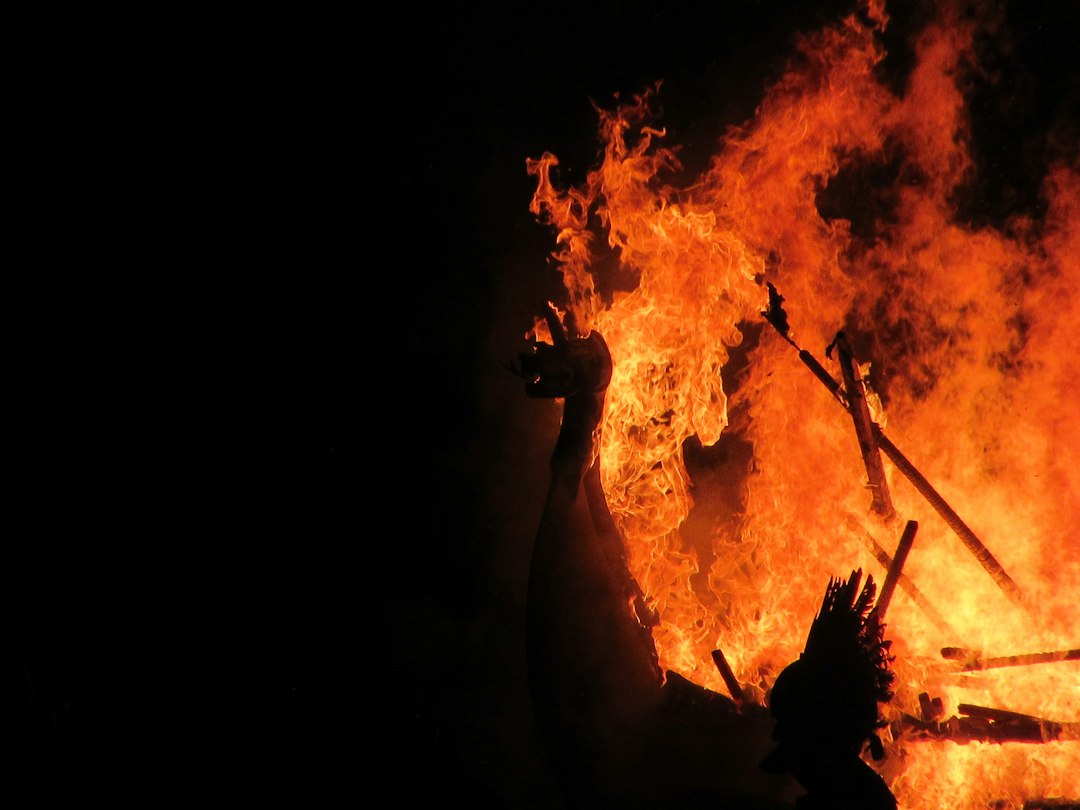
If you’ve ever looked into Up Helly Aa, you might assume it’s an ancient tradition passed down directly from the Norse settlers who lived here before Shetland became part of Scotland in 1467. But honestly, that’s a bit of a myth. The event actually started as Up Helly A’, or "up holy day," which simply marked the end of the Yule season, long before anyone started dressing up as Vikings. Back then, it wasn't the polished spectacle you see on social media today; it was defined by the chaotic and frankly dangerous practice of tar-barreling, where locals dragged burning barrels through the streets. Think of it less as a heritage parade and more like a volatile, localized street brawl that the town elites were desperate to tame.
To curb that violence, organizers in 1874 made a calculated pivot to Viking pageantry, essentially reinventing the festival's identity to create something more structured. It worked, and by 1882, we saw the first official torchlight procession, which shifted the entire tone of the night. If you’re a stickler for history, you’ll appreciate that the iconic Viking squads don't actually wear horned helmets—that’s just a popular invention with no basis in archaeology. Guizers have to follow strict costume guidelines, which is a detail that shows how much they care about maintaining the integrity of their specific Norse-inspired aesthetic. It's a fascinating study in how communities build their own traditions when the old ways become too unruly to manage.
You might wonder how a festival that stayed strictly local until the late 1970s became such a global draw, but it comes down to the sheer labor involved. Take the galley, for instance; it’s a centerpiece constructed by volunteers over four months, only to be intentionally burned to the ground by hundreds of torches at the end of the night. Or consider the role of the Jarl, who has to put in fifteen years of committee service just to earn the position. It’s a massive, long-term commitment that feels worlds away from the transient nature of modern tourism. When you look at the math, the festival date is still pinned to the old Yule calendar, falling precisely twelve days after Orthodox Christmas, keeping a quiet connection to that older, pre-Viking era hidden right in plain sight.
From Ancient Roots to Modern Spectacle: How the Festival Evolved
When you look at how a community event actually survives over a century, you realize it’s less about preserving a static memory and more about constant, intentional engineering. Think of it as a living organism that has had to adapt its physiology just to stay relevant in a modern world that demands both spectacle and safety. We aren't just talking about people putting on costumes here; we're looking at a rigorous, technical operation that balances fire-resistant logistics with a deep commitment to historical authenticity. It’s honestly fascinating how they’ve managed to turn what was once a volatile, unmanaged street display into a precise, 2.5-kilometer torchlight parade that operates with the timing of a Swiss watch.
To keep this tradition from fading into a generic tourist trap, the organizers have had to become masters of specialized material science. They’ve moved from simple, dangerous bonfires to using custom naval-grade timber and fire-resistant coatings that ensure the galley burns exactly as intended without compromising the safety of the surrounding town. And it isn't just the materials; there’s a sophisticated, almost industrial level of coordination involved, from calculating paraffin fuel loads to monitoring wind speeds that can easily whip through the narrow streets. If you’re into the weeds of how these things work, you’ll appreciate that every torch is weighed and balanced to ensure the procession flows at a steady, controlled pace rather than descending into the chaos of the past.
But the real magic happens in the details that most visitors never even notice. By mandating that every costume be crafted from period-appropriate wools and linens—strictly banning synthetics—the committee ensures the aesthetic remains rooted in the 19th century, even as they navigate the demands of a 2026 audience. They’re even tracking carbon outputs and managing ash disposal protocols to make sure the town’s harbor stays protected, which shows just how much effort goes into keeping this legacy sustainable. It’s a delicate balancing act, honestly, but it’s exactly this blend of high-tech safety measures and stubborn, old-world craft that keeps the spirit of the event from feeling like a museum exhibit. It feels real because, at every step, the community is actively choosing to do things the hard way.
The Guizer Jarl and the Squads: The Heart of the Procession
If you look at the heart of Up Helly Aa, you quickly realize it isn’t just a random group of people in costumes, but a highly disciplined machine built on decades of institutional knowledge. The Guizer Jarl acts as the figurehead for this massive effort, yet they are tethered to a committee that requires an almost unbelievable fifteen years of service just to sit at the table. It’s a staggering level of commitment that keeps the event from becoming just another hollow tourist spectacle. And frankly, that long-term investment is why the festival still feels so authentic today. You don't just show up and participate; you earn your spot through years of proving you understand the weight of the tradition.
When you zoom in on the squads, you see the real engine of the procession. These groups, now more diverse than ever following the inclusion of women and girls in the 2020s, function like independent, highly specialized units. Each squad is responsible for its own props and shields, often using traditional metalworking and woodcraft that would make a modern engineer stop and take notes. They don't just throw things together, either; every design must pass a strict vetting process to ensure it fits the Jarl’s chosen Norse theme for that year. It’s a fascinating balance of individual creativity and rigid, collective standards that defines the visual identity of the entire night.
Think about the sheer logistics of moving these squads through narrow Shetland streets without everything turning into a bottleneck. They treat the procession like a military operation, with every movement and visit to local community halls timed to the minute. This isn't accidental; the squads hold secret meetings and rehearsals all through the winter to ensure they can navigate the town with absolute precision. It is a massive, multi-generational effort where skills are passed down from one person to the next, often within families who have been doing this for decades. It’s honestly impressive to see people who work as engineers or public utility staff by day switch gears into these intense, historical roles by night, proving that this isn't just a hobby—it’s a way of life.
Lighting the Night: The Dramatic Torchlit March and Galley Burning
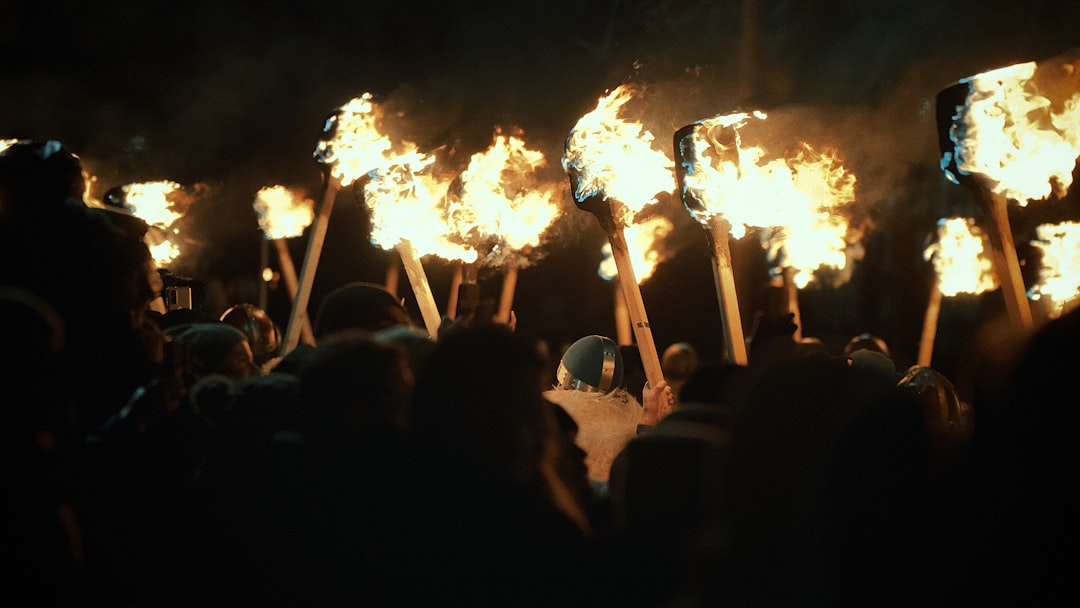
When you’re standing in the cold Shetland air waiting for that first flare, it’s easy to get swept up in the magic, but the reality is that the torchlit march is a masterclass in controlled, high-stakes logistics. Every one of those torches isn’t just a random flame; they are precision-engineered tools made of hessian and jute wrapped around wood, specifically weighted at 1.5 kilograms to keep the guizers from tiring out while maintaining a perfect, uniform line. They’ve even filtered the paraffin fuel to minimize smoke, which is a detail you’ll really appreciate when you're packed into those narrow streets with thousands of other people. It’s wild to think that the light produced is so intense that photographers don’t even need external gear to get the shot—the fire itself does all the heavy lifting.
The march moves with the discipline of a military unit, maintaining a strict cadence of 100 steps per minute to ensure the fireline never breaks or becomes a hazard. It’s fascinating how they’ve turned something that could be pure chaos into a clockwork operation, where every movement is rehearsed to keep the crowd safe and the visual impact high. If the wind hits 35 knots, the entire plan shifts automatically to a pre-vetted location, showing just how much they prioritize safety over the spectacle. It’s this blend of rigid technical standards and raw, visceral performance that makes the whole thing feel so grounded in reality rather than just being a show.
When the galley finally meets its end, the precision continues with a level of detail that honestly surprised me. The structure is built from reclaimed timber and a seasoned Norwegian spruce head, designed to burn completely and evenly in exactly twenty minutes once that final synchronized volley of torches hits it. Even after the fire dies down, the work doesn't stop; they use magnetic recovery to pull metal components from the harbor floor and treat the remaining ash as a soil additive to close the loop on their materials. It’s not just about the fire for a few hours—it’s a carefully managed, circular process that respects the environment as much as it honors the history. Watching it all come together, you realize this isn't just a festival; it’s an incredibly sophisticated engineering feat performed by a community that refuses to take the easy way out.
Essential Tips for Travelers: Navigating the Shetland Celebration
If you’re planning to experience the Shetland celebration firsthand, you’ve got to start by wrapping your head around the logistical reality that Lerwick essentially transforms into a restricted-access zone the moment the procession begins. The town’s historic lanes are incredibly narrow, so local stewards enforce strict bypass routes that you’ll need to follow if you want to avoid getting stuck behind a barricade. Honestly, I’d suggest you skip the urge to bring a tripod or bulky gear; the crowd density is immense, and the constant, fluid movement of the march makes setting up anything stationary impossible. Instead, focus on finding a spot near the street corners where the squads make their turns. The guizers follow a precise geometric path, and those corners offer the best sightlines without you needing to press into the thick of the fireline.
You should know that the festival’s timing is locked to a mathematical calculation of Shetland’s late-January daylight hours, hitting that perfect transition into total darkness for maximum visual impact. It’s a striking effect, but keep in mind that the thermal radiation from the galley fire is no joke—the heat necessitates a clear perimeter of at least fifty meters, which is strictly enforced for your safety. I’ve seen visitors get caught off guard by the sheer intensity of the light, but the good news is that the local cellular network gets a serious boost from temporary masts to handle the massive surge in data usage. Still, don’t bank on perfect connectivity; just enjoy the fact that the authorities are monitoring air quality and wind speeds in real-time to keep the whole operation safe.
If you’re lucky enough to score a ticket to the legendary hall visits, prepare for a long night that stretches well into the early morning hours. The squads move in a constant, tight rotation between different venues, often in full, heavy regalia that makes navigating the town a workout in itself. Because housing stock is so limited, you’re looking at booking your stay up to two years out—a reality that really underscores how much of a local, high-demand event this truly is. Make sure you’re checking the Shetland Islands Council’s ferry shuttle schedules, which are specifically synced to these late-night shifts to ensure you aren't stranded. It’s a massive amount of planning, but when you see the town effectively managing a temporary waste and infrastructure grid to clean up everything within forty-eight hours, you’ll realize just how much care this community pours into keeping their home running smoothly while they celebrate.
Beyond the Flames: Embracing the Enduring Spirit of Scottish Heritage
When we look past the immediate, visceral spectacle of the galley burning, it’s easy to miss that the enduring spirit of Scottish heritage here is actually sustained by a staggering amount of modern, highly technical precision. You might think tradition is just about looking backward, but in Shetland, it’s an exercise in rigorous engineering that feels lightyears ahead of what you’d expect. For instance, the festival team treats the entire event like a controlled experiment, using bespoke, non-toxic fire retardants that bond with the timber to ensure the galley burns at a consistent rate of exactly 1.2 centimeters of thickness per minute. It’s that kind of meticulous attention to detail—like the way acoustic engineers monitor song decibels to prevent resonance issues in the narrow lanes—that keeps the community’s identity from ever feeling like a static museum piece.
Honestly, it’s fascinating how they’ve managed to marry 9th-century aesthetics with such sophisticated environmental and physical safety standards. Take the costumes, for example; while they strictly use period-accurate wools and linens to honor the past, each garment is treated with a specialized lanolin-based sealant that boosts its flash point by 40 degrees Celsius. It’s a smart, protective buffer that allows participants to get close to the fire without needing to rely on modern synthetics that would ruin the visual integrity of the night. Even the torches aren't left to chance, as they are aerodynamically calibrated to remain stable in winds up to 28 knots, ensuring the parade doesn't descend into the kind of unpredictable chaos that defined the old tar-barreling days.
And if you want to understand how they balance this intense spectacle with the reality of living in a fragile, historic town, just look at how they manage the aftermath. They’ve implemented vacuum filtration systems to keep ash out of the harbor, ensuring the pH levels stay within strict environmental bounds, and even use pressure-sensitive plates under the cobblestones to monitor the weight distribution of the squads in real-time. It’s a closed-loop system where even the metal remnants from the harbor are analyzed for combustion efficiency and then recycled into commemorative items. When you see how they’ve integrated low-emission transport and real-time wind monitoring into the logistics of the night, you realize this isn't just a celebration of the past; it’s a living, breathing testament to how a community can preserve its soul by mastering the science of its own traditions.
Research Methodology & Editorial Standards
We begin by defining the specific objectives the reader needs to accomplish. Primary product documentation and authoritative secondary sources inform every guide before drafting begins.
Figures and rules are checked against the sources available at the time of publication. Travel pricing changes constantly — always confirm current fares, rates, and terms with the provider before booking.