
Experience the Most Breathtaking Scenic Train Rides Across California
Think about the salt air hitting those train cars every single day; it forces a specialized maintenance cycle just to keep the metal from oxidizing too quickly.
Hugging the Pacific: Exploring Coastal Routes from San Diego to San Luis Obispo
If you’ve ever sat by the window on the Pacific Surfliner, you know that moment when the tracks get so close to the water you feel like you’re actually floating on the tide. This 351-mile stretch from San Diego to San Luis Obispo isn't just a way to get from A to B; it’s an engineering marvel that hugs the coastline in a way that feels almost defiant. While we’re busy snapping photos of the surf, the reality is that the rail line is fighting a constant battle against the elements. Take the Del Mar Bluffs, for instance—those sandstone formations are eroding at about six inches a year, which keeps maintenance crews constantly on their toes to ensure the tracks stay secure. It’s a fascinating, if precarious, dance between heavy infrastructure and a very active Pacific Ocean.
But honestly, the technical side is just as gripping as the view. Think about the salt air hitting those train cars every single day; it forces a specialized maintenance cycle just to keep the metal from oxidizing too quickly. You’ve also got areas like San Clemente, where massive riprap revetments and seawalls are the only things standing between the tracks and the kinetic energy of those breaking waves. It’s a high-stakes environment where marine layers can drop visibility to under 500 feet in a heartbeat, requiring some pretty rigorous signaling protocols to keep everything moving safely. Compared to driving Highway 101, which runs right alongside us for much of the trip, the train offers a vantage point that feels remarkably detached from the highway traffic, even when we’re practically bumper-to-bumper with the cars.
What really strikes me is the environmental tightrope this route walks. We’re talking about a corridor that slices through some incredibly sensitive habitats, housing over 40 endangered or threatened species. It’s why you’ll see those Tier 4 emission-compliant locomotives pulling the weight now; they’re designed to keep nitrogen oxide and particulate matter low in places where that really matters. When you combine the historic 19th-century architecture at some of the 27 stations with these modern environmental upgrades, you get a unique snapshot of California’s past and present colliding. Whether you’re commuting or just looking for a car-free escape, there’s a genuine sense of scale here that you just don't get from behind a steering wheel. It’s worth reflecting on that next time you hear the whistle blow near the Gaviota Pass.
Sierra Nevada Splendor: Journeying Through California’s Mountain Landscapes
When you look at the Sierra Nevada, it’s easy to just see a pretty backdrop for a postcard, but I find it helpful to think of the range as a massive, living machine that’s constantly shifting. This is a single, colossal fault block that has been tilting westward for millions of years, and that mechanical push is exactly what created the jagged, 10,000-foot eastern escarpment we see today. You’re essentially staring at a mountain range that is still actively growing, with tectonic forces shoving the peaks upward by about a millimeter every single year. It’s wild to realize that Mount Whitney sits at 14,494 feet, holding the record for the highest point in the lower 48, while being less than 85 miles from the lowest point in North America. That kind of extreme verticality is what defines the entire experience of traveling through these mountains.
If you’ve ever wondered why the valleys here look so perfectly carved, you can thank the ice sheets of the Pleistocene epoch for that. Those glaciers scoured out the granite to create the deep, U-shaped canyons we now navigate, leaving behind the massive granodiorite formations that make the Sierra so visually distinct. Beneath the surface, there’s a whole lot of energy moving too, with geothermal features like the Long Valley Caldera acting as a reminder that this isn't a static environment. I always tell people to look closely at the soil in those high-altitude alpine meadows; they’re doing a massive job as carbon sinks, even with the short growing seasons they have to work with. It’s a delicate, high-stakes ecosystem that feels far more grounded and ancient than anything else in the state.
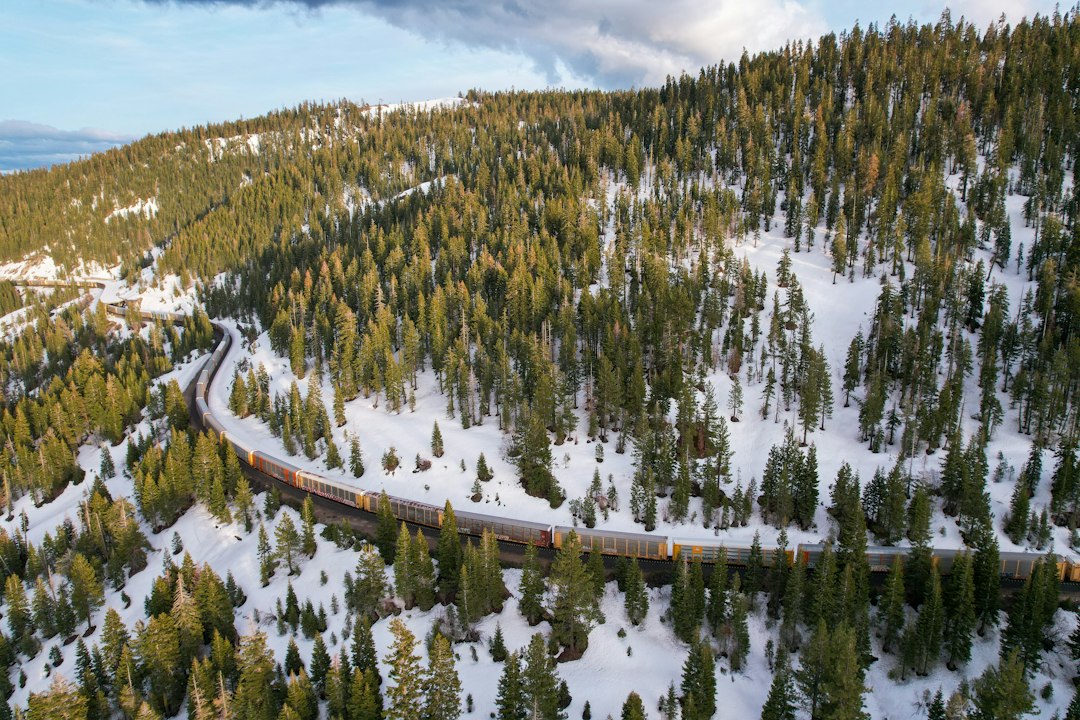
But for those of us who ride the rails, the most impressive part is how we actually manage to cut through this granite giant. Take Donner Pass, for example, which is a total beast when it comes to climate control. With nearly 400 inches of snow falling there annually, the mountain transit relies on heavy-duty snowsheds just to keep the tracks from being buried or destroyed. Beyond the engineering, you’ve got this incredible biodiversity, with over 3,500 species of plants clinging to these slopes because of the crazy microclimates created by the elevation shifts. It’s also the only place on Earth where you can find giant sequoias thriving in that specific, narrow band of the western slope. When you’re moving through the range, you’re not just seeing scenery; you’re seeing the water tower for 60 percent of California, held in place by a massive, frozen snowpack that forces our Pacific air to drop its moisture before it even hits the desert.
Luxury and Nostalgia: Experiencing Vintage Locomotives and Glass-Domed Cars
There’s a specific kind of magic that hits when you step into a glass-domed rail car, but if you look past the romance, you’re essentially sitting inside a masterclass of mid-century engineering. These "Astra Domes" were built with curved tempered safety glass designed to survive the massive thermal expansion and contraction cycles that come with climbing California’s high-altitude passes. You have to appreciate that these cars were never just about the view; they were a massive technical headache to climate control. Because that much glass turns the interior into a literal greenhouse, engineers had to pack in high-capacity HVAC units just to keep things comfortable. Honestly, it’s a delicate balancing act between maintaining that vintage aesthetic and keeping the cabin from becoming unlivable under the summer sun.
When it comes to the power pulling these heavy consists, we’re often looking at EMD F-unit power plants that are still legendary for their raw, high-torque output. These two-stroke diesel engines don't rely on modern computerized diagnostics, which means the engineers running them have to be incredibly dialed in—they’re interpreting physical pressure gauges and listening for auditory cues to manage engine loads on steep grades. It’s a stark contrast to the digital precision of today’s locomotives. I always find it fascinating how restoration crews work to keep the original brass and mahogany finishes intact while layering in non-toxic, modern fire retardants that you’d never even notice. They’re effectively scrubbing away decades of lead-based paint to get back to the steel skeleton, then applying modern anti-corrosive tech to keep the whole thing from rusting out.
And then there's the ride quality itself, which is where things get really interesting from a mechanical standpoint. Those classic bogies and suspension systems were notorious for harmonic vibrations, so you'll often see them retrofitted with modern dampers just to smooth out the journey. You’ll notice that signature click-clack rhythm, too, which is a direct byproduct of those old-school jointed rail segments that are almost extinct now in favor of continuously welded lines. Even the pneumatic braking systems are these robust, complex relics that require a level of manual calibration that most modern transit operators would find completely foreign. It’s a high-stakes, labor-intensive way to travel, but when you’re watching the Sierra landscape through UV-coated glass that’s perfectly tuned to block out high-altitude radiation, it’s hard to argue with the result.
Wine Country Rail: Combining Scenic Vistas with Vineyard Adventures
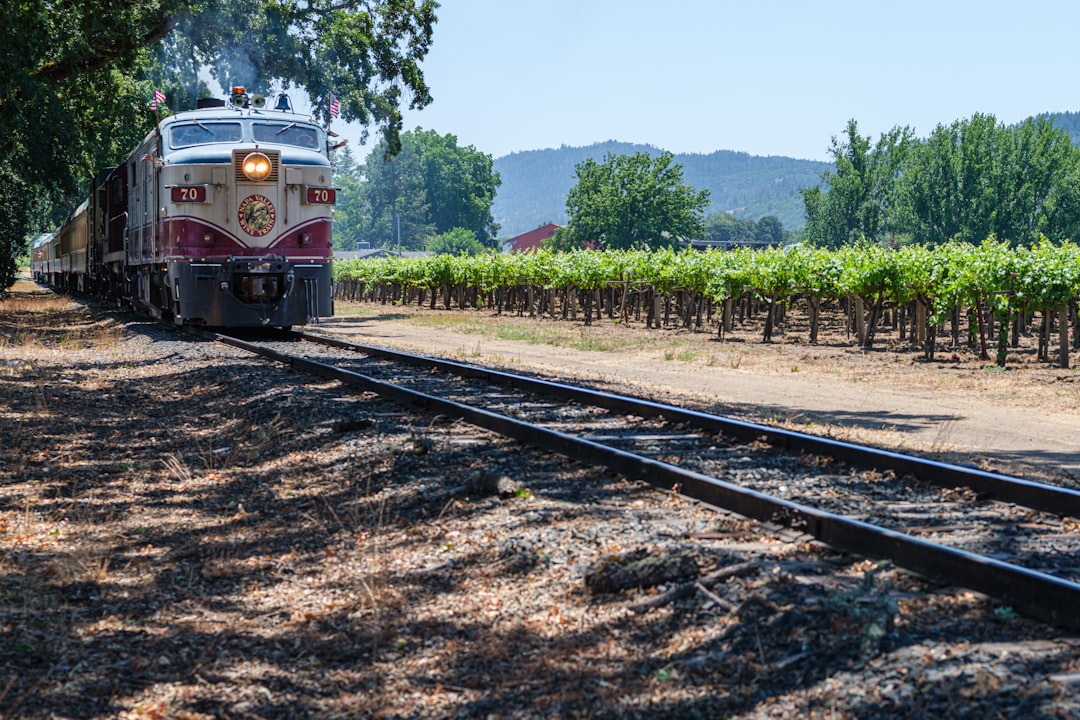
When we talk about blending the refinement of viticulture with the raw mechanics of rail, you're really looking at a fascinating collision of 19th-century infrastructure and modern agricultural precision. I’ve always found it remarkable how the Napa Valley Wine Train manages to operate on trackage dating back to 1864, essentially treating a relic of the freight era as a high-end hospitality platform. If you’ve ever walked through those Pullman cars, you’re looking at Honduran mahogany and brass that demand a rigorous humidity control cycle just to keep the wood from checking. It’s not just about the aesthetic; it’s a constant, high-stakes battle against thermal expansion and metal fatigue in an environment where the railbed itself is constantly shifting.
The engineering challenges here go much deeper than you’d expect, especially when you consider that the route cuts right through the Rutherford Dust area. Those volcanic loam soils are legendary for creating world-class Cabernet, but they also create a drainage nightmare for the track embankment, forcing maintenance crews to use heavy ballast tamping to keep everything perfectly level. Think about the kitchen cars for a second; they’re trying to manage the heat load of feeding 300 people while keeping the entire vintage structure stable against high-frequency vibrations. I’m always impressed by the way the operators have to balance their speed to keep dust levels down, because frankly, if they kick up too much debris, they’re impacting the very crop that makes the region famous.
But the real secret to the ride quality is the hidden transition from old-school jointed rail to thermite-welded sections, which is a massive logistical hurdle when you’re working in a high-fire-risk zone. It requires onsite fire-suppression teams just to perform basic repairs, which is a detail most people sipping a glass of wine in the dome car never even notice. You’ve got these massive, vintage locomotives pulling heavy consists, and the operators are essentially relying on ultrasonic testing of the steel axles to prevent fractures before they even happen. It’s a delicate, high-maintenance dance, but it’s honestly one of the most effective ways to appreciate how much effort goes into protecting the landscape while moving people through it. Next time you're out there, just listen for that lack of clatter—that’s the sound of modern engineering quietly holding up a piece of living history.
Essential Tips for Planning Your California Rail Expedition
Planning a rail expedition across California is honestly more about mastering the intersection of heavy infrastructure and environmental volatility than just picking a seat. If you're serious about the experience, you should prioritize midday departures during the summer months; doing so helps you avoid the harshest solar glare that hits those older, non-polarized carriage windows at lower angles. I always suggest timing your trip around the spring equinox if you want the longest daylight hours to really soak in the Sierra Nevada, where you’ll notice the snowpack acts as a massive natural acoustic dampener, changing how the engine noise resonates against the granite. It’s also worth noting that your seat choice matters more than you might think; sticking to the center of the car puts you at the point of minimum lateral displacement during those tight-radius curves, which is a lifesaver if you're sensitive to motion.
When you're looking at the technical side of the journey, it’s wild to realize that the state's corridors rely on complex Positive Train Control systems using GPS-synchronized transponders to keep passenger cars safely separated from heavy freight. You’ll find that operators are constantly fighting the elements, using specialized anti-corrosive lubricants on switches to stop marine salt from seizing up the works along the coast. Even the tracks themselves are high-maintenance, with engineers managing sand-dispensing systems for extra traction on steep mountain grades, while special expansion joints in the Central Valley handle steel that can grow up to 1.5 inches per hundred feet in the heat. It’s a constant, high-stakes dance, and the operators are even running real-time seismic monitoring that triggers an automatic halt of all transit if the earth decides to shift.
If you’re traveling through older routes like the Santa Susana Mountains, keep in mind that the rail lines are threading through tunnels over a century old, requiring precise laser-scanning to keep modern, taller rolling stock from clipping the walls. It’s also fascinating to see how they keep the vintage charm alive; many of those historic cars still use original lead-lined insulation, so operators have to layer in high-end, modern air-filtration systems to ensure the cabin stays safe for everyone on board. If you catch the train right at dusk or dawn, you might even spot localized thermal inversions where cool valley air creates some really strange, beautiful atmospheric refraction. It’s a lot to process, but understanding these mechanical and environmental realities makes the view from the window feel that much more impressive.
From Redwoods to Surf: Why Train Travel is the Best Way to See the Golden State
I think we often forget that seeing California from a car window is mostly about managing stress—navigating lane changes, dealing with unpredictable highway traffic, and focusing on the pavement rather than the scenery. When you swap the steering wheel for a rail seat, you’re not just changing your mode of transport, you’re fundamentally altering your relationship with the geography of the Golden State. Let’s pause for a moment and reflect on that: you’re essentially trading a high-friction experience for one that lets the landscape dictate the pace. Rail travel here isn't just a nostalgic throwback; it's a calculated, efficient way to bridge the gap between the ancient, fog-drenched redwood belts and the kinetic, sun-drenched surf culture of the coast.
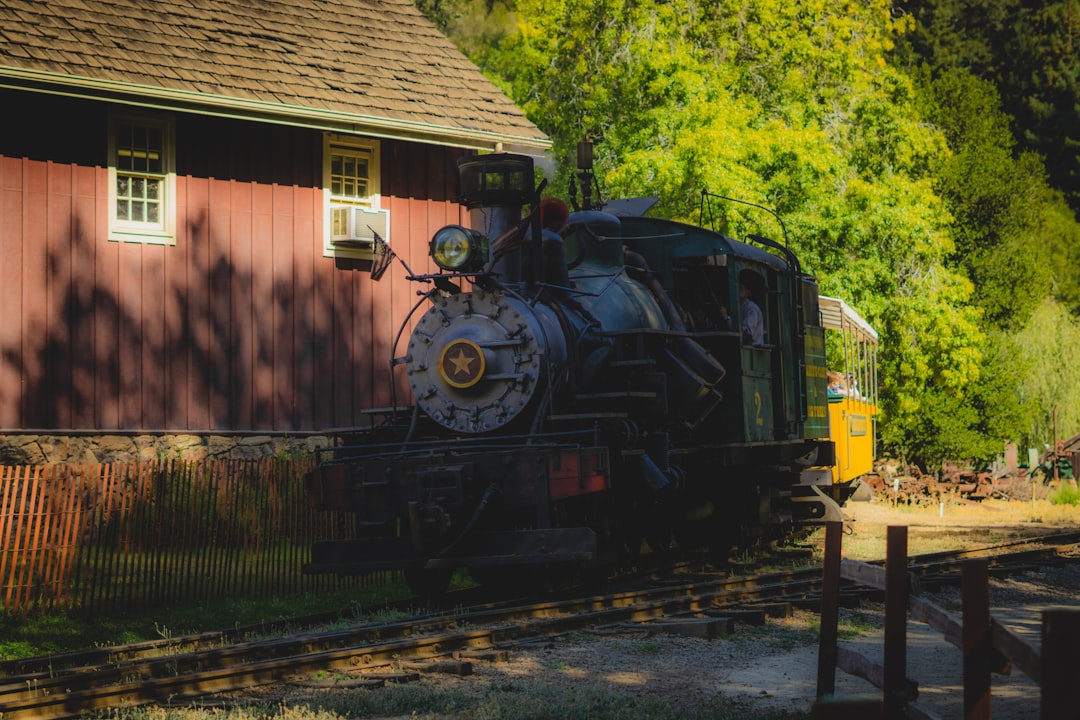
The logistics are actually quite fascinating once you look under the hood. Take the historic Skunk Train in Mendocino, for example, where the track geometry is so precise it has to account for the deep, expansive root systems of old-growth redwoods shifting beneath the ballast. These lines are essentially living artifacts, utilizing steam-era engineering that has been adapted to handle the unique physics of a forest floor that acts as a massive carbon sink. You’ll notice the ride quality feels different here, too, because those dense canopies and thick layers of organic duff act as natural acoustic dampeners, creating a silence you just can’t find on the I-5 or Highway 101. It’s a delicate, high-stakes balance where engineers must monitor everything from timber bridge integrity to the thermal expansion of steel rails during the rapid temperature spikes that hit when you move from the cool coast into the dry inland valleys.
But beyond the engineering, there’s a tangible sense of scale you gain when you’re moving through these corridors. You’re watching the transition from the high-tannin redwood timbers—which have naturally resisted rot for decades—to the open, salty air of the Pacific, all while the train’s onboard systems handle the heavy lifting. It’s a sophisticated, low-impact way to traverse protected lands that would be otherwise inaccessible or overwhelmed by road traffic. Honestly, if you want to understand the true texture of California—the way the atmosphere shifts, how the vegetation changes from ferns to sea grass, and why the infrastructure is so fiercely guarded—you really have to see it from the tracks. It’s an immersive, authentic way to travel that makes you feel like you’re finally seeing the state as it actually exists, rather than just passing through it.
Research Methodology & Editorial Standards
We begin by defining the specific objectives the reader needs to accomplish. Primary product documentation and authoritative secondary sources inform every guide before drafting begins.
Figures and rules are checked against the sources available at the time of publication. Travel pricing changes constantly — always confirm current fares, rates, and terms with the provider before booking.