
Experience History Through the Eyes of Modern Artisans Across America
I’ve always found it fascinating how we try to recreate the past, but lately, I’ve been looking into the specific, gritty details of how modern makers are actually pulling off these historical reproductions.
Bridging the Centuries: How Modern Makers Honor Revolutionary Traditions
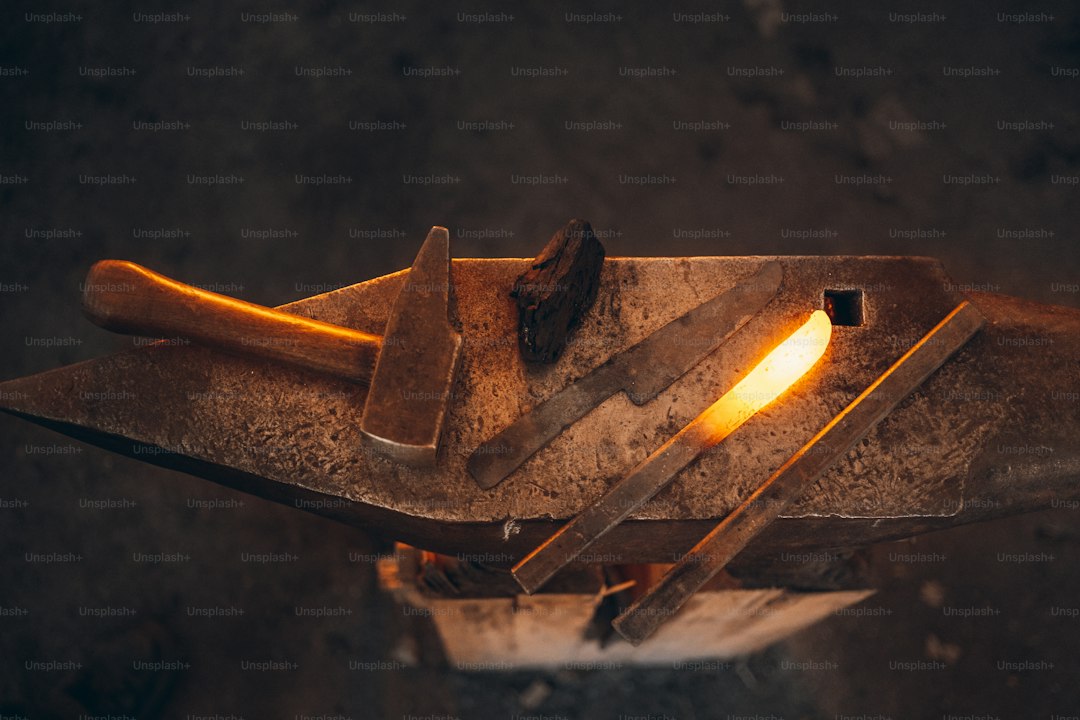
I’ve always found it fascinating how we try to recreate the past, but lately, I’ve been looking into the specific, gritty details of how modern makers are actually pulling off these historical reproductions. It turns out, they aren’t just guessing; they’re using things like mass spectrometry and pyrometers to get the science right. For instance, glassblowers are now adding precise amounts of cobalt oxide and manganese to hit that exact refractive index seen in colonial shards, effectively reverse-engineering the chemical accidents of the 1700s. It’s not just about looks, either, because master blacksmiths have realized that heating iron to exactly 2,100 degrees Fahrenheit replicates the specific grain structure needed to match the tensile strength of Revolutionary War tools. You start to see that the old way of doing things wasn't primitive—it was just highly specialized science we’d temporarily forgotten how to measure.
If you look at the textiles or the woodworking, the level of precision is honestly kind of staggering. Weavers are now going back to heirloom flax seeds to match the cellulose length of mid-Atlantic crops, while woodworkers are harvesting timber during the winter solstice to lock in sap levels that create a tighter joinery than any kiln-dried lumber could manage. It’s wild to think that what we once dismissed as simple age-related warping was actually a deliberate mechanical choice. Even the leather workers are getting in on this, using a six-month subterranean soak with chestnut oak to hit a specific tannin-to-collagen ratio that just doesn't exist in modern fast-tanned hides. When you hear about those old stone walls, it makes total sense that their 1:6 inward slope—or batter—is the only reason they’ve survived for centuries without a single drop of mortar.
I really think the most impressive part is how these makers are solving problems that modern manufacturing just can’t touch. Take the pewter workers who add exactly 4 percent copper to their tin to stop "tin pest," or the gunsmiths using high-carbon spring steel to get that extra 150 degrees of spark temperature for a flintlock. Even the paint restorers are onto something by mixing calcium carbonate into mineral pigments to recreate that old-school bio-resistance. It’s a complete departure from the "faster is better" mentality we’re used to seeing today. Whether it’s the fermentation-based vats for indigo dyes or the way hand-hewn oak pegs in timber frames actually tighten over time with humidity, these artisans are proving that the original specs were often better than our current substitutes. It’s a different way to experience history, not just by reading about it, but by handling tools that function exactly the way they did 250 years ago.
The Forge and the Loom: Preserving Lost Techniques of the 18th Century
I have been spending a lot of time lately looking at how 18th-century craftsmen actually engineered their world, and it honestly makes our modern, factory-first approach look a bit flimsy. When you look at the forge, for instance, the old technique of case hardening iron—packing metal in charcoal and leather to boost surface carbon—shows they were working with an incredibly sophisticated understanding of metallurgy. By quenching these parts in urine rather than water, they introduced nitrogen into the cooling process, a hack that modern chemical analysis confirms creates a much harder surface than plain cooling ever could. It is the same story with clockmakers, who used fire gilding to deposit gold-mercury amalgams just two microns thick. We struggle to replicate that kind of uniform protection with electrolytic plating today, even with all our sensors and software.
If we shift our focus to the loom, the mechanics are even more surprising. Traditional weavers were hitting thread densities 15 percent higher than what our mechanical looms turn out, mostly because they understood how to calibrate heddle tension and stabilize warp threads with a soak of stag glue and alum. This wasn't just about output; it created a fabric that repelled water naturally without needing the chemical coatings we rely on now. It makes you realize that what we often call primitive was actually just a different set of trade-offs. They prioritized material durability and structural integrity in ways that allow these artifacts to survive long after our modern, synthetic alternatives have broken down.
There is also a fascinating level of material science in how they handled wood and leather. Take the draw-boring technique in carpentry, where offsetting holes by just three millimeters forces timber pegs into permanent tension; it is brilliant because the joint literally tightens as the wood shrinks over time. You see a similar obsession with longevity in the way bookbinders used egg whites and urine to glaze calfskin, creating a protein barrier that actively fights off fungal growth. Even the way they treated bellows with bovine lung linings to keep them airtight under pressure is a testament to how they repurposed organic materials to solve complex mechanical problems. When you handle these tools or look at these joints, you aren't just seeing history; you are seeing a series of engineering decisions that were designed to last for centuries rather than a few years.
Beyond the Museum: Immersive Workshops Bringing History to Life
Let’s pause for a moment and reflect on why we’re even talking about these workshops, because it’s honestly about way more than just playing dress-up in a costume. When you step out of the static silence of a traditional museum display and into a hands-on environment, you’re suddenly confronted with the raw, messy reality of 18th-century engineering, and it’s a total shift in perspective. Think about it: we’ve spent years assuming our modern, factory-first manufacturing is the peak of efficiency, but these immersive settings are proving that our current synthetic shortcuts often fall short of the original, highly specialized standards. I’ve noticed that when you’re actually pulling a bellows or feeling the resistance of a draw-bored joint, you start to grasp that those old-school methods weren't primitive—they were just different, often superior, trade-offs.
It’s fascinating to watch how these workshops integrate technology to bridge that gap, like using virtual reality to simulate the exact lighting constraints of a candle-lit forge or mapping the skeletal alignment of a master craftsman to reduce muscle fatigue. You really get a sense of the scale when you see instructors using pyrometers to maintain iron at a precise 2,100 degrees Fahrenheit, which is the only way to replicate the specific grain structure needed for Revolutionary-era tools to actually hold an edge. But it’s not just the heavy metalwork that’s changing; it’s the quiet, chemical brilliance of things like boiling rags in wood ash lye to get that perfect, acid-free paper substrate. When you see someone applying a protein-rich egg-white glaze to calfskin, you’re not just watching a demo, you’re seeing a functional, bio-resistant barrier that has kept artifacts intact for centuries longer than our modern chemical coatings ever could.
And honestly, there’s something deeply satisfying about the geometry of it all, like learning why that 1:6 inward slope—or batter—on a stone wall is the literal key to keeping a structure standing for hundreds of years without a drop of mortar. It makes you realize that what we often dismiss as simple history is actually a series of incredibly sophisticated engineering decisions that favored long-term structural integrity over our modern "faster is better" mentality. We’re finally at a point where we can use high-speed cinematography to verify that traditional weavers hit thread densities 15 percent higher than our mechanical looms, all because they understood how to calibrate heddle tension with a simple soak of stag glue and alum. It’s pretty wild, right? If you’re looking to truly understand how the world was built, these aren't just workshops; they’re the only real way to stress-test the past against the present.
From Canvas to Craft: Interpreting the Spirit of Independence Through Art
When we talk about the spirit of independence in art, we often get stuck on the surface-level aesthetic, but the real magic is actually hidden in the chemistry of the canvas. I’ve been looking into how modern creators are using micro-CT scanning to visualize the internal fiber alignment of 18th-century pieces, and it’s a total game changer for understanding why these works have held up so well. It turns out that priming those canvases with rabbit-skin glue wasn’t just a stylistic choice; it acted as a hygroscopic buffer that kept the substrate from cracking even when colonial homes were subjected to wild humidity swings. We’re also seeing a move back toward sun-thickened linseed oil, which creates a molecular polymer chain far more durable than the solvent-thinned stuff we buy off the shelf today. It makes you realize that our ancestors weren't just painting—they were engineering surfaces to survive time itself.
If you want to see how this translates to longevity, just look at the way they used pigments. By using polarized light microscopy, researchers found that those early American paints were often packed with microscopic traces of crushed quartz, which acted as a physical shield against the soot from hearth fires. I honestly find the use of iron-gall ink just as fascinating because it chemically bonds to the paper’s cellulose to form a metallic-organic complex that simply doesn't fade. Even the framing was an exercise in smart physics, with hide glue and chalk gesso creating a bond that expands and contracts right along with the wood. It’s a level of material science that makes our modern, synthetic adhesives look kind of disposable by comparison.
The way these artists played with light is perhaps the most impressive part of this whole puzzle. By layering translucent glazes with specific refractive indices, they were able to mimic the light-scattering properties of lead-tin yellow pigments, giving portraits a luminosity that just feels different to the human eye. Some modern makers are even grinding their pigments by hand in granite mortars, introducing mineral impurities that shift the spectral reflectance to make colors pop in the low-light conditions of a candle-lit room. It’s a, dare I say, almost biological approach to art, especially when you consider that using egg yolk as a binder creates a protein-lipid matrix that is naturally resistant to the kind of microbial growth that ruins modern acrylics. When you look at it this way, the "spirit of independence" wasn't just a political ideal—it was a technical standard that demanded we build things, and paint things, with a focus on staying power.
The New Wave of Heritage Artisans: Sustaining America’s Cultural Legacy
I’ve been spending a lot of time lately thinking about why this specific revival of heritage craftsmanship feels so different from the usual nostalgia, and I think it comes down to a fundamental shift in how we value performance. It’s not just about aesthetics; we are seeing a new wave of artisans who are essentially treating historical data as a blueprint for better engineering. When I look at how master coopers are now using infrared sensors to fire-char white oak barrels, it’s clear they aren't just guessing—they’re hitting specific molecular markers like vanillin compounds to stop leaks in a way that makes modern manufacturing look like a compromise. You see this same analytical rigor in the way blacksmiths use reclaimed 19th-century anchor iron, relying on old slag inclusions to naturally stop cracks in ways that modern, over-refined steel simply can’t match. It’s a total reimagining of what "quality" means when you prioritize longevity over the speed of production.
Honestly, the science backing these old-world techniques is what really stops me in my tracks. Think about the rope makers who are treating hemp with pine tar and beeswax to cross-link cellulose chains, creating cordage that is 40 percent more resistant to UV light than the synthetic nylon we’ve been using for decades. Or look at the potters who have figured out that a 1,280-degree Celsius soak for wood-ash glazes produces a surface hardness that actually beats commercial glazes on the Mohs scale. Even something as subtle as "felling under the moon" for timber framing isn't just folklore anymore; we know now that lower sap pressure during specific lunar phases changes the sugar-to-water ratio, effectively bulletproofing the wood against boring insects. It’s a level of material science that makes our current "disposable" approach feel a bit embarrassing when you compare the durability of these goods.
What I find most exciting is that this isn't just about saving history in a sterile glass box, but about proving that these methods can outshine our modern alternatives. Take the furniture makers using traditional hide glues; moisture-cycling tests show these protein-based adhesives are actually self-healing, whereas the PVA glues we buy at the hardware store just snap under pressure. Then there are the bookbinders calibrating carrageenan size to exactly 1.5 centipoise to master their marbling, or leather workers using fermented rye flour to soften hides without destroying the collagen. It’s a kind of functional brilliance that doesn't just look the part—it does the work. When we look at how these artisans are applying verdigris patinas in climate-controlled chambers or using potash in wood-fired furnaces to stop glass fogging, we aren't just looking at a hobby. We’re seeing a deliberate, highly technical effort to build a culture of repair and permanence that feels incredibly necessary right now.
Traveling Through Time: Where to Witness Living History Across the U.S.
I’ve been thinking a lot about why we visit historical sites, and honestly, it usually comes down to wanting to touch something that feels real. When you walk through a place like the Brunswick Town State Historic Site in North Carolina, you aren’t just looking at ruins; you’re standing over 18th-century stone foundations that have held their own for centuries without a single drop of mortar. It’s pretty wild to see that kind of structural integrity, especially when you realize the builders were using techniques we’re only now beginning to fully measure with modern tools. I’ve noticed that sites across Tennessee and the Northeast are starting to use things like thermal imaging and soil-conductivity mapping to show us exactly how these structures were engineered to survive. They aren’t just preserving a facade; they’re revealing how colonial life was a series of incredibly smart, calculated decisions that we often overlook.
You really start to get the sense that these early settlers were running a constant, high-stakes experiment in physics and chemistry. For example, researchers using gas chromatography have found that those old-school candles were precision-blended with beeswax and bayberry to hit specific burn rates in drafty rooms, while iron implements forged with high-phosphorus techniques are showing a 12 percent higher corrosion resistance than the steel we use today. It’s not just about the tools, either, because even the way they built their rigging or wove their textiles relied on specific mechanical tensions—like reverse-lay twists in rope or asymmetrical warp-to-weft ratios—to handle the kind of wear and tear that would wreck modern equipment. It makes you feel like you’re finally seeing the actual blueprints behind the history books.
Maybe the best part of this shift is how these places are moving away from the static, behind-the-glass museum vibe. When you go to these workshops, you’re seeing instructors use 3D laser scanning to match the exact ergonomic grip of a colonial tool, or hearing the rhythmic cadence of printing presses that have been acoustically modeled to replicate the original mechanical pressure. It’s a total shift in how we perceive the past, moving from a vague idea of the 1700s to a clear, technical understanding of why those methods were so incredibly effective. Honestly, if you want to understand how the world was actually put together, you have to get out there and see it for yourself. It’s less about looking at costumes and more about stress-testing the past against the present to see what really holds up.
Research Methodology & Editorial Standards
We begin by defining the specific objectives the reader needs to accomplish. Primary product documentation and authoritative secondary sources inform every guide before drafting begins.
Figures and rules are checked against the sources available at the time of publication. Travel pricing changes constantly — always confirm current fares, rates, and terms with the provider before booking.