
Experience History Through the Eyes of Artisans Recreating the American Revolution
I’ve spent time watching artisans who still use hide glue for architectural restoration, and it’s a process that demands constant vigilance—you have to keep that glue at a precise 140 to 150 degrees Fahrenheit, or the bond just won’t hold the way it should.
The Lost Techniques: Preserving 18th-Century Craftsmanship
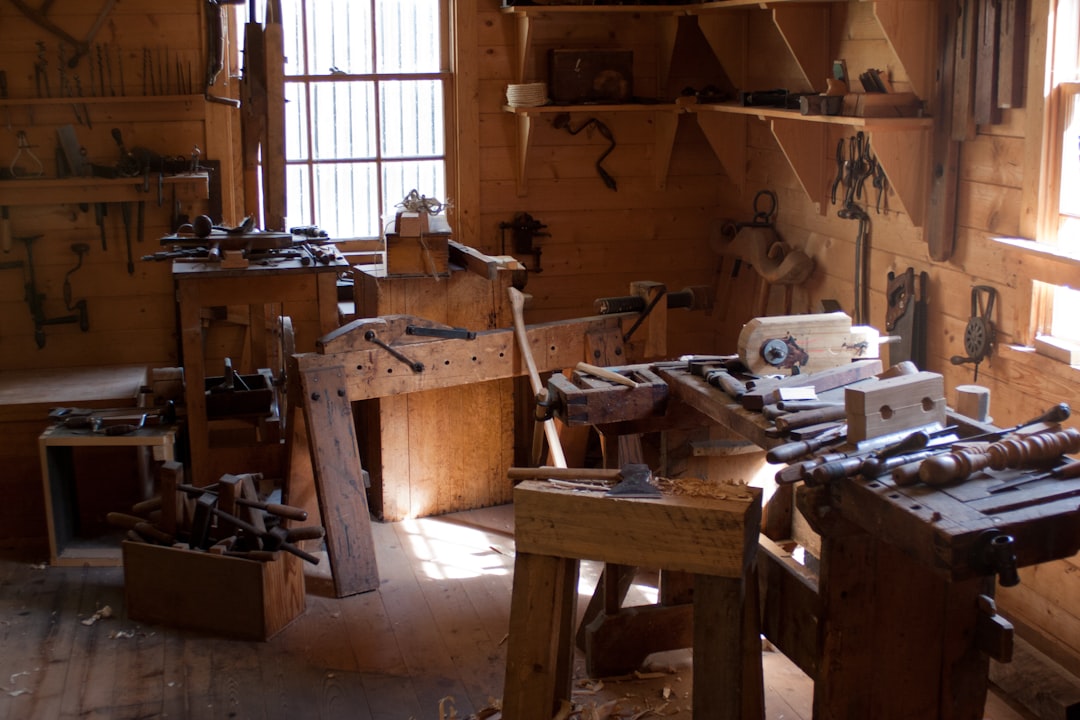
When you start looking closely at how 18th-century objects were actually made, you quickly realize that we’ve traded a lot of "feel" for convenience. I’ve spent time watching artisans who still use hide glue for architectural restoration, and it’s a process that demands constant vigilance—you have to keep that glue at a precise 140 to 150 degrees Fahrenheit, or the bond just won’t hold the way it should. It’s not just about the glue, though; they’re often scouring for reclaimed, old-growth timber because modern fast-growth wood simply doesn't have the tight grain density required to survive another century. You can't just walk into a hardware store and grab the right materials for these jobs. It’s a completely different mindset that prioritizes long-term material behavior over how fast you can finish the project.
Think about the way these artisans approach something as fundamental as masonry or blacksmithing. They’ll tell you that using modern Portland cement on an 18th-century structure is essentially a death sentence because that rigid material traps moisture, whereas traditional lime-based mortars allow the building to breathe. Then you look at the blacksmiths, who are managing coal forge temperatures by nothing more than the color of the metal, aiming for that perfect 2,300-degree mark for forge-welding without a single digital sensor in sight. It’s honestly humbling to see someone work iron with traditional swages and fullers instead of relying on a pneumatic press. They’re effectively reading the material in a way that modern automation can’t replicate.
Even the smallest details, like the gilder’s tip used to apply gold leaf that’s less than 0.1 micrometers thick, reveal how much we’ve lost in terms of specialized dexterity. I often wonder how many of these techniques would disappear entirely if these experts didn't spend so much time analyzing original tool marks to reverse-engineer exactly how a craftsman worked back in the 1700s. Whether it’s hand-sewn kettle stitches in bookbinding or the complex, friction-based joinery of hand-cut dovetails, these methods aren't just for show. They’re functional choices designed to handle the natural expansion and contraction of materials over decades. If you ever get the chance to see this work in person, you’ll see why these slow, manual methods are still the gold standard for anything meant to actually last.
Bringing the Battlefield to Life: The Role of Living History
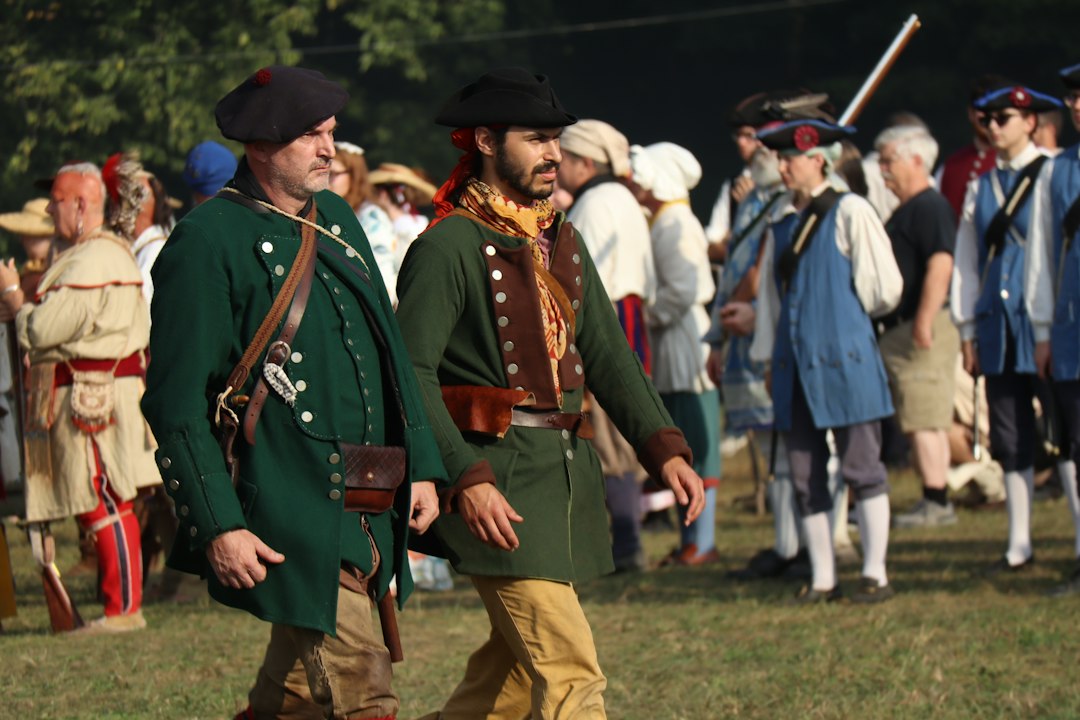
When we talk about bringing the American Revolution to life, it’s easy to picture the grand, sweeping motions of a battle, but the real magic actually happens in the quiet, grit-filled details that most history books just skim over. Think about the moment a reenactor puts on a kit weighing over 40 pounds; that’s not just a costume, it’s a physical lesson in the sheer exhaustion of 18th-century infantry life. I’ve seen practitioners spend months digging through archival records just to source the right vegetable dyes, like madder root or indigo, because they know those natural pigments interact with sunlight in a way modern synthetics simply can’t mimic. It’s this level of obsessive research—down to the exact stitch counts in period undergarments—that transforms a static museum exhibit into something you can actually feel.
It’s kind of wild to realize that by following original drill manuals like Baron von Steuben’s, these participants aren't just performing; they’re running a live, tactical experiment that shows us exactly how those formations moved across a field. You start to understand the rate of fire limitations faced by soldiers in the 1770s once you’ve watched someone struggle through the strict, slow loading procedures required for black powder muskets. Even the camp life, which often gets sidelined, is being reconstructed with an incredible eye for accuracy, from the specific scent of tallow candles to the way iron hearth equipment dictates what a soldier could actually eat for dinner. When you remove all the modern conveniences like plastic or zippers, you’re left with a controlled environment that forces you to grasp the physical constraints our ancestors navigated every single day.
Honestly, I think this approach is the only way to truly bridge the gap between us and the past because it moves beyond dates and names into the realm of lived experience. You aren't just reading about a skirmish anymore; you’re standing in the middle of a camp where the administrative record-keeping is done with quill pens and iron gall ink, and the regional accents you hear actually reflect the specific geography of the 18th-century colonies. It’s a sensory immersion that pulls you out of your modern bubble and places you right in the middle of the chaos and the craftsmanship of the era. Whether it’s a surgical demonstration based on actual Continental Army journals or a simple, period-accurate meal, these living history efforts turn abstract theories into something tangible. It makes me wonder what other parts of our history we’ve been misinterpreting simply because we’ve never bothered to test it out in the dirt and the smoke ourselves.
Beyond the Canvas: Artists Who Captured the Spirit of Independence
When we move away from the battlefield and into the studio, we find that the struggle for independence was captured just as vividly through the lens of early optical science and chemical trial-and-error as it was with muskets. Think about Charles Willson Peale, who didn't just paint; he used a camera obscura to anchor his perspectives, essentially merging cold, hard physics with the fluid motion of portraiture. It’s a fascinating contrast when you look at someone like John Singleton Copley, who took a radically different route by applying upwards of twenty layers of oil glaze to his canvases. He was chasing a specific refractive index to make silk look like silk, a process that demanded months of patience while the paint cured, proving that these artists were as much engineers as they were painters.
We often forget that this wasn't just about aesthetics, as these creators were literally risking their health to define a new national identity. Those vibrant flesh tones you see in museum portraits weren't just mixed from a tube; they were often derived from grinding down toxic materials like mercuric sulfide vermilion or precious lapis lazuli. Artists were essentially working as chemists in poorly ventilated rooms, unaware that their lead-based whites would eventually react with sulfur in the air to darken over time. They were also building for the specific conditions of their day, choosing high-contrast chiaroscuro techniques designed to dance and glow under the flickering, low-light conditions of 18th-century candles, rather than the flat LED lighting we use in galleries today.
Even the tools they carried tell a story of a nation in flux, with traveling portraitists packing bladder-stored pigments into specialized wooden boxes to withstand the bumpy, unpaved roads of the colonies. If you look at an infrared scan of these works, you’ll see the pentimenti—the hidden shifts in composition where an artist moved a limb or adjusted a weapon—which really highlights their struggle to physically represent the shifting political tensions of the era. I’ve always found it compelling that the very canvas underneath, often identified as specific Irish linen, holds a chemical fingerprint tied to the regional soils used for the frame’s gilding. It’s a reminder that when we study these portraits, we aren't just looking at faces from the past; we're looking at a rigorous, scientific attempt to capture the spirit of an age before the ink on our independence had even fully dried.
Immersive Education: Visiting Mount Vernon’s Revolutionary War Weekends
When you step onto the grounds of Mount Vernon during these Revolutionary War weekends, you aren’t just watching a play; you’re witnessing a form of tactical research that puts the reality of the 18th century front and center. I think the most fascinating part is how they utilize the estate’s actual topography to show exactly how Continental forces leveraged natural defensive lines to hold their ground. It’s not just about the showmanship, as participants are actively calculating the logistical strain of the era, such as managing the two-pound daily ration required to maintain a soldier’s baseline endurance. When you see someone struggling with the weight of a full kit, you finally understand the sheer physical toll that these campaigns took on the body.
The level of technical detail here is honestly staggering, especially when you consider how they’ve integrated period-accurate science into the daily routine. Take the ballistics demonstrations, where you can see firsthand how the windage of a .75 caliber Brown Bess musket drastically changes your hit probability at fifty yards—it’s a humbling lesson in the limitations of early military technology. They even go as far as using period survey instruments to map encampments, mirroring the precise geometry George Washington relied on during his early career. It’s a stark contrast to our modern GPS-reliant world, and watching them work through these manual calculations really highlights the cognitive load soldiers faced just to keep a formation moving.
Even the quieter moments of camp life provide a masterclass in 18th-century environmental adaptation that you just can't find in a textbook. You’ll see them managing black powder storage with a constant eye on the Virginia humidity, making daily adjustments to priming mechanisms to prevent a misfire in the damp air. They’re even demonstrating the physics of semaphore and signal flags, showing the exact reaction times needed to transmit orders across a battlefield before the era of instant communication. And if you pay attention to the way the reenactors move, you’ll notice they’ve had to adapt their gait to account for the total lack of modern arch support in their period footwear, a small detail that perfectly illustrates the musculoskeletal fatigue documented in old military archives. It’s these specific, lived experiences that turn a simple history lesson into a real, tangible understanding of what it actually took to survive the Revolution.
The Modern Artisan’s Commitment to Historical Authenticity
When we talk about the modern artisan’s obsession with historical authenticity, I think it helps to start by admitting that most of what we call craftsmanship today is actually a sanitized, simplified version of the real thing. It’s easy to look at a reproduction and admire the aesthetic, but the true labor involves a level of chemical and physical precision that borders on the scientific. Take blacksmithing, for instance; those masters aren't just hitting metal, they’re watching for the Curie point at 1,418 degrees Fahrenheit, where the iron loses its magnetism and becomes perfectly ready for the hammer. It’s a rhythmic, almost meditative dance with physics that simply can’t be replicated by a machine or a modern sensor.
And it’s not just the metal. If you’ve ever wondered why some period recreations feel so remarkably solid, it’s because they’re using materials that our modern supply chains have largely forgotten. Think about the way a master weaver sources specific, high-lanolin wool to ensure natural water resistance, or how a paper maker uses a stamping mill to keep fibers long and tear-resistant rather than relying on the harsh chemical pulping we see in every office supply store today. They are essentially reverse-engineering the survival strategies of the 18th century. When you use period-accurate hand-forged nails with their asymmetrical shanks, you’re not just being fancy—you’re using a wedge that respects the grain of old-growth timber, preventing the wood from splitting over time in a way that modern mass-produced hardware never could.
But here is where it gets really interesting for me: this isn't just about preserving a lost hobby, but about understanding the very chemistry of our past. Whether it’s a gilder carefully managing toxic mercury vapors to achieve a depth of luster that electroplating just can't touch, or a bookbinder using lime-processed parchment that self-buffers against acidity, these choices are rooted in a deep, empirical knowledge of material behavior. They’re managing biological indigo vats and mixing specific resins like sandarac and elemi to ensure their work actually breathes. It’s this rigorous, almost stubborn commitment to the "slow" way that keeps history from turning into a museum piece. When you look at their work, you aren't just seeing a replica; you’re seeing a functional, living testament to the fact that our ancestors knew exactly what they were doing when they designed things to last for centuries.
Connecting with the Past: Why We Still Need Revolutionary Reenactments
We often talk about history as if it’s a dusty set of dates in a textbook, but I’ve come to realize that we’re missing the actual pulse of the past unless we put ourselves in the middle of the mess. When you watch a reenactment, it’s easy to focus on the costumes or the spectacle, but for those involved, it’s really a form of intense tactical research where every detail serves as a data point. Think about the physical reality of a Continental soldier; by living on a strictly rationed two pounds of food a day, they’re not just performing, they’re effectively running a long-term field study on human endurance and caloric necessity. You start to see why those small skirmishes weren't just random scuffles, but carefully calculated moves dictated by 18th-century topography and the sheer weight of a kit that would leave any modern hiker exhausted.
It’s kind of wild to watch them navigate the actual limitations of their equipment, like when you see someone struggle with the predictable, mathematical drop-off in accuracy of a Brown Bess musket at fifty yards. They aren't just guessing; they’re dealing with windage and the finicky nature of black powder that’s hyper-sensitive to the humidity of the day. And when you factor in the lack of modern arch support in their period footwear, the musculoskeletal fatigue they experience becomes a tangible, painful lesson in what it actually took to march across the colonies. It’s a complete sensory shift, one that swaps our GPS-reliant comfort for the intense cognitive load of using old-school survey tools to map out a camp before the sun goes down.
Maybe it’s just me, but I think we need these experiences because they pull us out of our modern bubble and force us to confront the grit of the 18th century on its own terms. Whether it’s researchers using iron gall ink to see how the chemistry of a quill pen dictated the speed of communication, or groups bringing women’s often-overlooked domestic narratives into the light, this work fills the gaps that books leave behind. We’re finally seeing a push to include maritime logistics, using historic schooners to show how supply lines actually held up under blockade pressure. It’s not just about looking back; it’s about testing the physics and the biology of a different era to see what we’ve forgotten along the way. Honestly, when you stand in that smoke and heat, you’re not just reading about the revolution anymore—you’re feeling the weight of the choices our ancestors made every single day.
Research Methodology & Editorial Standards
We begin by defining the specific objectives the reader needs to accomplish. Primary product documentation and authoritative secondary sources inform every guide before drafting begins.
Figures and rules are checked against the sources available at the time of publication. Travel pricing changes constantly — always confirm current fares, rates, and terms with the provider before booking.