
Discovering Ancient Traditions in the Remote Villages of Tusheti
If you’re planning to visit Tusheti, you need to understand that this isn’t your typical mountain getaway.
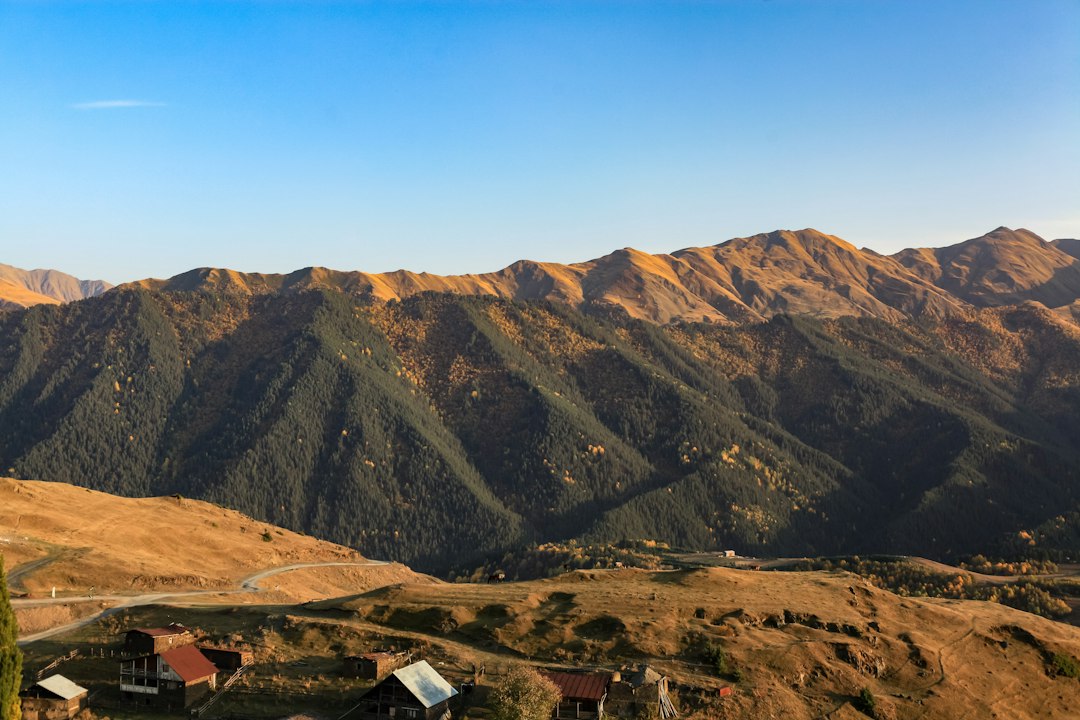
A Journey to the Edge of Europe: Navigating the Remote Paths of Tusheti
If you’re planning to visit Tusheti, you need to understand that this isn’t your typical mountain getaway. The only way in is the Abano Pass, a 2,850-meter climb that is frankly terrifying, especially when you consider how often landslides wipe out sections of the track. It’s not just a road; it’s a high-stakes obstacle course that keeps the region isolated for most of the year. Because the pass is impassable from October to June, the locals pack up and move to the lowlands, leaving these ancient stone villages as ghost towns for the winter. It’s a seasonal rhythm dictated entirely by the geology of the Greater Caucasus fold-and-thrust belt.
Think about the sheer engineering required to live here, like the dry-stone masonry of Dartlo or those incredible koshki defensive towers. These weren't built for aesthetics; they were survival tools designed with retractable ladders and arrow slits to withstand blood feuds and invasions. Even today, the infrastructure is fragile, as many villages operate off-grid with small solar setups or DIY hydro-turbines rather than a national power line. You’ll also notice the Tush sheep, a breed that’s evolved specifically for these brutal altitudes, which is the backbone of the local transhumance economy. It’s fascinating how the harsh terrain has preserved the Tush language, keeping it distinct from standard Georgian through sheer geographic distance.
When you’re walking these paths, you’re stepping through a history that feels almost pre-modern, especially when you encounter the khatis. These are sacred shrines where locals still perform animal sacrifices to mountain deities, a practice that highlights a syncretic faith blending Orthodox Christianity with deep-rooted paganism. You have to be careful where you step, though; there are strict social taboos, like the rule forbidding women from approaching certain shrines to maintain what the elders view as spiritual purity. It’s a world away from the convenience of European tourism, but that’s exactly why it’s worth the trouble. You aren't just a visitor here; you're a guest in a landscape that has been carefully managed by human hands and mountain spirits for thousands of years.
The Enduring Legacy of Pagan Roots and Ancient Rituals
It’s fascinating how we often view ancient rituals as mere curiosities from a bygone era, yet when you spend time in places like Tusheti, you realize these practices are actually sophisticated, living survival systems. Think about the way animism functions as a spiritual ecological framework here; it’s not just about superstition, but about using specific landmarks as interfaces between the community and the volatile environmental forces of the Caucasus. Researchers have noticed that these sacred sites frequently overlap with areas of high biodiversity, which tells me that these old taboos were really just prehistoric conservation strategies meant to keep the land productive. It’s a brilliant, if unintended, way of managing natural resources by wrapping them in the authority of the divine.
When we look at the mechanics behind these traditions, it’s clear they were built on a precise understanding of seasonal timing. By using solar and lunar alignments to dictate when to gather, these communities ensured their human footprint stayed perfectly synchronized with the mountains' unpredictable cycles. I’ve always found it remarkable how archaeological sites show the physical layering of history, where early monotheistic symbols were often placed directly over older, pagan stone foundations. It’s like the architecture itself is a compromise, a structural record of how one belief system gradually folded into the next without ever truly erasing what came before.
If you dig into the linguistic roots, the vocabulary used in these rites often predates the regional adoption of major world religions, suggesting these traditions were home-grown responses to a very specific, rugged reality. Many of these rituals involve using local medicinal botany or specific natural fibers, which reveals that the healers weren't just spiritual guides; they were essentially the village’s resident ecologists and pharmacists. And let’s be honest, the persistence of these rites isn't just stubbornness, but a direct result of geographic isolation that shielded these cultures from total homogenization. These aren't static museum pieces, but dynamic social tools that continue to help people navigate modern challenges, proving that sometimes the oldest logic is the most resilient way to survive.
Architectural Marvels: The Iconic Defensive Towers of the Tusheti Highlands
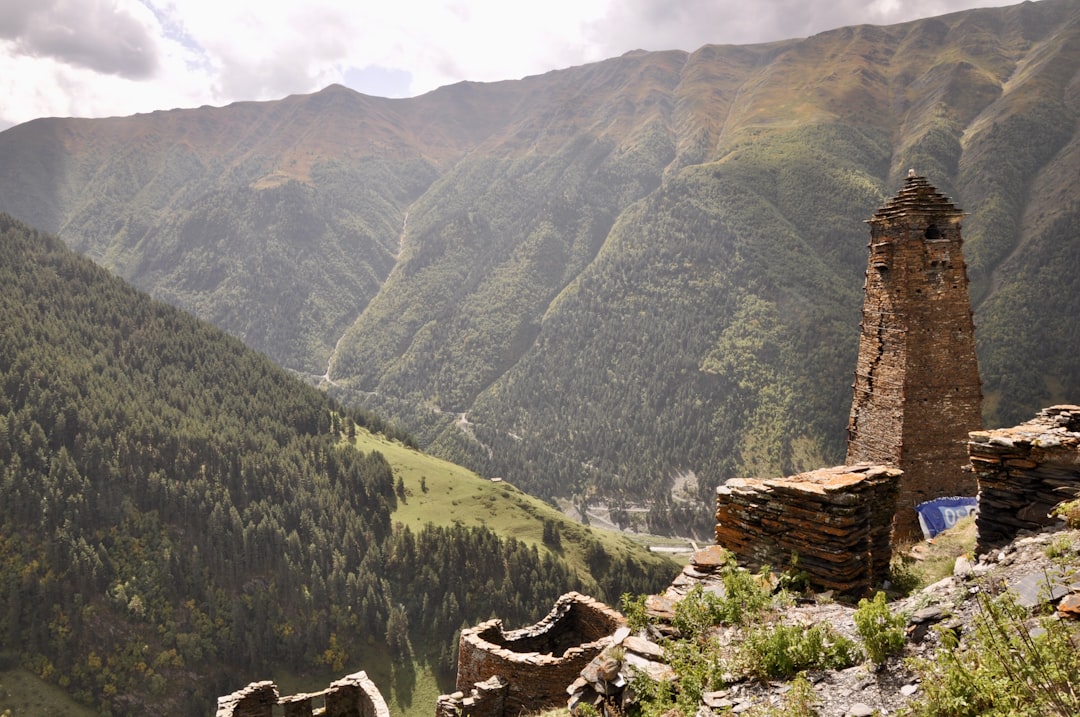
You’ve probably noticed those striking, needle-like stone towers as soon as you catch your first glimpse of a Tusheti village, but the real magic is in how they actually stay standing. These structures, or koshki, are masterclasses in seismic engineering that have survived centuries of brutal mountain winters. By tapering the walls inward as they rise, the builders effectively lowered the center of gravity, which gives the towers incredible stability when the earth starts to shake. They also mixed lime mortar with local volcanic ash, creating a flexible bond that keeps the stones from cracking during the constant freeze-thaw cycles that would destroy most modern masonry. It’s honestly a brilliant hack for living in the Greater Caucasus.
The design goes way beyond just being tall, though; it’s about total defensive autonomy. Think about the fact that the ground floor doesn't even have a door, so you'd have to use a retractable wooden ladder just to get inside and then pull it up behind you to seal yourself off from any ground-level threat. Inside, you’ll find clever little cavities and wooden beams that work as a dampening system, taking the massive weight of those heavy slate roofs and spreading it out across the perimeter. And because the foundation stones are anchored directly into deep-set bedrock, these towers act like massive, immovable pins against the shifting, unstable slopes.
There’s also a high-tech layer to the communication that might surprise you. These towers are positioned in specific sightlines so that if a threat appeared, villagers could relay smoke or fire signals across the valley almost instantly. The arrow slits weren't just for show either; they were angled in a fan pattern to give defenders the widest possible field of vision without compromising the stone facade's strength. Even the walls, which can be over a meter thick at the base, serve a double purpose as a thermal mass to keep the interior livable during the most extreme cold. It’s hard not to respect the sheer coordination required to pull this off, especially knowing that the entire village had to haul those stones from the scree slopes themselves just to make sure their community had a fighting chance.
Seasonal Transhumance: The Rhythms of Shepherding Life
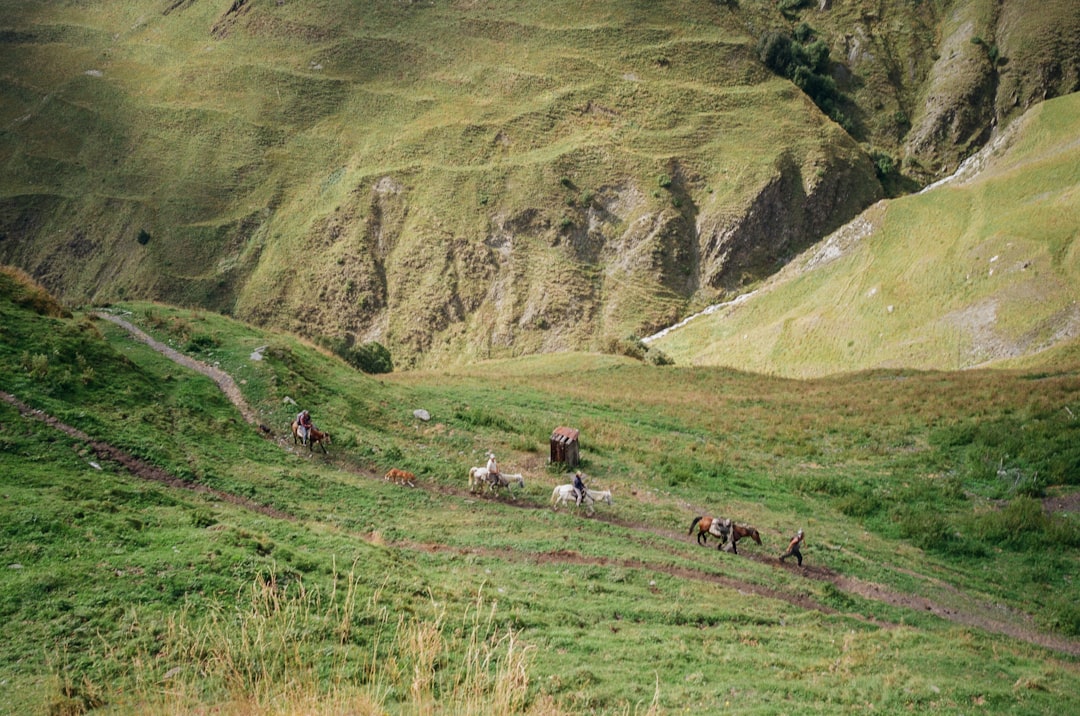
When you start looking at the rhythm of life in Tusheti, you realize pretty quickly that it’s not just a job—it’s a finely tuned survival strategy that’s been running for centuries. The core of this existence is the biannual transhumance, a grueling 100-kilometer trek that forces shepherds to navigate a staggering 2,000-meter vertical drop between the high-alpine summer pastures and the winter plains of Shiraki. It’s wild to think that this isn't a casual move, but a migration strictly synchronized with the phenology of the Caucasus, timing the departure to the exact moment the first frost hits the peaks and the winter grasses start to push through the soil down below. And here’s the thing: they don’t rely on a bunch of pack animals to haul their gear. Instead, they operate on a lean support system where every essential tool, from salt blocks to wool-mending kits, is carried by the shepherds themselves.
It’s easy to romanticize the view, but the actual mechanics of the journey are brutal and highly technical. To avoid the constant threat of landslides in the valley bottoms, these guys use a technique called ridge-walking, keeping the flock on the highest, most stable terrain regardless of how much extra energy that takes. They also rely on the Caucasian Shepherd dog, a breed that’s genetically wired to defend against wolves and bears in near-total silence, which is honestly terrifying when you consider what’s lurking in the shadows up there. When the wind picks up, they don’t shout; they use a complex system of specific vocal calls and whistles that cut through the mountain air where normal speech would just vanish. It’s a level of coordination that makes most modern logistics look clumsy by comparison.
Everything they do is designed to maximize their resilience against a landscape that doesn't care if they survive or not. Take the Tush sheep, for example; genetic studies show a high degree of heterozygosity in the breed, which is just a fancy way of saying they’ve got a massive biological safety net against diseases that would wipe out more "refined" breeds. Even the way they process food is rooted in this environment, like the Guda cheese, which is aged in sheepskin bags buried in the cool, stable earth to get the fermentation just right. Then there’s the kosh system, those temporary shelters made of local slate that act as a bridge between the high summer villages and the winter camps. Honestly, when you look at how they manage these communal grazing rights based on soil moisture and slope gradients, you realize they’ve been practicing a form of high-level land management that we’re only just starting to appreciate today. It’s not just about moving sheep; it’s about maintaining a fragile, thousand-year-old balance that keeps this whole world from slipping away.
Sacred Spaces and Animal Sacrifices: Understanding Tushetian Spirituality
When you find yourself standing before a Tushetian khati, it’s hard not to feel like you’ve stumbled into a conversation that started long before we arrived. Here is what I think: these aren't just ruins or religious sites, but active, living interfaces where the community negotiates its survival with the mountains. The rituals here, particularly the animal sacrifices, are grounded in a rigid, almost mathematical precision; the sheep selected for the offering must be unblemished and raised under strict conditions, functioning as a kind of spiritual currency. This isn't just about folklore. It’s an economic hedge, timed specifically to agricultural benchmarks like the start of the shearing season or the migration to high pastures, serving as a sort of divine insurance policy for the village’s livelihood.
The social structure surrounding these shrines is just as complex as the rituals themselves. You’ll find that access is heavily regulated by taboos, like the exclusion of women during certain cycles based on concepts of ritual purity that date back centuries. It’s a stark reminder that these spaces operate on a logic entirely distinct from the modern world. The village priest, or dathvis-mshvenieri, acts as a mediator who translates the will of these pagan deities, often utilizing ancient petroglyphs embedded in the stone altars—symbols that likely predate institutional Christianity in the Caucasus by a massive margin. When you see the horns of past sacrifices mounted nearby, it’s not just a trophy; it’s a physical record of the community’s ongoing contract with the mountain spirits.
Look, the architecture itself tells you everything you need to know about their priorities. These shrines are intentionally minimalist—often just a dry-stone wall or a solitary standing stone—because the Tush believe the landscape itself is the true vessel of the divine. You don't need a cathedral when you have the entire Caucasus to work with. Before any ceremony, you’ll see participants using juniper smoke to cleanse the air of impurities, a sensory detail that sticks with you long after you’ve left the village. And if you’re lucky enough to witness the pouring of chacha onto the stones as a libation, you realize that every gesture is part of a protective perimeter, a way to keep the volatile environment in check. It’s a fascinating, if occasionally uncomfortable, look at how a culture maintains its identity by keeping its oldest, most demanding traditions front and center.
Preserving a Fragile Heritage in an Increasingly Connected World
When we talk about the preservation of heritage in a world that’s becoming hyper-connected, we often focus on the tension between modernization and tradition. But looking at places like Tusheti, I’m convinced the dynamic is much more cooperative than most people realize. We aren't just choosing between a museum-like stasis and total digital integration; we're witnessing a fascinating synthesis where high-tech tools are actually the ones keeping ancient ways of life from fading away. Whether it’s the use of satellite interferometry to predict landslides on the Abano Pass or using 3D photogrammetry to study the structural stress on those iconic stone towers without laying a finger on them, technology is acting as a silent guardian for these fragile, remote landscapes.
Think about it this way: for the Tush people, these modern interventions aren't just gadgets—they're survival gear. When they use RFID tags to verify the provenance of their hand-woven wool or integrate open-source flow regulators into their DIY hydro-turbines, they're asserting their own agency in a global market that usually tries to commodify or erase them. It’s a complete departure from the old model of tourism where a place is either "authentic" or "developed." Here, the authenticity is being defended through a decentralized mesh network of sensors that monitor everything from seismic shifts to soil health. This isn't just about saving history; it’s about ensuring that the community stays viable in a climate that is shifting beneath their feet.
And honestly, there’s a clear lesson here for the rest of us about the value of these ancient systems. Take the correlation between those old, animist-protected sacred sites and the high-biodiversity hotspots that researchers are finding today—it proves that these "superstitious" taboos were, and still are, highly sophisticated conservation strategies. When I look at how the local ethnobotanical knowledge is now being codified into digital databases, I see a bridge being built between millennia of mountain wisdom and modern pharmacology. It really makes you pause and reflect: maybe the most resilient way to survive the modern era isn't to run from it, but to use every bit of available tech to protect the things that make us human in the first place. Let's dig into how these specific, low-impact strategies are actually changing the way we think about the future of remote travel.
Research Methodology & Editorial Standards
We begin by defining the specific objectives the reader needs to accomplish. Primary product documentation and authoritative secondary sources inform every guide before drafting begins.
Figures and rules are checked against the sources available at the time of publication. Travel pricing changes constantly — always confirm current fares, rates, and terms with the provider before booking.