
Discover These Refreshing National Parks to Escape the Summer Heat
If you’re feeling like the summer heat is just getting too intense to handle, you aren’t alone.
High-Altitude Sanctuaries: Why Mountain Peaks Offer the Ultimate Cooling Relief
If you’re feeling like the summer heat is just getting too intense to handle, you aren’t alone. We’re seeing a massive shift in travel habits lately, with more people trading crowded beaches for the crisp, thin air of mountain peaks. It’s not just a trend; it’s a smart way to manage the physical stress of record-breaking heatwaves. When you head to higher ground, you’re basically tapping into the environmental lapse rate, which tells us that for every 1,000 meters you climb, the air temperature drops by about 6.5 degrees Celsius. Think of it as a natural thermostat that’s built into the landscape itself.
The science here is pretty straightforward once you look at it. Because the air is thinner up there, it doesn’t hold onto heat the same way it does at sea level, and that lower concentration of greenhouse gases really makes a difference. You also get the benefit of topographic forcing, where mountain winds act like a giant fan to pull heat away from your skin, making everything feel much more comfortable. Plus, the drier air makes it easier for your body to cool itself through evaporation, so you don’t end up feeling that heavy, sticky humidity that plagues lower elevations. Even the ground helps out, as snowpack at higher altitudes absorbs solar energy just to melt ice, keeping the surrounding air from heating up as quickly.
Honestly, the relief is almost immediate when you factor in the microclimates created by the terrain. You get earlier sunsets because of the surrounding peaks, which cuts down on the hours of direct solar exposure you’d get in the city. Then, at night, you get the bonus of cold air drainage, where that dense, chilly air flows down from the summits to keep the valleys cool long after the sun goes down. This is exactly why places in Nepal, Colorado, and various hidden hill stations are seeing such a surge in visitors—people are finally realizing that these thermal refugia are the best way to actually enjoy a vacation instead of just trying to survive the weather. It’s a completely different experience when you aren’t constantly fighting the heat, and it makes your time away feel like a real break.
Coastal Breezes and Island Retreats: National Parks That Stay Temperate
If you’re anything like me, the idea of sweating through a summer vacation is a total non-starter, which is why I find myself constantly looking toward the water for relief. While mountain peaks are great, there’s something about the way coastal parks regulate their own climate that feels like hitting a reset button on your nervous system. Think about it: instead of just chasing elevation, you’re looking for places where the ocean acts as a massive thermal regulator. It’s not just about a nice breeze; it’s about the physics of large bodies of water that simply refuse to heat up as quickly as the land around them.
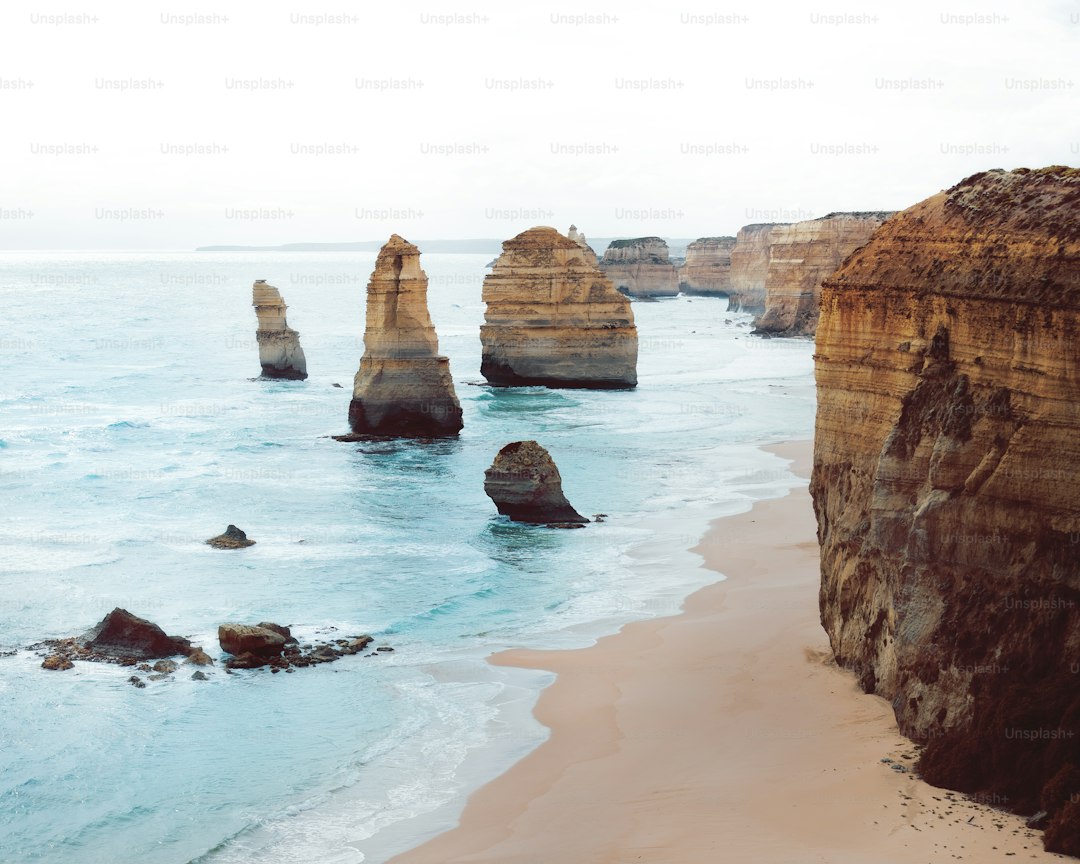
Places like Acadia National Park are perfect examples of this, where that famous marine layer acts like a natural air conditioner, rolling in off the cold Atlantic to keep the island temperatures surprisingly stable. Then you have spots like the Channel Islands or Redwood National Park, where cold currents and upwelling bring deep, chilly water to the surface, effectively shielding the coast from the brutal heatwaves that often bake the inland mainland. It’s fascinating how these microclimates work, especially when you consider that places like Isle Royale stay cool simply because they’re sitting in the middle of Lake Superior’s massive, frigid basin.
Honestly, even in places you wouldn't expect, like the tropical waters of Dry Tortugas or the Virgin Islands, you’re seeing the benefits of thermal inertia and persistent trade winds that keep the air moving and the heat from stagnating. Whether it’s the moist, cool maritime air feeding the rainforests of Olympic National Park or the way Glacier Bay’s tidewater glaciers drop the ambient temperature of the surrounding fjord, the strategy is consistently the same. You’re trading the unpredictable, scorching air of the interior for the steady, reliable influence of the sea. It really changes the math on how you plan your summer travel when you know where to look for these natural climate buffers.
Exploring Subterranean Wonders: Staying Underground to Beat the Afternoon Sun
If you’re really trying to escape the midday heat, you might want to consider heading beneath the surface instead of just climbing higher. I’ve found that once you descend about 10 to 15 meters underground, the earth starts acting like a massive thermal insulator that just ignores whatever the sun is doing up top. The rock mass effectively filters out those wild seasonal temperature swings, keeping things consistent regardless of how brutal it gets outside. It’s honestly a game changer when you realize the ground temperature down there just mirrors the average yearly temperature of the region, creating a naturally stable climate. You’re essentially using the earth’s crust as a giant heat exchanger, and the relief you feel is almost instant because you’re completely cut off from all that direct solar radiation.
Think about the physics of these spaces for a second, because it’s pretty fascinating how they stay so balanced. In places like lava tubes, those porous basalt walls work as perfect heat sinks, soaking up thermal energy during the day and letting it go so slowly that the air stays chilled. Many caves even use what’s called the stack effect, where the density difference between the heavy, cold air inside and the hot air outside creates its own self-regulating ventilation system. You’ll also run into cold traps, where dense, chilled air naturally pools in the lowest sections of a cavern and just sits there, staying locked away from the summer heat all season long. It’s a completely self-contained environment that doesn’t need any help to keep you comfortable.
There’s also a strange sensory shift that happens when you go deep enough, because these spaces naturally dampen all that surface noise we’re so used to. You’re trading the wind and the traffic for a quiet, tranquil atmosphere where the only thing you’ll notice is the stillness. While the humidity can get up near 100 percent—which does change how your body cools down—the ambient temperature is low enough that you never really run the risk of overheating. Plus, you’re entirely shielded from UV rays and infrared solar loading, so you don’t have to worry about the heat building up on the surfaces around you like it does on a sunny trail. If you’re looking to truly disconnect from a heatwave, ducking into one of these geological formations is easily the most effective way to reset your internal thermometer.
The Power of Glacial Waters: Parks Where You Can Swim in Refreshing Alpine Lakes
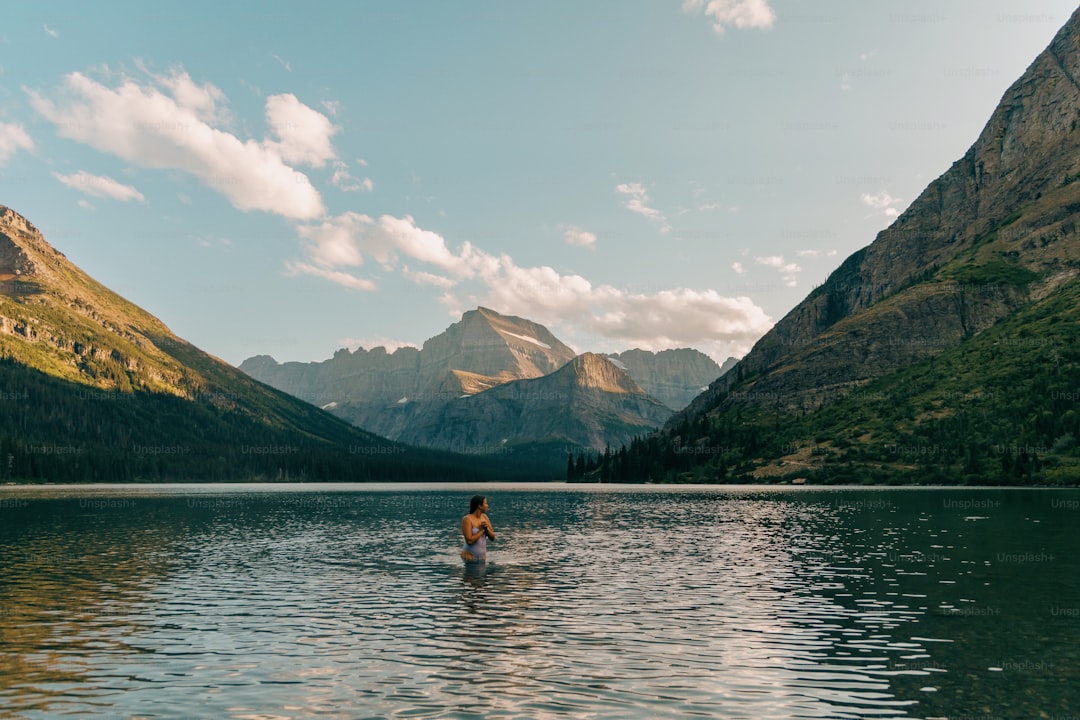
If you’ve ever stood on the edge of an alpine lake and felt that sharp, invigorating chill radiating off the water, you know it’s a completely different sensation than a typical swim. These glacial basins are essentially massive, high-altitude thermal batteries, staying stubbornly cold because they’re fed by the slow, steady melt of ancient ice. The reason they look that iconic, milky turquoise is actually down to rock flour—tiny mineral particles ground up by glaciers that catch the light in a way clear water just can’t. Because these lakes are usually nutrient-poor, or oligotrophic, they lack the organic matter that makes other lakes murky, giving you that incredible, glass-like clarity that makes it feel like you’re swimming in liquid sapphire.
But it’s the physics of the water that really keeps things refreshing. Most of these lakes maintain temperatures between 4 and 10 degrees Celsius, and because of their density, they develop a strong thermocline that keeps the surface layers from ever truly warming up, even during a heatwave. You’re also benefiting from the high albedo of the sediment, which reflects a fair amount of solar radiation, preventing the heat absorption you’d see in darker, deeper bodies of water. Think about the geography here too; these lakes sit in cirques—deep, bowl-shaped depressions carved out by glaciers—which act like wind tunnels. This creates a constant, cooling airflow across the surface that keeps you feeling refreshed the moment you step out of the water.
It’s honestly fascinating how these ecosystems function as a sort of delayed-release reservoir for the mountains. That winter snowpack isn't just scenery; it’s a massive store of cold, oxygen-rich water that keeps feeding the basin long after the spring thaw is over. If you’re a swimmer, this means you’re diving into water that has been naturally aerated and filtered through rock, which feels remarkably crisp compared to the stagnant, warm water you find at lower elevations. I’ve always found that there’s a quiet, raw energy in these spots that you just can't replicate anywhere else. If you're looking for a genuine way to reset your internal thermometer, skip the crowded pool and head to one of these high-altitude basins; just be prepared, because that first plunge is definitely going to wake up every nerve in your body.
Dense Forest Canopies: Finding Natural Shade in America’s Old-Growth Woodlands
When you’re staring down a heatwave, there’s something deeply instinctual about seeking the shelter of an ancient forest, and honestly, the relief you feel is backed by some pretty incredible biology. These old-growth canopies essentially function as high-performance biological air conditioners, intercepting up to 95 percent of incoming solar radiation before it ever hits the ground. It’s not just about blocking the sun; through a process called evapotranspiration, these massive, deep-rooted trees act like natural pumps that release water vapor, which can drop ambient temperatures by as much as 10 degrees Celsius compared to open fields. I’ve noticed that when you step into one of these stands, the shift is immediate because you’re moving from a high-energy environment into a stratified microclimate where the air feels fundamentally different.
The vertical complexity of these woodlands is the real secret sauce, as those multilayered branches trap cool air close to the forest floor and keep it from escaping. Unlike younger forests or clear-cut areas, these stands facilitate cold-air pooling, where the oxygen-rich air generated by the canopy settles in the understory and stays there, creating a refreshing refuge that holds its own against the summer heat. That thick carpet of organic matter on the floor acts as a massive thermal insulator, preventing the soil from absorbing the heat that would otherwise radiate back onto you throughout the afternoon. It’s a complete departure from the urban heat-island effect, where concrete and steel just soak up the sun and make everything feel even worse.
Think of it as a natural heat sink where the high leaf area index works in your favor by maximizing latent heat exchange. The way those complex branches break up wind flow also helps dissipate pockets of stagnant, hot air, which is why the interior of these forests feels so consistently temperate even when the mercury is hitting record highs. You’re also getting the added benefit of moisture-loving plants like ferns and mosses, which naturally regulate humidity and keep the ground level feeling crisp and cool. Honestly, when you’re standing under a canopy that has stood for centuries, you’re not just finding shade; you’re tapping into a perfectly balanced thermodynamic system that feels worlds away from the stress of a scorching summer day.
Strategic Itineraries: How to Time Your Visits for Cooler Morning and Evening Exploration
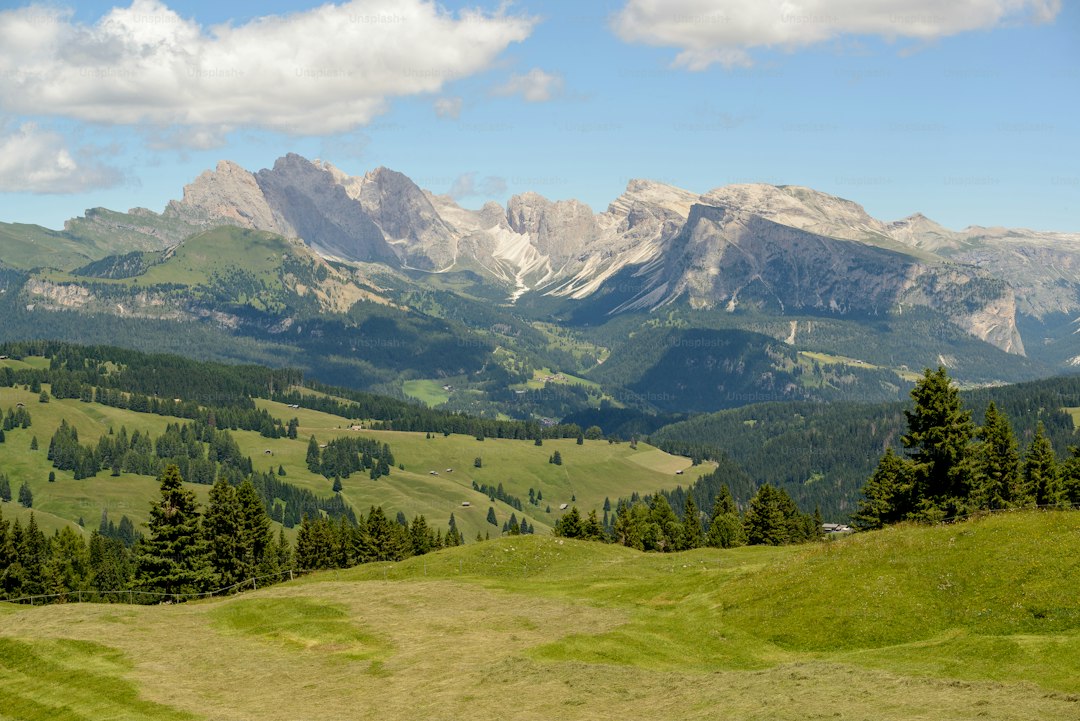
If you've ever found yourself trudging up a trailhead at noon, feeling the heat radiate off the rocks like a blast furnace, you know exactly why timing is the most underrated tool in your travel kit. Most of us default to a standard 9-to-5 vacation rhythm, but here’s the reality: solar zenith typically peaks around 1:00 PM, and the thermal load on your body hits its absolute worst between 2:00 PM and 4:00 PM. I’ve learned the hard way that the ground and nearby stone act like massive thermal batteries, soaking up heat all day and dumping it back onto you well into the evening. To beat this, you’ve got to lean into your own physiology; your core temperature actually hits its natural low between 4:00 AM and 6:00 AM, making the pre-dawn hours the absolute best time for any strenuous movement.
Think about it this way: when you start your day before the sun even breaches the horizon, you’re hitting the trail while the ground is still releasing the coolness stored from the night before. This isn't just about avoiding a sunburn; it’s about taking advantage of a natural thermal buffer that keeps surfaces significantly cooler for several hours after sunrise. Plus, you’re dodging the "canyon albedo" effect, where light bounces off rock faces to cook you even when you think you’re safely in the shade. If you’re at a popular park, arriving at the trailhead by 8:00 AM isn't just for beating the crowds—it’s about getting off the asphalt parking lots before they turn into literal heat islands that mess with your temperature regulation for the rest of the day.
There’s also a real safety component to this that people often overlook. In many of our mountain parks, the atmosphere gets increasingly unstable as the day heats up, which is why you see those sudden, violent afternoon thunderstorms peaking between 2:00 PM and 6:00 PM. By front-loading your itinerary, you’re essentially clearing the most dangerous and uncomfortable terrain while the air is still naturally stagnant and cool, rather than waiting for the turbulent, heat-laden air of the late afternoon. You’ll find the "blue hour" just before sunrise offers incredible clarity, too, with far less dust and heat haze to mess with your view. Honestly, once you make the switch to this crepuscular schedule, you’ll realize that not only are you staying cooler, but you’re also syncing up with the local wildlife, which naturally moves and feeds during these exact same windows.
Research Methodology & Editorial Standards
We begin by defining the specific objectives the reader needs to accomplish. Primary product documentation and authoritative secondary sources inform every guide before drafting begins.
Figures and rules are checked against the sources available at the time of publication. Travel pricing changes constantly — always confirm current fares, rates, and terms with the provider before booking.