
Why You Must Visit the Sacred Heart of Australia at Uluru Kata Tjuta National Park
When we look at Uluru, it’s easy to get caught up in the sheer scale of that massive sandstone monolith, but the real story here is the people who have called this place home for over 30,000 years.
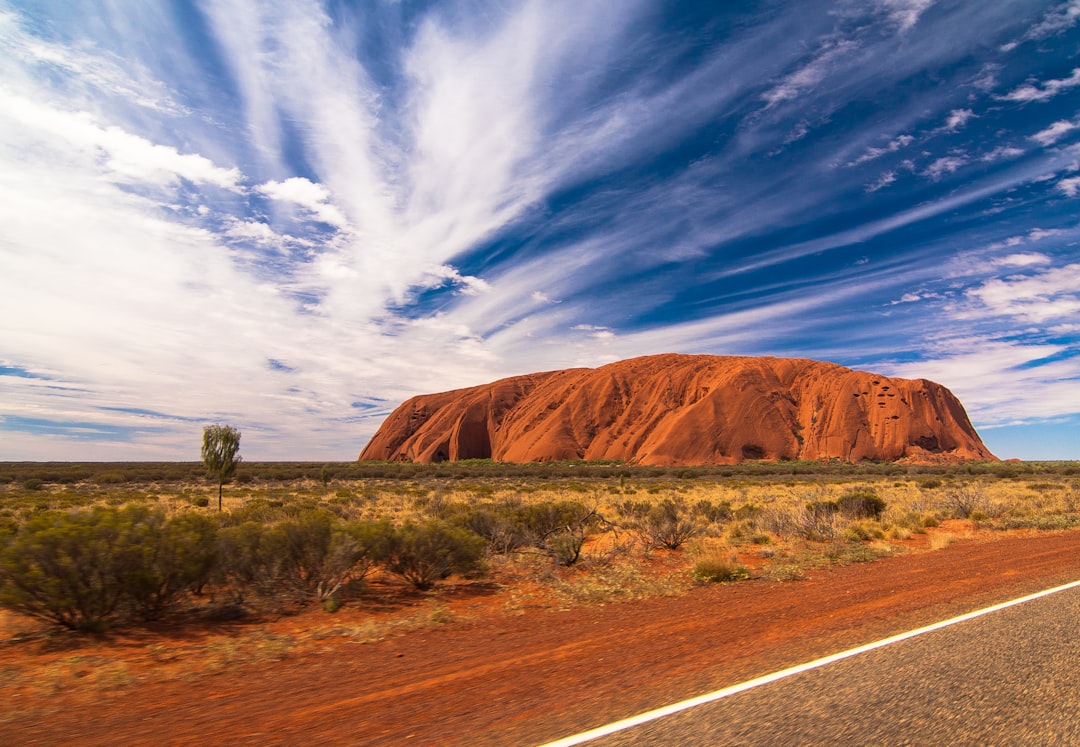
An Ancient Legacy: Understanding the Spiritual Significance of the Anangu People
When we look at Uluru, it’s easy to get caught up in the sheer scale of that massive sandstone monolith, but the real story here is the people who have called this place home for over 30,000 years. The Anangu people aren't just living near these landmarks; they are the traditional custodians, and their existence is guided by Tjukurpa, a foundational law that acts as both a spiritual compass and a practical survival guide for this harsh desert. Think of it as a living archive where every ridge and rock formation tells a story of ancestral beings who are believed to still inhabit the land today. It’s this deep, unbroken connection that sets the region apart from any other destination you might visit.
To really grasp why this place is so protected, you have to understand that for the Anangu, the landscape is not a playground or a park, but a sacred map of history and responsibility. Many areas are strictly gender-restricted, meaning certain sites are reserved only for initiated men or women to preserve ancient knowledge that simply isn't meant for public consumption. You'll see this reflected in the way they manage the land, using traditional cool-burning techniques that don't just prevent wildfires but actively boost the biodiversity of the desert. It’s a level of environmental stewardship that’s been refined over millennia, proving that traditional methods can be more effective than modern interventions.
And then there's the art, like the intricate dot paintings you might see during a workshop, which are really a sophisticated way of mapping out their history and the complex narratives of the Tjukurpa. These aren't just aesthetic choices; they are active tools for passing down cultural wisdom to the next generation. When you consider the principle of Kanyini—that idea of total nurturing and responsibility toward both the land and your community—you start to see why the Anangu are so protective of these waterholes and sacred sites. It's not about keeping people out; it’s about maintaining a balance that’s been held for thousands of years. If you're planning a visit, keep this in mind: you're stepping into a space that is still very much alive with a culture that asks for nothing more, and nothing less, than genuine respect.
Respecting Country: Why the End of Uluru Climbing Was a Milestone for Indigenous Rights
When we talk about the end of the Uluru climb, I think it is helpful to look past the headlines and see it as a shift in how we balance public access with actual human rights. That ban, which finally went into effect on October 26, 2019, didn’t just happen out of nowhere; it marked the 34th anniversary of the park being handed back to the Anangu, turning a historical milestone into a practical reality. Honestly, I find the data from those final years pretty telling, as less than 16 percent of visitors were actually choosing to climb anyway. It really makes you wonder why it took so long to align our travel habits with the clear wishes of the traditional owners.
The decision itself came from a unanimous 2017 vote by the Board of Management, which blends Indigenous leadership with national park oversight. If you look at the environmental side of things, the case for closing it becomes even harder to argue against. Decades of foot traffic had physically eroded the sandstone, and the mess left behind—everything from litter to human waste—was literally contaminating the rock pools that local wildlife depend on. For the Anangu, the climb wasn't just a physical act; it was a path across the Mala Tjukurpa, an ancestral track they view with the same sanctity most people reserve for a church or a grave.
Think about the sheer amount of energy we wasted before the closure, too, with safety protocols forcing the climb to shut down over 100 days a year because of heat or wind. Since the metal chain was removed and the bolts were pulled out to let the rock face heal, the park has actually seen a spike in interest for the base walks and cultural programs. It is a perfect example of how shifting away from a checklist-style of tourism toward meaningful education can lead to better outcomes for everyone. We aren't just visiting a landmark anymore; we're observing a new standard in land management where the rights of the custodians are finally being prioritized over the desire for an unrestricted photo op.
Beyond the Monolith: Exploring the Towering Domes of Kata Tjuta
While most visitors fixate on the singular presence of Uluru, I think you’ll find that the true geological intrigue of the park actually lies about 30 kilometers away at Kata Tjuta. The name itself translates to many heads, which makes perfect sense when you’re standing before these thirty-six distinct, weathered domes rising abruptly from the desert floor. Unlike the monolithic sedimentary block of its more famous neighbor, Kata Tjuta is a complex conglomerate of Mount Olga Sandstone, formed roughly 550 million years ago from compressed alluvial fans. If you look closely at the rock, you’ll see it’s a chaotic mix of granite, basalt, and gneiss pebbles suspended in a sandy matrix, a composition that tells a much more fractured story of the Earth’s history than the uniform sandstone of the big rock.
It’s easy to overlook just how much taller these formations are, but Mount Olga actually hits 546 meters, putting it about 200 meters higher than the peak of Uluru. I love how the geology here works in real-time; the vertical joints in the rock allow water to seep in, driving a process of spheroidal weathering that slowly rounds off the edges of these massive blocks. You aren’t just looking at a static pile of rocks, but at a structure that is constantly being sculpted by the environment, leaving behind talus slopes of loose sediment and boulders at the base of every dome. And what’s really wild is that what you see today is just the tip of a massive, tilted formation that reaches deep beneath the desert surface.
The real magic happens when you venture into the deep, narrow ravines that cut through the domes. Because these gorges are sheltered, they create microclimates that are drastically cooler and more humid than the scorching dunes just a few hundred meters away. These little pockets trap moisture long after the rain stops, acting as a vital refuge for sensitive plant species that couldn't survive in the open desert. It’s an incredible example of how even in the most arid environments, small shifts in topography can create pockets of life that feel entirely separate from the harshness surrounding them. When you’re walking through those shaded paths, take a moment to look at the russet coloring of the stone, which is essentially the iron-rich minerals oxidizing right in front of you.
Wintjiri Wiṟu: Witnessing the Intersection of Traditional Storytelling and Modern Technology
Wintjiri Wiṟu represents a massive shift in how we experience history, moving far beyond the static nature of a museum or a standard documentary. At its core, the production uses a fleet of 1,200 synchronized drones to animate the Mala story against the night sky, creating the largest permanent light drone installation on the planet. It is essentially an exercise in extreme precision, where each drone maintains centimeter-level positioning to ensure the imagery remains fluid and readable from every seat in the desert theater. I think it is fascinating how the system automatically accounts for the volatile desert environment, constantly adjusting flight paths to counteract thermal shifts and high winds. It’s a level of technical choreography that, quite honestly, feels like watching a living, breathing machine perform a dance that has been told through oral tradition for thousands of years.
The technical backbone here is just as impressive as the visuals, specifically the way the spatial audio system works in tandem with the aerial display. Hundreds of hidden speakers are mapped to the movement of the drones, creating a three-dimensional soundscape that makes the narrative feel like it is literally drifting through the air around you. By layering these digital tools with authentic Mala songs, the production manages to preserve ancient oral history in a format that feels urgent and alive rather than dusty or forgotten. I was struck by the durability of the hardware, which has to withstand the brutal heat cycles and fine, abrasive red dust of the Centre without failing. It’s a masterclass in engineering that manages to stay invisible, letting the story take center stage while the robotics fade into the background.
What really stands out to me is how this project functions as a deliberate case study in digital preservation, proving that high-end tech can actually serve as a respectful vessel for intangible cultural heritage. The entire setup is powered by a dedicated array of renewable energy, which feels like a necessary nod to the environmental stewardship the Anangu have practiced for generations. Instead of just projecting a flat movie onto a screen, this medium transforms the entire desert into a canvas, effectively transcending the limitations of traditional cinema. It isn't just a light show; it is an attempt to bridge the gap between ancient Tjukurpa and the modern era in a way that feels honest and intentional. If you have the chance to see it, try to focus on how the light and sound move in unison—it is a rare moment where the cutting edge of human invention feels like it finally has something meaningful to say.
A Journey Through Time: How Indigenous Management Shapes the National Park Experience
When you walk through Uluru-Kata Tjuta, you’re not just exploring a park; you’re stepping into a landscape governed by a sophisticated, centuries-old framework that prioritizes the Anangu people’s Tjukurpa above standard, one-size-fits-all conservation. The Board of Management here is legally structured so that traditional owners hold the majority of seats, which fundamentally changes how the land is treated. Instead of focusing solely on Western ecological metrics, the team uses cool-burning techniques to create a mosaic of vegetation that prevents massive wildfires while actively boosting the population of local desert species like the mulgara. It’s a level of stewardship that feels far more intuitive and effective than what you’d see in a typical, hands-off national park.
Here’s the thing that really struck me: the integration of traditional knowledge with modern technology creates a much more resilient ecosystem. For instance, the management team uses cultural monitoring where elders assess the land’s health through indicator species and seasonal shifts that traditional scientific instruments often miss. When we talk about water, they’re not just relying on sensors; they’re protecting sacred rock holes that have served as vital hubs for thousands of years, keeping them pristine by restricting human access in sensitive zones. It’s a hybrid approach that provides a way better long-term view of climate shifts than satellite data alone.
And honestly, this philosophy extends to how they handle the infrastructure we all use. Every path or road development goes through a rigorous cultural clearance process, meaning traditional owners walk the land to ensure nothing sacred is disturbed. Sometimes that results in a longer, more circuitous route for us, but it’s a necessary trade-off to prioritize the earth’s sanctity over the efficiency of our transit. It’s a powerful reminder that our travel habits should bow to the heritage of the land, not the other way around. By supporting this model, we aren't just visiting a destination; we’re witnessing a global gold standard for how to hold onto cultural history while navigating the demands of the modern world.
Essential Tips for First-Time Visitors: Navigating the Sacred Heart of Australia
If you're planning your first trip to the Red Centre, it’s easy to feel overwhelmed by the sheer scale of the landscape, but navigating it is simpler when you understand that you’re essentially stepping onto a massive, living geological laboratory. First off, let’s talk about the heat, because the diurnal temperature variation here is no joke; you might see surface temperatures on the monolith hit a staggering 70 degrees Celsius during a summer afternoon, only to watch that same rock face plummet to near-freezing by the time you're having dinner. Because the atmosphere in the desert offers less protection against solar radiation, I can’t emphasize enough that packing high-SPF sunscreen and a wide-brimmed hat isn't just a travel suggestion, it’s a physiological necessity for your own safety. And honestly, keep an eye on the rock faces for those dark, vertical streaks, as they’re actually mineral stains carved by water runoff that has followed the exact same pathways for thousands of years.
It’s also helpful to realize that the environment is far more active than it looks at first glance, especially when you consider that the region supports over 400 native plant species that have adapted their root systems to tap into groundwater hidden within the sandstone’s deep, subterranean fractures. You’ll notice the park’s road network is intentionally designed to avoid disrupting the natural drainage lines that funnel moisture to these plants, so staying on marked paths is vital to keeping that delicate cycle intact. Interestingly, the desert is so arid that the annual evaporation rate consistently outpaces the meager 300 millimeters of rainfall we get each year, which is why your own water management is a critical part of being a responsible guest. If you happen to be there after a rare, heavy downpour, you might even spot the shield shrimp, a fascinating little creature that can remain dormant in the sand for years before hatching almost instantly when the ephemeral rock pools finally fill.
There’s a real technical beauty to the landscape too, especially when you look at the iron oxide responsible for that iconic deep-red hue, which is just the result of a slow, natural rusting process happening over millions of years. The geology here is a bit of an anomaly, with sandstone layers tilted almost vertically by tectonic shifts from the Alice Springs Orogeny hundreds of millions of years ago, creating the perfect nooks for rare species like the central rock-rat. Because the ecosystem is so sensitive, you’ll see strict biosecurity protocols in place to stop invasive weeds, as even a small introduction of non-native seeds can throw off the entire nutrient balance of the soil. As you explore, just remember that the spinifex grass you see everywhere produces a natural resin that’s been used as an industrial-grade adhesive for centuries—a perfect example of how the plants here are as functional as they are beautiful. It’s all about moving through the space with the awareness that you’re a guest in a place that has been perfectly calibrated by nature long before we arrived.
Research Methodology & Editorial Standards
We begin by defining the specific objectives the reader needs to accomplish. Primary product documentation and authoritative secondary sources inform every guide before drafting begins.
Figures and rules are checked against the sources available at the time of publication. Travel pricing changes constantly — always confirm current fares, rates, and terms with the provider before booking.