
The Ultimate Palm Springs Hotel for Mid Century Design Lovers
Palm Springs isn't just a place with a distinct look; it’s a living laboratory of post-war ingenuity where architects like Donald Wexler proved that industrial materials—think corrugated aluminum and steel—could actually create high-end, comfortable homes.

The Architecture of Cool: Why Palm Springs Defines Mid-Century Modernism
When you first step into the valley, it’s easy to get distracted by the sheer number of pools, but the real story is in the bones of the buildings. Palm Springs isn't just a place with a distinct look; it’s a living laboratory of post-war ingenuity where architects like Donald Wexler proved that industrial materials—think corrugated aluminum and steel—could actually create high-end, comfortable homes. They were essentially solving a puzzle: how do you live in a desert without feeling like you're trapped in a bunker? By utilizing steel-frame construction and rapid assembly techniques, these designers weren't just following trends; they were directly addressing the extreme thermal realities of the climate. It's fascinating because when you look at those iconic butterfly roofs, you realize they weren't just built for flair; they were calculated, functional machines designed to catch prevailing winds and channel them through the interior for natural cooling.
But the brilliance doesn't stop at the roofline. If you really pay attention, you’ll notice how the entire landscape was treated as a component of the architecture itself. Visionaries like David Hamilton mastered this by layering in drought-tolerant, sculptural flora that mirrors the geometric lines of the houses, creating this seamless transition from the living room to the desert floor. When you see architects use identical flooring inside and out, it’s not just a design choice—it's a deliberate attempt to erase the boundary between your chair and the mountains. Plus, those clerestory windows you see everywhere are a masterclass in balance; they flood rooms with soft, ambient light while keeping your private life tucked away behind solid, high walls. It’s a level of intentionality that feels almost rare today.
This concentration of mid-century modernism is the highest in the world, and honestly, it’s a direct result of post-war zoning that actually encouraged experimental, low-density living. Because of that, we have this incredible, protected narrative where historic ordinances mandate the preservation of original facade colors and materials. It’s why Modernism Week has grown from a small, local passion project into this global phenomenon—people are finally recognizing that these homes aren't just museum pieces. They are functional, human-scale structures that prioritized a relaxed, communal lifestyle before that was the standard. So, as we dive into what makes this city tick, keep in mind that every cantilevered overhang and glass wall was a specific answer to a specific problem, and that’s why these homes still feel as relevant—and as cool—as they did in 1955.
Preserving the Legacy: Inside the Iconic Design Elements of the Property
When we talk about preserving a mid-century property, it’s rarely as simple as a fresh coat of paint; it’s more akin to surgery where you’re trying to keep the soul of the house intact while making it functional for the modern world. I’ve spent time looking into the specific restoration techniques used here, and honestly, the level of obsession is staggering. Preservationists are now utilizing precise chemical analysis to identify vintage paint formulas, ensuring that the color matching isn't just close—it's identical to those original 1950s palettes. They’re even sourcing aggregate from the same regional quarries used decades ago to restore terrazzo flooring, ensuring the mineralogical consistency is perfect. It’s that kind of granular detail that separates a generic renovation from a true historical stewardship.
Think about the invisible stuff that usually gets ignored, like how to keep a house cool without destroying its character. Engineers are now pulling off some incredible feats, using micro-duct technology to thread modern HVAC systems through the tight gaps of original tongue-and-groove ceilings. They’re also fabricating custom dual-pane glass that mimics the light-transmission indices of the old single-pane windows, which means you get actual energy efficiency without that weird, distorted look modern glass often has. Even the masonry is treated with a scientific eye; specialists are sourcing concrete blocks that match the exact porosity and density of the originals, ensuring the shadow-block walls age at the same rate as the rest of the structure. It’s a delicate dance between keeping the integrity of the design and actually being able to live in the space.
And it goes beyond just materials; it’s about the structural heartbeat of the building. Restoration teams are now using non-invasive ultrasonic testing to check for corrosion inside steel columns, which is a massive win for safety without having to rip open the walls. They’re even 3D-printing internal parts for original valves and fixtures, keeping those authentic mid-century details running smoothly instead of swapping them out for something off the shelf from a big-box store. Lighting is another huge factor, with designers using LED mapping to replicate the exact warm glow of old tungsten bulbs, ensuring the evening ambiance feels like 1955. It’s a constant, careful effort to ensure that every cantilevered roofline and glass wall remains a functional machine for living, just as the original architects intended.
Curated Interiors: A Deep Dive Into Authentic Period-Specific Furniture
If you’ve ever walked into a room and felt like the furniture was vibrating on a different frequency than the architecture, you know exactly what I’m talking about. It’s not just about picking a vintage chair because it looks cool; it’s about understanding that these pieces were engineered to solve specific problems, just like the buildings themselves. When we look at authentic mid-century upholstery, for instance, we’re often seeing Maharam’s historical archives at work, where they recreate proprietary 1950s weaves using modern synthetic fibers that somehow keep that original tactile hand-feel. It’s a brilliant way to get the look without the stress of constant upkeep. But you have to be careful, because the market is flooded with pieces that get the silhouette right but miss the soul-crushing details that actually make a piece authentic.
Think about the Eames Lounge Chair; it wasn't just shaped for aesthetic flair, but for a very specific 15-degree recline angle born from 1950s ergonomic studies. If a replica misses that degree, the whole physical experience of the chair changes. I’m also constantly looking for the five-layer construction in molded plywood, which leaves a distinct edge grain that you just don't see in cheaper, mass-produced versions. Then there’s the issue of materials like Brazilian rosewood, which has been banned under CITES since 1992, so any serious collector now has to rely on forensic wood analysis to ensure they aren't buying a substitute. It’s a bit of a detective game, but honestly, that’s where the fun is.
Even the smaller details tell a massive story about the design intent of the era. Take the Saarinen Tulip table; originals were weighted with heavy-gauge steel in the base to stop that annoying wobble you find in lightweight modern knockoffs. Or look at Noguchi’s sculptural furniture, where he favored wood-on-wood tension joints over metal fasteners because they handle thermal expansion in desert climates so much better. I’ve even seen restorers use electrostatic scanning to replicate the exact light-reflection index of 1950s matte metal finishes. When you start paying attention to the specific six-way hand-woven patterns in cane or the translucency of a Nelson bubble lamp’s spray, you stop seeing furniture as mere decor. You start seeing it as a functional, calculated machine that was built to last, and suddenly, living with these pieces feels less like decorating and more like keeping history alive.
Seamless Indoor-Outdoor Living: The Desert Lifestyle Reimagined
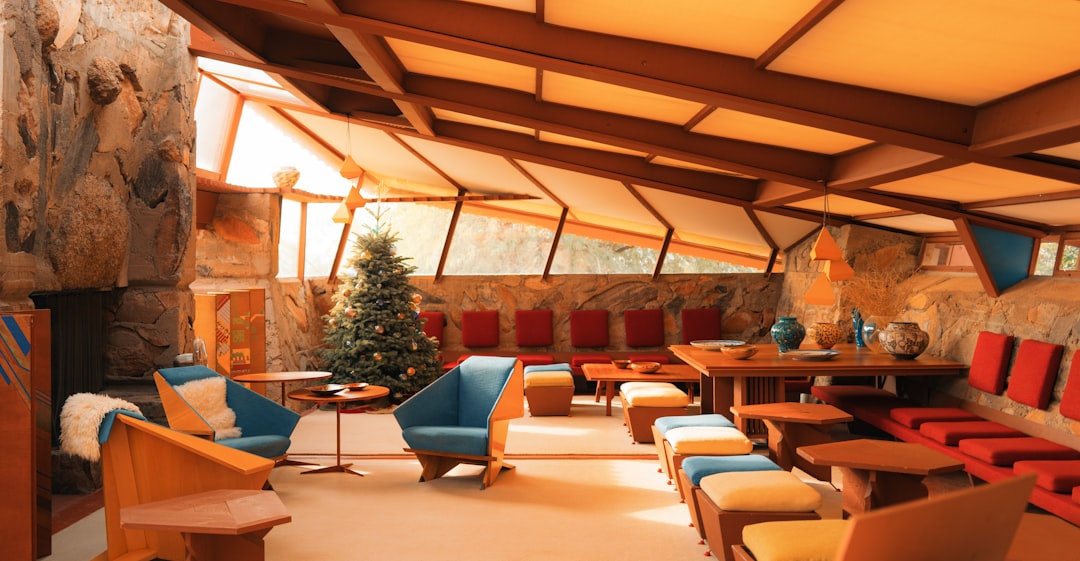
Let’s talk about the desert, because there’s something genuinely transformative about how these homes handle the outdoors. We’ve moved way past the old idea of just adding a patio; today, it’s about this total blurring of boundaries where the living room essentially ends at the base of the mountains. When you look at how these spaces are being reimagined, you’ll notice the floor-to-ceiling glass isn't just for the view—it’s a precision-engineered interface. Architects are now using flush-threshold sliding doors with recessed tracks that make the physical transition between your carpet and the desert floor feel non-existent. And honestly, it’s not just for show; extending interior ceiling planes out past the glass line creates these "outdoor rooms" that trick your brain into thinking the house is twice its actual size.
But here is where the technical side gets really cool. You’re dealing with a harsh climate, so managing that heat gain without closing off the house is a masterclass in physics. I’ve seen some incredible work where they use high-albedo roof coatings to reflect about 80 percent of solar radiation, which keeps things surprisingly cool before you even flip a switch. Then you have those deep-set eaves, which are calculated to block the brutal summer sun while still letting the lower-angled winter light flood the interior. It’s a bit of a balancing act, but when you combine that with thermal-mass concrete floors that soak up daytime heat and release it slowly at night, the whole house starts to act like a living, breathing organism.
It’s also fascinating to see how they’re modernizing the utility side of things to keep that minimalist look intact. Designers are leaning into things like smart-tinting electrochromic glass that shifts opacity based on the sun’s movement, which means your original mid-century fabrics don't fade to nothing in a year. And the landscaping? It’s moving toward what we call hydro-zoning, where you’re grouping plants by specific water needs to slash irrigation by 60 percent without making the yard look like a dry patch of dirt. I really believe that when you get these elements right—the seamless thresholds, the clever light management, and the smart water use—the home doesn't just sit in the desert; it becomes a natural part of it. It’s not about fighting the climate anymore; it’s about working with it to create a space that feels both protected and completely wide open.
Beyond the Room: Immersive Experiences for Modernism Enthusiasts
When you’re truly submerged in the mid-century aesthetic, it’s easy to focus solely on the furniture, but the real magic lies in the sensory engineering that defined the era. I’ve found that the most authentic immersive experiences don't just look the part; they use hidden subterranean sound-dampening panels to replicate the exact acoustic resonance of 1950s plaster walls. It’s wild how much the sound of a space dictates your mood, and by using high-fidelity directional speakers that project audio only within a three-foot radius of a specific design object, you get this incredible, intimate connection to the item that feels almost private. I’m also a big fan of how curators are now using scent-dispersion systems calibrated to the chemical compounds of vintage floor waxes and desert sage to trigger a genuine, nostalgic response that standard museum tours just can’t touch.
If you’re wondering how to bridge the gap between 1955 and today, look at how we’re now using original Bakelite switch plates retrofitted with modern smart-home sensors. It gives you that tactile, satisfying click of the past while letting you control your environment with current tech. Even the lighting is being handled with a scientific eye; recent studies on circadian rhythms have pushed designers to implement lighting sequences that mirror the exact solar progression of the Coachella Valley, shifting from crisp, cool morning tones to that deep, honeyed amber of an evening desert sky. It’s an approach that respects the architecture’s intent while making the space feel alive.
The technical side of this immersion is frankly impressive when you look at the environmental data. By using moisture-sensing technology to trigger subtle, localized cooling mists, some installations are actually mimicking the specific microclimate feel of a home running a traditional evaporative cooler. And believe it or not, the placement of desert succulents isn't just for style; they act as natural acoustic baffles that reduce internal noise reverberation by about 15 percent, which is a massive help in those glass-heavy rooms. It’s this kind of data-driven, granular attention to the environment that transforms a static room into a living, breathing experience. Honestly, when you realize that every scent, sound, and shadow has been calibrated to pull you into the past, you stop being a visitor and start living the history.
Booking Your Stay: Essential Tips for Design-Focused Travelers
When you’re hunting for the perfect mid-century retreat, it’s easy to get swept up in the aesthetic, but the real test is whether the space actually functions as well as it looks. I always recommend digging into the technical specs before you commit your credit card, because a beautiful room doesn't mean much if you’re battling a noisy, outdated HVAC system all night. Start by checking if the property uses daylight-harvesting sensors, which automatically tweak the lighting based on the sun’s intensity to keep that perfect golden-hour glow consistent. If you’re a light sleeper, ask to be booked away from the primary HVAC intake, as the mechanical noise in retrofitted historic buildings can often hit that distracting 45-decibel mark. It’s also worth looking for properties that employ occupancy-based climate controls, as these infrared systems keep the room comfortable without wasting energy while you’re out exploring.
When you’re looking at these listings, think about the materials as much as the layout. I’ve learned to prioritize hotels that use smart-tinting electrochromic glass, which filters out nearly all harmful UV radiation and keeps those authentic, vintage fabrics from fading into nothing. If air quality is a concern—especially in our dusty desert climate—look for properties that have upgraded to MERV-13 rated filtration; they’re honestly the only way to keep the air feeling crisp and clean. You should also check if the grounds are managed with proper xeriscaping, which uses native, drought-tolerant plants to save water without sacrificing that iconic, sculptural desert vibe. It’s a small detail, but it tells you a lot about how much the management respects the local ecosystem.
Finally, don’t be afraid to act like a bit of a detective when you’re comparing options. Real mid-century fans look for properties that can provide the provenance of their furniture, as those authentic pieces often have manufacture stamps that verify their history. I always suggest scanning booking platforms for detailed floor plans, too, because you want to avoid those spots that have been awkwardly expanded and lost that original, human-scale proportion that made the style famous in the first place. If a hotel has gone through the trouble of professional sound-attenuation audits to keep decibel levels below 35 during the day, you know they’ve put serious thought into the guest experience. It really comes down to finding that sweet spot where historic integrity meets modern, invisible comfort.
Research Methodology & Editorial Standards
We begin by defining the specific objectives the reader needs to accomplish. Primary product documentation and authoritative secondary sources inform every guide before drafting begins.
Figures and rules are checked against the sources available at the time of publication. Travel pricing changes constantly — always confirm current fares, rates, and terms with the provider before booking.