
French Court Finds Air France and Airbus Guilty in Landmark 2009 Crash Ruling
This court ruling shatters that narrative by finding both Airbus and Air France guilty of manslaughter, marking a rare instance where corporate entities were held criminally liable for their specific roles in the disaster.

The Path to Justice: Revisiting the 2009 Rio-Paris Flight 447 Tragedy
When I think about the Rio-Paris Flight 447 tragedy, I’m still struck by how a series of small, technical failures spiraled into such a massive loss of life. It’s hard to wrap your head around the fact that icing on simple Pitot tubes—specifically the older Thales models known to be vulnerable—could trigger such a catastrophic chain reaction. When those sensors failed, the autopilot cut out, leaving the crew with confusing, contradictory airspeed data. I’ve read through the technical reports, and it’s honestly maddening that the stall warning system actually went silent because the airspeed dropped below a certain threshold. That technical quirk likely left the pilots in the dark, unable to realize they were in a full aerodynamic stall for those final, agonizing minutes.
The recovery operation itself is a story for another time, but dragging the black boxes from nearly 4,000 meters down is a testament to how hard it is to get to the truth at the bottom of the ocean. For years, it felt like justice was just drifting further away, especially when the initial 2011 investigation basically said there wasn't enough evidence to hold anyone responsible. That legal limbo lasted nearly a decade, which is just painful to consider for the families involved. It took until 2019 for the Paris Court of Appeal to finally step in and order a full trial, effectively shifting the focus from just pilot error to the broader corporate responsibilities we often overlook.
Looking back, the final verdict really changes how we view these kinds of incidents by highlighting that pilot mistakes don't happen in a vacuum. The court made it clear that the crew’s confusion was a direct byproduct of systemic failures and a lack of training for high-altitude manual handling. You have to wonder how different things would have been if the manufacturers had acted on those known sensor risks sooner. It wasn’t just about one bad decision in the cockpit, but a total breakdown where technical flaws met a training gap. It’s a sobering reminder that even in modern aviation, the safety of a flight depends on the silent, reliable performance of every single component working in concert with the human at the controls.
Understanding the Verdict: Court Findings on Corporate Manslaughter
When we talk about the legal aftermath of Flight 447, it is easy to get lost in the sheer duration of the proceedings, but the final verdict feels like a seismic shift in how we view corporate accountability. For years, the industry operated under the assumption that pilot error was the primary, if not sole, culprit in such tragedies, effectively shielding manufacturers and airlines from deeper scrutiny. This court ruling shatters that narrative by finding both Airbus and Air France guilty of manslaughter, marking a rare instance where corporate entities were held criminally liable for their specific roles in the disaster. To really understand why this matters, you have to look past the headlines and focus on the prosecution’s argument, which centered on reckless negligence rather than just a series of unfortunate operational mistakes.
The court made it clear that the defense’s attempt to pin everything on the pilots simply didn’t hold up under the weight of the evidence. It turns out that both companies had documented knowledge regarding the vulnerability of those specific Pitot tubes when facing adverse weather, yet they failed to communicate those risks with the necessary urgency to the flight crews. We are talking about internal corporate communications that existed well before the 2009 crash, suggesting that the danger was known but perhaps not treated with the level of priority it deserved. By highlighting a breakdown in corporate safety culture where commercial interests seemed to push aside the need for immediate technical retrofits, the judges drew a direct line between board-level decisions and the final, tragic outcome in the cockpit.
This decision serves as a massive precedent for future aviation law because it effectively mandates a new standard for transparency between airlines and the manufacturers who supply their fleets. While the actual financial penalties were relatively minor compared to the scale of the human loss, the symbolic weight of the guilty verdict is what truly resonates. It forces companies to reckon with the fact that they can no longer hide behind operational ambiguity or place the entire burden of safety on the shoulders of the crew. When you look at the landscape of international aviation today, this ruling acts as a long-overdue check on the system, ensuring that proactive risk mitigation is no longer optional but a hard requirement for those in charge of our skies.
The Role of Pilot Error and Technical Failure in the Crash
When we look at the wreckage of these tragedies, it is easy to default to the idea of a single catastrophic mistake, but the reality is almost always a messy intersection of human limits and mechanical blind spots. Let’s dive into why that is, because when the flight control computers on the jet hit that alternate law mode, the entire nature of the flight changed in a heartbeat. That shift wasn’t just a computer glitch; it stripped away the protective envelope the pilots had been relying on, turning a manageable situation into a high-stakes guessing game. I think it’s important to realize that when the stall protection system deactivated, the pilots were suddenly flying an aircraft that wouldn’t automatically correct for their errors, a dangerous transition for anyone used to modern automation.
And here is the part that really bothers me: the cockpit instruments were actually feeding the crew misleading data while the plane was already in trouble. It’s like being in a whiteout while driving and having your GPS tell you that you’re on a clear road when you’re actually heading toward a cliff. Because the engine thrust stayed high, the plane couldn't recover its speed, and that horizontal stabilizer locking into a full nose-up position effectively sealed their fate. It’s hard to wrap your head around, but by that point, the physics of the situation made a recovery aerodynamically impossible, regardless of how skilled the people in the cockpit were.
Think about it this way: the crew was fighting an aircraft that was literally working against them because of how the flight systems were programmed to respond to sensor failures. When the side-stick controllers didn’t provide tactile feedback, the pilots couldn't even feel that their own inputs were canceling each other out, which is a massive design oversight in my book. We also have to acknowledge that those Pitot tubes had shown signs of weakness in earlier flights, yet the industry just didn't prioritize the retrofits that could have prevented this whole nightmare. It wasn't just a pilot error or a technical fluke; it was a total breakdown where the training manuals met a machine that was fundamentally misunderstood by the very people operating it.
Legal and Reputational Consequences for Airbus and Air France
When you look at the aftermath of the Flight 447 ruling, it’s impossible not to feel that the legal system finally caught up with the reality of modern aviation. For over a decade, we watched as this case bounced between courts, leaving families in a state of suspended animation while both Airbus and Air France leaned on the defense that pilot error was the sole culprit. But that 2023 appellate verdict completely shattered that narrative by pinning the tragedy on involuntary manslaughter, proving that corporate oversight failures are just as lethal as a wrong move in the cockpit. It’s a sobering reality check that, even when you follow the letter of the law in manufacturing, you aren't automatically shielded from the consequences of ignored warning signs.
Here is what I think really changed the game: the court didn't just look at the crash itself, but at the years of internal documentation that showed both companies knew those Pitot tubes were a weak link in stormy conditions. When you realize that information about icing risks was essentially buried in back-office memos rather than being pushed to the pilots who actually needed to know, the "oops" defense just doesn't hold water. Sure, the 225,000-euro fine per company is basically pocket change for giants of this size, but that’s missing the point of the verdict. This wasn't about the money; it was about the precedent that manufacturers can't hide behind certification paperwork when their own data screams that a system is vulnerable.
Now, as we sit here in 2026, the reputational shadow of this trial is still clearly visible in how these companies handle transparency. Investors aren't just looking at the bottom line anymore; they're digging into safety governance and how quickly technical bulletins actually reach the flight deck. It’s a massive shift because it forces airlines and manufacturers to acknowledge that their duty to the crew doesn't end when the plane leaves the factory or when the training manual is printed. Honestly, if this ruling does anything, it makes it clear that the era of passing the buck between the manufacturer and the airline is over. We’re in a new space now where the entire chain of command, from the board room down to the flight deck, is on the hook for how they respond to known risks.
Why the Appeal Court Decision Marks a Turning Point in Aviation Law
When you think about the history of aviation law, it is easy to assume that pilot error is the final word in a disaster, but the recent appellate ruling in the Flight 447 case really changes that entire narrative. After seventeen years of legal back-and-forth, the courts finally pushed past the easy answer of blaming the flight crew, choosing instead to hold both Airbus and Air France criminally responsible for involuntary manslaughter. I think it’s important to see this not just as a single verdict, but as a total dismantling of the old shield corporations used to hide behind—the idea that if a pilot made a mistake, the manufacturer’s design or the airline’s training couldn't also be at fault. This ruling forces us to admit that systemic negligence can exist right alongside human error, and that's a massive shift for how we hold the industry accountable.
Here is why this is such a turning point: the court essentially decided that having a component certified by regulators isn't a "get out of jail free" card if the company internally knows that part is dangerous. Airbus and Air France were caught with internal documents showing they were aware of the Pitot tube vulnerabilities well before the crash, yet they failed to sound the alarm with the urgency the situation demanded. The judges made it crystal clear that your duty of care doesn't end when you sell an aircraft or print a manual; it extends to how you communicate technical risks to the people sitting in the cockpit. By penalizing both firms, the court is telling the entire industry that they can no longer prioritize commercial interests or operational convenience over the basic safety of the crew.
Honestly, if you look at the landscape of modern flight, this decision sets a new, higher bar for transparency between manufacturers and the airlines that fly their jets. It’s no longer enough for an airline to just follow the manufacturer’s lead; they now have an independent obligation to verify how their fleet handles extreme scenarios, especially when automated systems start to fail. The court really drove home the point that the human-machine interface has to be intuitive, and if a design flaw—like the lack of tactile feedback in the side-sticks—makes it impossible for a pilot to understand their own inputs, that’s on the designers. This verdict creates a new legal reality where the entire chain of command, from the board room down to the flight deck, is on the hook for how they respond to known risks, making the skies just a little bit safer for all of us.
Impact on the Aviation Industry: Safety Standards and Future Implications
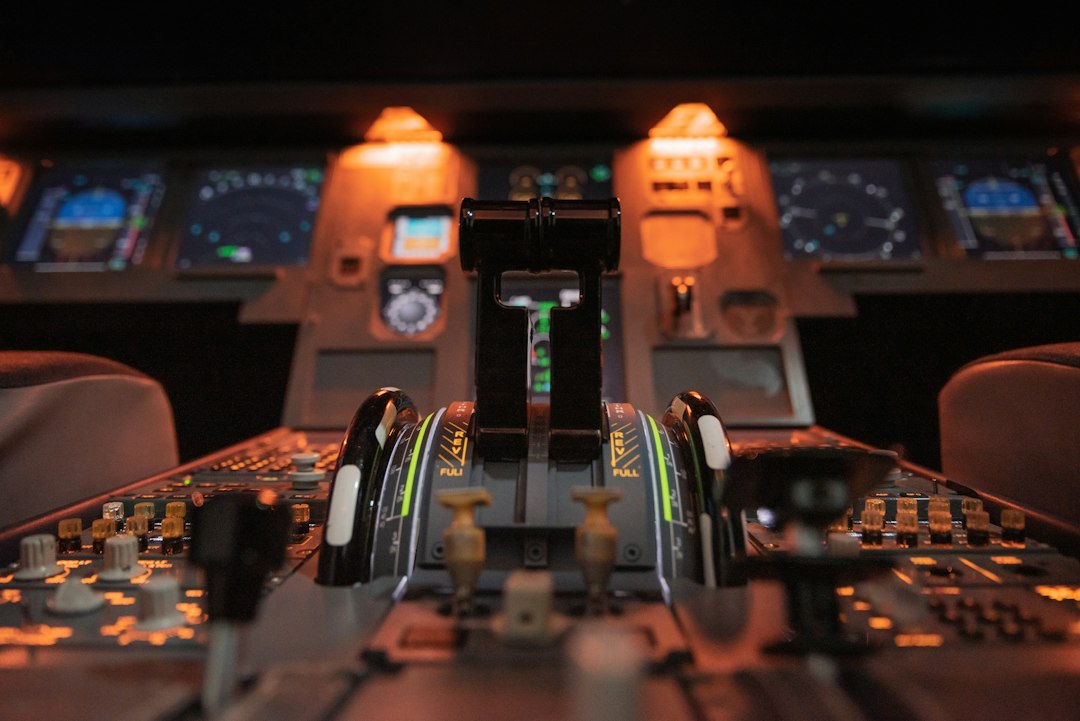
When we look at the broader impact of the Flight 447 ruling on modern aviation, it’s clear that the industry is undergoing a necessary, if overdue, evolution in how we define safety. For years, the reliance on single-point airspeed data felt like a standard operating procedure, but we now see a massive shift toward multi-sensor data fusion to ensure that no single failing component can blind a flight crew again. It’s honestly a relief to see manufacturers moving toward haptic feedback in side-stick controls, because expecting a pilot to intuitively guess when their inputs are canceling out a colleague’s—without any physical sensation—was always a design flaw waiting to happen. I think the biggest change, though, is the shift in culture; it’s no longer enough for an airline to just file away a technical bulletin, as we now have mandatory acknowledgment protocols to ensure critical data actually makes it to the people flying the plane.
This isn't just about hardware upgrades, either, as the training world is finally catching up to the realities of high-altitude manual recovery. We’re moving away from assuming automation will always handle the heavy lifting and toward curricula that force pilots to recognize and react to aerodynamic stalls when their sensors start acting up. You can see this in how flight control computers are being re-engineered to maintain predictable handling even when they drop into those complex alternate law modes. It’s a bit like fixing a car’s steering while it’s already on the road, but these stress-testing requirements are essential for keeping the plane from becoming a mystery to the crew mid-flight.
If you look at the legal landscape today, the precedent set by these courtroom battles has effectively forced a new level of transparency that simply didn't exist before. Manufacturers can’t hide behind certification paperwork anymore if their internal data hints at a vulnerability, and that’s a win for everyone who steps onto a jet. Airlines are now taking an independent look at their own fleet’s limits rather than just trusting the manual, which I think creates a much healthier layer of redundancy in the system. We’re also seeing a massive push for flight displays that actually prioritize clear, human-readable information during an emergency, rather than dumping a wall of conflicting alerts on a stressed crew. It’s all part of a move toward a more honest, transparent, and human-centric way of building the machines that carry us across the world.
Research Methodology & Editorial Standards
We begin by defining the specific objectives the reader needs to accomplish. Primary product documentation and authoritative secondary sources inform every guide before drafting begins.
Figures and rules are checked against the sources available at the time of publication. Travel pricing changes constantly — always confirm current fares, rates, and terms with the provider before booking.